The 1970s File Feature
Love Is The Message
Love Is the Message — MFSB Featuring The Three Degrees (1974) "Love Is the Message" by MFSB featuring The Three Degrees is one of the foundational recordings…
01 The Story
Love Is the Message — MFSB Featuring The Three Degrees (1974)
"Love Is the Message" by MFSB featuring The Three Degrees is one of the foundational recordings of the disco era, a track that functioned simultaneously as a hit single, an album centerpiece, a radio theme, and a dancefloor institution across multiple decades. Its release in 1974 on Philadelphia International Records placed it at the absolute center of the Philadelphia soul movement, which was redefining Black popular music at precisely the moment the disco revolution was beginning to take shape in clubs across New York and beyond.
MFSB, an acronym for Mother Father Sister Brother, was the house band of Philadelphia International, the label co-founded by producers Kenny Gamble and Leon Huff. The collective comprised some of the most accomplished session musicians in the country, players who had been working the recording studios of Philadelphia since the 1960s and who had developed a collectively intuitive ensemble sound that was unmistakably their own. Alongside them, The Three Degrees, the Philadelphia vocal group who had already established themselves as a commercially significant act in their own right, provided the vocal passages that punctuate the otherwise instrumental architecture of the recording.
"Love Is the Message" was released as the B-side of "TSOP (The Sound of Philadelphia)," which became one of the most recognized pieces of music in American television history after it was adopted as the theme for Soul Train, the nationally syndicated R&B dance program. While "TSOP" carried the promotional weight of the single campaign, "Love Is the Message" was the track that dancers and DJs returned to repeatedly, its extended arrangement and flowing structure making it ideal for the emerging disco format that prized long, continuous grooves over the three-minute pop convention.
"TSOP" reached number 1 on the Billboard Hot 100 in 1974, making it the first instrumental to top the chart in years and giving the MFSB/Three Degrees recording the commercial spotlight. But in clubs, on the dance floor, and in the emerging world of DJ culture that was taking shape in New York, "Love Is the Message" was the side that mattered. DJs at venues like the Loft, the Gallery, and later the Paradise Garage made the track a regular feature of their sets, recognizing its structural properties as perfectly suited to the social and physical experience of sustained communal dancing.
The recording's production, fully executed within the Sigma Sound Studios environment that was the operational home of Philadelphia International, showcases the MFSB ensemble at full strength. The arrangement builds from a relatively spare opening through orchestral escalation, with strings, brass, rhythm section, and vocal interjections layering progressively to create the sense of emotional and physical ascent that made the track so effective on a large dance floor with a powerful sound system. This architecture was not accidental but reflected the deep professionalism of the MFSB players and the production intelligence of Gamble and Huff.
The track appeared on the album Love Is the Message, released in 1973 and carrying the same title. The album's release gave Philadelphia International a document that captured the full scope of the MFSB sound, from uptempo dance material to slower, more orchestral pieces. The album sold well and further cemented Philadelphia International's position as the most important Black-owned record label operating outside Motown during the first half of the 1970s.
In the years following its release, "Love Is the Message" grew in cultural stature far beyond its original chart performance. Disco historians, music writers, and former club regulars consistently cite it as one of the essential tracks of the era, a recording that defined the emotional and physical experience of the dancefloor before the word disco had fully entered the mainstream vocabulary. Its influence extended directly into the DJ and remix culture of the late 1970s and 1980s, as producers and mixers recognized its structural intelligence as a template for creating sustained musical experiences rather than discrete pop moments.
The track has been sampled, referenced, and reissued across multiple generations of popular music. Its appearance in retrospective compilations, documentary soundtracks, and academic discussions of the disco era reflects a growing recognition that "Love Is the Message" was not simply a product of the Philadelphia soul moment but one of its defining achievements, a recording that understood what music could do for a room full of people in motion and delivered on that understanding with complete conviction.
02 Song Meaning
Meaning and Cultural Resonance of "Love Is the Message"
"Love Is the Message" operates in a register where musical meaning is communicated primarily through sound and structure rather than through conventional lyrical content. The track is largely instrumental, with vocal passages from The Three Degrees serving as textural and emotional accents within the broader orchestral and rhythmic architecture rather than as carriers of narrative meaning in the pop-song sense. Understanding what the recording means requires attending to what it does rather than what it explicitly says.
The title itself is the interpretive key. In the context of Philadelphia International Records and the broader Philadelphia soul movement, the message of love was never merely romantic. Kenny Gamble and Leon Huff, as producers and ideological architects of the label's output, understood love in a communal and almost political sense, as the social force that could bind communities together, provide dignity and affirmation to Black Americans facing ongoing discrimination, and create spaces of joy and belonging in the midst of difficult social circumstances. The Philadelphia International catalog as a whole was animated by this vision, and "Love Is the Message" distilled it to its purest form by removing most of the verbal scaffolding and letting the music itself carry the weight.
The recording's extraordinary effectiveness in disco and club environments was not merely a matter of its musical construction, though that construction was superbly designed for the purpose. It was also a matter of what it meant to be on a dance floor in the early-to-mid 1970s in cities like New York, where the communities that gravitated to those spaces, primarily Black, Latino, and gay, were navigating social marginalization and finding in communal dancing an experience of freedom, acceptance, and collective joy that was unavailable to them in much of the surrounding culture. A record whose title declared that love was the fundamental message, delivered through music of irresistible physical momentum, carried genuine emotional significance in that context.
The Three Degrees' vocal contributions are worth examining as a specific element of the recording's meaning. Their presence ensures that the track is not entirely abstract, that there is a human voice, specifically a female vocal group whose sound combined gospel warmth with sophisticated pop phrasing, affirming the emotional content that the instrumental arrangement expresses. Their interjections function less like a conventional lead vocal and more like a Greek chorus, confirming and elevating the emotional stakes established by the music beneath them.
As a cornerstone of what would become known as disco, "Love Is the Message" also carries meaning as a historical document of a transitional cultural moment. The track appeared before the word disco had achieved its commercial saturation, before the genre had been co-opted, mass-produced, and eventually subjected to the backlash that culminated in the Disco Demolition Night of 1979. In its original context, the recording embodied the genuine communal discovery of a new musical form by specific communities for specific human purposes. That authenticity gives the track a historical weight that purely commercial disco productions of the later 1970s cannot claim.
The lasting influence of "Love Is the Message" on DJ culture is inseparable from its meaning as a piece of music. The track taught a generation of DJs and, through them, a generation of producers that music structured for sustained physical and emotional experience, rather than for a radio edit or a three-minute attention span, could achieve something qualitatively different from conventional pop. This lesson propagated through house music, electronic dance music, and every subsequent form of music made primarily for the dancefloor, making the recording's meaning inseparable from the entire subsequent history of club music as a cultural form.
→ More from MFSB Featuring The Three Degrees
View all MFSB Featuring The Three Degrees hits →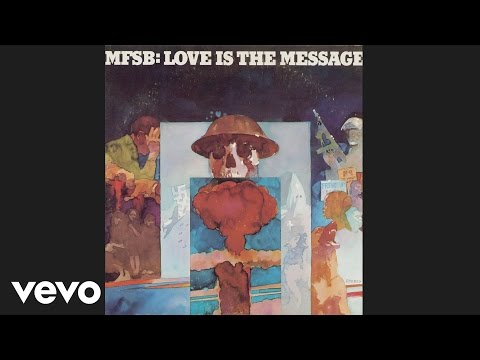

→ More from the 1970s File
View all 1970s hits →




Keep digging