The 1970s File Feature
The Fightin' Side Of Me
"The Fightin' Side of Me" — Merle Haggard and the Sound of American Defiance Bakersfield, 1970 Picture the America of early 1970: a country torn between its …
01 The Story
"The Fightin' Side of Me" — Merle Haggard and the Sound of American Defiance
Bakersfield, 1970
Picture the America of early 1970: a country torn between its image of itself and its experience of itself, between the flag-waving patriotism of the World War II generation and the student protests, draft resistance, and anti-war demonstrations that had become fixtures of daily news coverage. Vietnam was grinding toward its most controversial years. The country's internal divisions had calcified into something that felt permanent and potentially explosive. Into this atmosphere, Merle Haggard walked up to a microphone and recorded a song that said, plainly and without diplomatic softening, that those who criticized America while living within it had better understand the people who were ready to fight for it.
The Haggard Provocation
Merle Haggard wrote "The Fightin' Side of Me" in 1969, the same period in which he had already made his political allegiances explicit with "Okie from Muskogee," a song that became an anthem for the working-class Americans who felt dismissed or ridiculed by the counterculture. The two songs were companion pieces, approaching the same cultural divide from slightly different angles. Where "Okie" described a way of life under implicit attack, "The Fightin' Side of Me" was more direct: it addressed the protestors themselves and articulated what Haggard saw as the limits of his patience.
Haggard was one of the Bakersfield Sound's defining figures, alongside Buck Owens, and his style was built on a harder, more electric guitar-driven approach than the smoother Nashville production dominating country radio at the time. The Strangers, his backing band, were among the tightest working groups in the genre, capable of a driving, no-frills energy that suited Haggard's plainspoken lyrical style. The recording of "The Fightin' Side of Me" reflected that directness: no sonic excess, no production ornament, just the argument delivered at tempo.
Chart Performance and Cultural Moment
The track entered the Billboard Hot 100 on February 14, 1970, debuting at position 100 before climbing to 98 the following week and reaching its Hot 100 peak of 92 on February 28, 1970, spending three weeks on the chart in total. The modest Hot 100 placement understated the song's actual commercial and cultural impact. On the country charts, the song performed far more substantially, reaching number one on the Billboard country chart. Country radio was its natural home, and the audience that made it a country hit represented exactly the demographic the song was addressing.
The Hot 100 placement nonetheless matters as evidence of crossover attention during a moment of intense cultural polarization. The song was not speaking only to country audiences; it was entering a national conversation about loyalty, patriotism, and the boundaries of political dissent.
Haggard's Complicated Legacy
The reception of the song was never simple. Haggard's political music made him a hero to some Americans and a villain to others, a division that persisted across his career and has informed discussions of his legacy since his death in 2016. In later interviews, Haggard offered more nuanced retrospective accounts of his intentions, suggesting that some of the political content of his late-1960s and early-1970s work was more complicated in motivation than the songs' most partisan fans believed.
Whether taken at face value as pure political expression or understood as a more complex product of a specific working-class cultural identity, the song remains one of the most direct articulations of a particular American sensibility that country music produced during that turbulent era. It spoke for people who felt their values were under assault and gave those feelings a melodic form that radio could carry across the country.
The Sound That Endures
Divorced from its political context, the track is also simply a tremendous piece of country recording. Haggard's vocal performance carries the full weight of his Bakersfield roots: tough, precise, emotionally direct without theatrical excess. The Strangers drive the track with the confident economy of a band that has played thousands of nights together. The song's endurance on country radio playlists and its continued presence in discussions of the era confirm that whatever else it may represent, it is fundamentally a well-made piece of music. Press play and hear what country sounded like when it was speaking, loudly and without apology, for half of America.
"The Fightin' Side of Me" — Merle Haggard And The Strangers' singular moment on the 1970s charts.
02 Song Meaning
"The Fightin' Side of Me" — Patriotism, Dissent, and the Limits of Tolerance
The Song as Political Statement
Relatively few popular songs make political arguments as directly as "The Fightin' Side of Me." Most political pop music works through metaphor, allegory, or emotional evocation rather than direct address. Merle Haggard's approach was different: he wrote a song that spoke plainly to a specific audience about a specific cultural tension, in terms that could not easily be mistaken or reinterpreted. The song says what it means, and that directness is both its strength and the source of the controversy it generated.
The Working-Class Cultural Identity
To understand the song's meaning, it helps to understand the social position from which Haggard was writing. He came from Bakersfield, California, from a working-class Dust Bowl migrant family, and had spent time in San Quentin State Prison before finding success in music. His political instincts were shaped by a background in which mainstream American institutions, the military, the law, the flag, carried a different kind of weight than they did for the college-educated young people filling the protest marches of the late 1960s.
The song articulates a particular American grievance: the feeling that people who have sacrificed for the country, who have built their identities around service, patriotism, and conventional codes of loyalty, are being mocked or dismissed by a vocal minority that benefits from the freedoms those codes helped establish. Whether one finds that argument persuasive or not, it is a genuine expression of a real social tension that divided American culture deeply in 1969 and 1970.
The Boundaries of Dissent
The song raises questions about the nature of political tolerance that have not lost their relevance. The narrator does not argue against free speech; he argues that freedom of speech does not come without social consequences, that speaking against the country in front of people who have sacrificed for it will produce a reaction. The distinction between the legal right to dissent and the social reception of that dissent was a genuine flashpoint in 1970 and has remained one in various forms ever since.
Critics of the song read it as threatening and authoritarian in spirit, an attempt to silence legitimate political opposition through implied coercion. Defenders read it as an authentic expression of the emotional limits of people whose values were under attack. Both readings engage seriously with the song rather than dismissing it, which is itself a form of acknowledgment of its cultural weight.
Country Music and Political Voice
The broader significance of the song extends beyond its immediate political content to what it reveals about country music's capacity to function as political speech. Haggard's willingness to address the cultural divide directly helped establish a template for country music as a genre that speaks explicitly for a specific demographic's values and grievances. That template has influenced the genre's political identity ever since, through artists who positioned themselves in similar ways in subsequent decades.
This legacy is complicated. Country music's alignment with conservative working-class identity has been both a source of its commercial strength and a limitation on its perceived range. Haggard himself was more complex politically than the song's most partisan fans acknowledged, expressing support for marijuana legalization and later offering critical views on the Iraq War. The full picture of his politics does not reduce neatly to the flag-waving image some attached to "The Fightin' Side of Me."
The song endures because it captures a real emotional state with uncommon directness, the frustration of someone who loves their country and cannot accept what they perceive as its betrayal from within. That emotion, whatever one thinks of its political expression, was genuine, widely shared, and consequential. Haggard gave it a voice that the country charts carried to millions of listeners who recognized something of themselves in it.
→ More from Merle Haggard And The Strangers
View all Merle Haggard And The Strangers hits →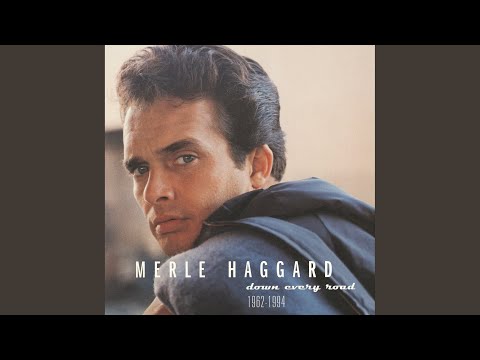
→ More from the 1970s File
View all 1970s hits →




Keep digging