The 1970s File Feature
After The Dance
After The Dance — Marvin Gaye (1976) Marvin Gaye's I Want You , released in March 1976, represented a significant artistic statement at a moment when its cre…
01 The Story
After The Dance — Marvin Gaye (1976)
Marvin Gaye's I Want You, released in March 1976, represented a significant artistic statement at a moment when its creator was navigating both personal turbulence and a rapidly shifting musical landscape. The album, produced almost entirely by Leon Ware and T-Boy Ross, established a sonic world of languorous sensuality that set it apart from the more urgent declarations of Gaye's earlier work. "After The Dance" emerged from this environment as one of the album's most carefully constructed pieces, a meditation on desire and connection that operated at a slow burn entirely suited to its subject matter.
"After The Dance" appeared on the Tamla label, distributed by Motown, continuing the relationship between Gaye and the company that had defined his commercial career since the early 1960s. By 1976, that relationship was growing complicated: Gaye had wrested a degree of creative control from Motown following the landmark success of What's Going On in 1971, and subsequent albums had reflected his evolving sense of artistic autonomy. I Want You, however, represented a partial return to collaboration, with Leon Ware having originally conceived many of the album's compositions for his own project before Gaye and Motown claimed them.
Leon Ware's role in the creation of "After The Dance" was foundational. Ware co-wrote the track alongside T-Boy Ross, bringing to it the lush, layered aesthetic that characterized his own artistic vision. The arrangement built around synthesizers, strings, and a rhythm section that prioritized groove over urgency, creating a musical atmosphere that felt simultaneously modern and timeless. The production choices reflected the influence of the mid-1970s soul movement while maintaining the sophisticated values that had always been central to Motown's commercial identity.
Gaye's vocal performance on the track demonstrated the evolution his voice had undergone since the late 1960s. Where the earlier Marvin Gaye had favored a more overtly emotional, sometimes pleading vocal style, the artist heard on I Want You projects a quality closer to private communion than public declaration. On "After The Dance," he moves between registers with an ease that disguises the technical demands of the performance, making the emotional intimacy feel effortless rather than constructed.
The album I Want You was released during a period of significant activity in American popular music. The mid-1970s saw the parallel development of disco and its more soulful counterparts, and Gaye's record occupied a space between those tendencies, drawing on the rhythmic emphasis of dance music without fully surrendering to its more mechanistic impulses. "After The Dance" particularly embodied this balance: it was rhythmically grounded enough to function on the dance floor while remaining emotionally complex enough to reward listening outside that context.
The track was released as a single and performed respectably on the charts, extending the commercial reach of the album beyond what album tracks typically achieved. The single version of "After The Dance" demonstrated Gaye's continued commercial viability during a period when many of his contemporaries from the Motown golden era had seen their chart fortunes decline. His ability to adapt to the evolving tastes of a mid-1970s audience without abandoning the qualities that made his work distinctive was one of the most remarkable features of his career at this stage.
The album's broader reception confirmed that critics and audiences were willing to follow Gaye into more explicitly sensual artistic territory. While What's Going On and Let's Get It On had each broken new ground in different ways, I Want You extended the latter's preoccupation with physical and emotional desire into an even more immersive format. "After The Dance" functioned as a kind of centerpiece for this exploration, a track that gathered the album's themes and sonic language into their most concentrated form.
Gaye's personal circumstances during this period are inseparable from the material he was recording. The dissolution of his first marriage to Anna Gordy Gaye, combined with his involvement with Janis Hunter (who would become his second wife), gave the album's themes of desire and romantic longing a biographical dimension that listeners and critics have noted extensively. Whether or not specific songs encoded specific personal experiences, the emotional authenticity of the performances suggested that Gaye was drawing on real feeling rather than simply executing someone else's artistic vision.
The cultural footprint of "After The Dance" has grown considerably in the decades since its release. The track has been sampled, covered, and referenced by subsequent generations of artists working in R&B and neo-soul, and its reputation as one of the finer achievements of mid-1970s romantic soul has only solidified with time. The combination of sophisticated production, vocal excellence, and emotional depth that defined the song placed it among the recordings that continued to define standards for the genre long after its initial commercial moment had passed.
02 Song Meaning
Meaning and Themes: After The Dance
"After The Dance" inhabits the quiet space that follows the ecstatic energy of a dance floor encounter, the moment when the music slows and two people find themselves in proximity that demands something more than movement. Marvin Gaye uses this scenario as the starting point for an exploration of desire that is simultaneously physical and emotional, asking what happens when attraction deepens into something that cannot be resolved by the dance itself.
The song's central tension is between the formal social context of dancing, which provides a permitted framework for closeness, and the private emotional territory that opens up once that framework recedes. The narrator is not simply attracted to his partner; he is drawn into a kind of vulnerability that the dance floor's energy had previously contained. When the music stops, the feelings do not, and it is in that continuation that the song finds its subject.
This thematic concern with desire as a form of transformation runs throughout the I Want You album and reaches one of its most refined expressions in this track. Gaye understood that the most interesting thing about physical attraction is not the attraction itself but what it reveals about the person experiencing it: the longing, the uncertainty, the willingness to be changed. "After The Dance" stages this revelation with a gentleness that makes the emotional stakes feel real without rendering them melodramatic.
The production's role in communicating these themes cannot be overstated. Leon Ware's arrangement created a sonic environment that matched the lyrical content precisely. The slow-building synthesizer lines, the understated percussion, and the warm string textures all contributed to a sense of suspended time, as if the song itself existed in the same liminal moment it describes. Gaye's vocal performance responded to this environment intuitively, finding a register that felt private and confessional rather than performative.
Within Gaye's catalog, the song represents a refinement of the approach he had pioneered on "Let's Get It On" three years earlier. Where that record had been more overtly declaratory, "After The Dance" operates with a greater degree of restraint, implying as much as it states and trusting the listener to inhabit the emotional space the performance creates. This maturation in approach reflected both Gaye's artistic development and the more sophisticated production environment that Leon Ware brought to the project.
The song also carries within it a quiet philosophical dimension that elevates it above straightforward romantic sentiment. The notion that a dance can create a connection that outlasts its occasion suggests something about the way shared experience generates emotional obligation, a bond that persists after the specific moment that created it has ended. This is not a simple love song but a meditation on how encounters create feelings that then demand to be acknowledged and honored.
For listeners in 1976 and afterward, the song offered a model of romantic expression that was both culturally specific, rooted in Black American musical and social traditions around dance as courtship, and universally recognizable. The dance as a metaphor for romantic possibility is ancient, but Gaye and Ware gave it a freshness and specificity that made it feel entirely of its moment while remaining accessible across time.
The enduring appeal of "After The Dance" lies in its successful navigation of multiple tensions: between desire and restraint, between the public context of dance and the private experience of feeling, between the immediacy of physical attraction and the deeper longing that underlies it. These are tensions that do not resolve easily, and the song's willingness to sit with them rather than offer false resolution is one of the central reasons it has retained its power across decades and continued to speak to listeners encountering it for the first time.
→ More from Marvin Gaye
View all Marvin Gaye hits →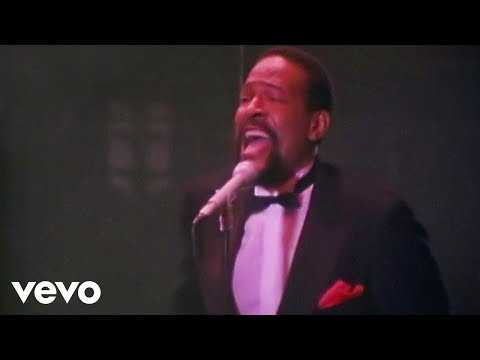


→ More from the 1970s File
View all 1970s hits →




Keep digging