The 1970s File Feature
Mandrill
The Story Behind Mandrill by Mandrill Picture a Manhattan loft in the early 1970s, windows open to a city that was equal parts grit and groove, and a band th…
01 The Story
The Story Behind "Mandrill" by Mandrill
Picture a Manhattan loft in the early 1970s, windows open to a city that was equal parts grit and groove, and a band that refused to be filed under a single genre. That was Mandrill, a Brooklyn-bred outfit built around the Wilson brothers, who treated funk, jazz, salsa, rock and African rhythm as one continuous language. Their self-titled signature piece carried their name like a flag, a horn-soaked, percussion-driven workout that announced exactly who they were before you knew anything else about them. To hear it now is to step straight into a moment when American music was busy tearing down the walls between styles.
A Band of Brothers and Many Worlds
Mandrill was founded by brothers Carlos, Lou and Ric Wilson, raised partly in Panama and partly in Brooklyn, a background that explained the band's natural fluency in Latin and Caribbean rhythm. By 1971 they had assembled a large, muscular lineup heavy on horns and hand percussion, the kind of group that could fill a room with sound. Their debut album for Polydor introduced a sprawling, ambitious vision, and the track bearing the band's own name functioned as a kind of mission statement. Mandrill was a multi-instrumental collective that prized musicianship over polish, and that ethos is audible in every restless bar of this recording.
The Sound of the Track
The arrangement moves like a living thing, built on interlocking percussion, a churning bassline, and brass that punches and slides in equal measure. There is a looseness to it that feels improvised even when it is clearly arranged, the players passing the spotlight around the room. You can hear the Latin undercurrent in the congas and the jazz instinct in the way the horns answer one another. It is dense and physical music, designed less for radio convenience than for bodies in motion. The production glistens with the warmth of analog tape and a band recorded close to live.
A Brief Run on the Hot 100
Commercial radio in 1971 was not always sure what to do with music this adventurous, and the chart numbers reflect that tension. "Mandrill" debuted on the Billboard Hot 100 at number 96 on June 5, 1971, then nudged upward the following week. It peaked at number 94 on June 12, 1971, holding that spot into the next survey. The song spent just three weeks on the Hot 100 before slipping away, a modest showing that undersells the band's deeper influence. Mandrill were always more an album and live-band proposition than a singles machine, and the brevity of this chart run tells that story plainly.
The Legacy Beyond the Charts
What the Hot 100 could not measure was the long tail of Mandrill's influence. The band's fusion of styles helped lay groundwork that later hip-hop producers would mine for samples, and their reputation among musicians outstripped their commercial profile. Mandrill went on to record across the 1970s for Polydor and later United Artists, building a catalog prized by funk obsessives and crate-diggers alike. The self-titled track remains a calling card, a compact demonstration of everything that made them special. Modest chart placement and lasting respect are not contradictions in this corner of music history. The band kept evolving across the decade, refining their fusion and earning a devoted following among musicians and serious listeners who valued ambition over easy hooks. Their willingness to stretch, to let a groove breathe and a horn line wander, marked them as players first and pop stars a distant second. That priority cost them radio play, but it bought them durability. Decades later, the music still rewards anyone willing to listen closely, which is the truest measure of a band built on craft.
Why It Still Lands
Drop the needle today and the energy translates instantly, no period nostalgia required. The interplay between horns and percussion sounds fresh because it was built on craft rather than trend. The rhythms have aged into something timeless, the kind of groove that producers and dancers keep rediscovering. For listeners discovering the band through a sample or a playlist, this is the ideal entry point, a track that wears the band's name and earns it. It carries everything the group stood for in a single concentrated burst of sound. Press play and let the groove make the introduction the charts never fully did.
"Mandrill" — Mandrill's singular moment on the 1970s charts.
02 Song Meaning
The Meaning Behind "Mandrill" by Mandrill
A song that shares its name with the band carries an unusual weight. It is part theme music, part declaration of identity, and "Mandrill" functions as exactly that. Rather than telling a linear story, the track communicates through rhythm, dynamics and the sheer breadth of its musical vocabulary. Its meaning lives less in words than in the message the arrangement sends about who this band intended to be.
Identity as the Central Theme
The most striking thing about the piece is its insistence on self-definition. By naming the song after themselves, the Wilson brothers framed it as a portrait of their collective character. The track presents the band as a melting pot of funk, Latin, jazz and rock, and that diversity is the point. It refuses to settle, just as the musicians refused to be boxed into a single label or scene.
A Celebration of Rhythm and Roots
Underneath the showmanship runs a deep respect for rhythmic traditions, especially the Afro-Latin currents the brothers grew up around. The percussion carries cultural memory, connecting Brooklyn dance floors to the Caribbean and West Africa. The song's emotional message is one of joy and pride, an invitation to move and to recognize the shared roots beneath many styles of Black popular music.
The Cultural Moment
In 1971, funk and soul were expanding their ambitions, and audiences were increasingly open to long-form, groove-based music. Mandrill embodied that early-1970s spirit of fusion, when artists treated genre boundaries as suggestions rather than rules. The track speaks to a moment when American music was reaching outward, absorbing global influences and asserting that complexity and danceability could coexist.
Why It Resonated
Listeners drawn to this music responded to its honesty and its physical pull. There is no posturing in it, only a band playing hard and inviting you along. The communal energy of the performance made it feel less like a product and more like a gathering. That sense of inclusion is a large part of why the band earned such devotion from those who found them. The music does not ask you to belong to any single scene; it simply invites you to move, and that openness extends a welcome to anyone listening. There is something democratic in a groove this generous, a feeling that the party has room for everyone.
A Statement of Purpose
Because the song carries the band's own name, it doubles as a kind of thesis. It declares the group's commitment to fusion and to musicianship over commercial calculation. Every choice in the arrangement reinforces that stance, from the layered percussion to the conversational horns. The track is the band explaining itself in sound, telling listeners exactly what they value and how they intend to play.
The Lasting Message
Stripped to its essence, the song argues that music is strongest when it embraces many sources at once. It is a quiet manifesto for openness, delivered through horns and hand drums rather than slogans. That idea has aged gracefully, which is why crate-diggers and curious listeners keep returning to it. The message feels especially relevant in an age of genre-blending, when the walls Mandrill helped dismantle have largely come down. They were ahead of their time, and the song remains proof of it.
→ More from Mandrill
View all Mandrill hits →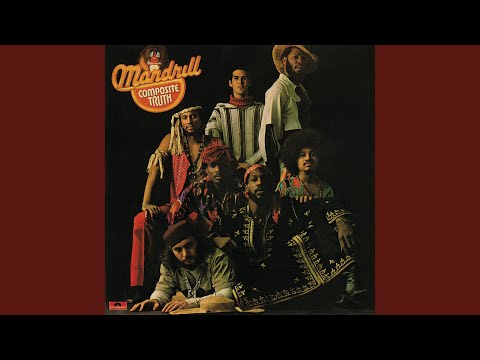
→ More from the 1970s File
View all 1970s hits →




Keep digging