The 1970s File Feature
Top Of The World
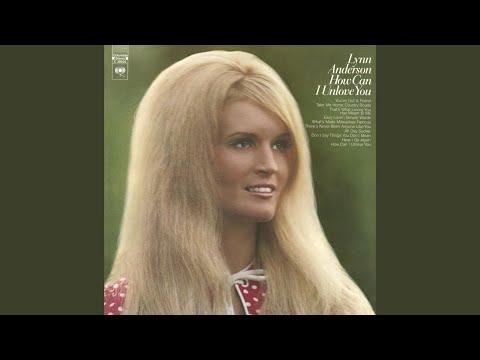
"Top Of The World" — Lynn Anderson Country's Crossover Queen in Full Flight The summer of 1973 belonged, in many ways, to a sound that refused to stay in its…
01 The Story
"Top Of The World" — Lynn Anderson
Country's Crossover Queen in Full Flight
The summer of 1973 belonged, in many ways, to a sound that refused to stay in its assigned lane. Country music was reaching across genre boundaries with a new confidence, and Lynn Anderson was one of its most capable ambassadors to the pop mainstream. She had spent the early part of the decade riding the enormous commercial wave of "(I Never Promised You a) Rose Garden," a 1971 single that became one of the best-selling country-pop records of its era. By 1973, Anderson was a known quantity on both the country and pop charts, a singer whose warm, assured delivery could make almost any material feel accessible.
Lynn Anderson was born in Grand Forks, North Dakota, but came up through the Nashville system, signed to Columbia Records and working with producer Glenn Sutton and later with Al Capps. Her style occupied the middle ground between traditional country construction and the lush, string-enriched arrangements that characterized the countrypolitan sound of the late 1960s and early 1970s. That sound prioritized vocal clarity and emotional directness over the raw twang of earlier country, and Anderson embodied it with an elegance that translated well to adult contemporary radio.
A Song Already Riding High
By the time Lynn Anderson recorded "Top of the World," the song already had a significant commercial history. The Carpenters had taken it to number one on the Billboard Hot 100 in November 1973, making it one of the year's biggest pop hits. Written by John Bettis and Richard Carpenter, the track was rooted in the soft pop sound that Karen and Richard Carpenter had refined into one of the decade's most distinctive voices. Anderson's version approached the same material from a country angle, and in the process demonstrated something important about the flexibility of well-constructed songs: a great melody and lyric can survive radical tonal changes without losing their essential appeal.
Anderson's recording debuted on the Billboard Hot 100 on June 30, 1973, entering at position 97 and climbing steadily through the summer. The chart run traced a patient arc upward, reaching its peak position of 74 on August 25, 1973, after spending ten weeks on the chart. That kind of sustained climb, moving from 97 to 74 over more than two months, reflected genuine and growing radio and sales support rather than a spike driven by a single event or promotion.
The Architecture of a Perfect Pop-Country Single
What made Anderson's version work was the combination of production choices that kept the song's buoyancy intact while giving it a warmth that was distinctly country. The lyric describes a state of almost overwhelming joy, a sense that everything in the world has aligned perfectly and that happiness feels like a physical place you could stand on and survey the landscape from above. Anderson's voice, clear and unforced, carried that sentiment without overselling it. Country production of the early 1970s had a specific gift for making big emotions feel intimate, and this recording drew on that tradition effectively.
The pop competition that summer was considerable. The charts were full of artists from every corner of the American musical landscape, from soul and funk to soft rock and glam-influenced pop. Anderson's version of "Top of the World" carved out its own space by appealing directly to the adult contemporary listener who wanted something melodically satisfying without edges or abrasion. Ten weeks on the Hot 100 confirmed that there was a real audience for exactly that.
A Place in the Country-Pop Bridge
Anderson's career in the early-to-mid 1970s represents a key moment in the ongoing negotiation between country music and the pop mainstream. The countrypolitan movement of the late 1960s and early 1970s had made country music safe for mainstream consumption in a new way, polishing away the regional roughness without entirely sacrificing the genre's emotional directness. Artists like Anderson were the public face of that project, demonstrating through chart success after chart success that country could compete on the Hot 100 without apology.
Her take on "Top of the World" sat comfortably alongside her other work of the period, occupying that productive space where country fans and pop fans could meet without either feeling they had compromised. The record also illustrated the value of well-sourced cover material: in choosing a song that was simultaneously a country composition and a proven pop melody, Anderson maximized her chances on both sides of the genre fence. The gamble paid off across ten chart weeks that summer. Put this one on and feel what 1973 sounded like when everything clicked.
"Top Of The World" — Lynn Anderson's singular moment on the 1970s charts.
02 Song Meaning
The Meaning of "Top Of The World" by Lynn Anderson
The Geography of Pure Happiness
Some songs locate their emotional content in time, in specific memories or moments. "Top of the World" does something more ambitious: it locates happiness in space, describing an elevated vantage point from which everything in the singer's life looks exactly right. The song's central metaphor is physical elevation as emotional state, the sensation of being so thoroughly content that the ordinary world seems to shimmer with significance below you. It is a simple conceit, but executed with enough melodic and lyrical precision that it registers as something more than a greeting card sentiment.
Written by John Bettis and Richard Carpenter, the song fits naturally into the emotional vocabulary of early 1970s soft pop, a genre that specialized in articulating positive feeling without irony or complication. In an era when much of rock music was exploring darkness, complexity, and social critique, the warm certainty of a song like this offered listeners an alternative emotional register, one that did not demand anything from them except the willingness to feel good for a few minutes.
Love as Total Transformation
The lyrical content of "Top of the World" describes love as a force that transforms the singer's entire perception of the world. Nature looks different, the future looks brighter, and ordinary experience is suffused with a warmth that seems to come from outside as much as within. This is love as revelation, not the complicated, negotiated reality of adult relationships but the first blinding clarity of reciprocated feeling.
Lynn Anderson's country interpretation added a specific emotional register to that content. Country music in the early 1970s had a particular talent for selling sincerity, for making the listener believe that the sentiment being expressed was genuine rather than performed. Anderson's vocal delivery did not wink at the lyric or hold it at arm's length; she committed fully to the song's uncomplicated joy, and that commitment is what gave her version its warmth. In a genre built on emotional directness, sincerity was the ultimate technique.
The Cultural Moment of Early 1970s Optimism
The summer of 1973 was not uniformly optimistic. The Watergate scandal was consuming Washington, the Vietnam War was winding down in a manner that satisfied almost no one, and the American economy was beginning the inflationary spiral that would define the mid-1970s. Against that backdrop, the popularity of songs like "Top of the World" suggests something important about why audiences turn to music during uncertain times. The song did not address any of those anxieties directly; it offered instead a temporary refuge, a place where the singer's emotional reality was simply one of perfect happiness.
This is not escapism in the dismissive sense but something more functional, the use of music as a space for rehearsing positive emotional states that daily life may not always deliver. Country music in the countrypolitan era was particularly skilled at creating these spaces, combining familiar melodic structures with production that felt warm and enveloping rather than cold or challenging.
Why the Feeling Travels Across Versions
The fact that both the Carpenters' pop version and Lynn Anderson's country reading found commercial success with "Top of the World" speaks to the quality of the underlying material. A song that can sustain two genuinely different interpretations without losing its essential character is a well-built song, one where the emotional content is lodged in the melody and lyrical structure rather than in any particular arrangement or vocal style. Anderson's version proved that the joy at the heart of the song was portable, capable of crossing genre lines while remaining fully itself. That is the mark of writing that lasts.
→ More from Lynn Anderson
View all Lynn Anderson hits →

→ More from the 1970s File
View all 1970s hits →




Keep digging