The 1970s File Feature
(If Loving You Is Wrong) I Don't Want To Be Right
"(If Loving You Is Wrong) I Don't Want To Be Right" — Luther Ingram's Soul Landmark Southern Soul at Its Most Vulnerable The summer of 1972 belonged, in sign…
01 The Story
"(If Loving You Is Wrong) I Don't Want To Be Right" — Luther Ingram's Soul Landmark
Southern Soul at Its Most Vulnerable
The summer of 1972 belonged, in significant part, to a man from Jackson, Tennessee who had been paying his dues on the R&B circuit for years without the commercial breakthrough his talent deserved. Luther Ingram's recording of (If Loving You Is Wrong) I Don't Want To Be Right arrived that June as one of the most emotionally direct and uncommonly honest pieces of popular music the decade would produce. While rock was getting harder and pop was getting shinier, this record operated from a place of absolute soul music tradition, a slow, pained, morally complicated confession that asked listeners to sit with an uncomfortable truth rather than offer them reassuring simplifications.
The Record and Its Origins
The song was written by Homer Banks, Carl Hampton, and Raymond Jackson, three songwriters who had deep roots in the Memphis soul tradition. It was recorded at Stax Records, the Memphis label that had served as home to some of the most emotionally powerful R&B and soul music of the previous decade, from Otis Redding to Isaac Hayes. By 1972, Stax was operating in a different commercial environment than its early glory days, but it retained the commitment to authentic feeling that had defined its catalog. Ingram, whose career Stax had been developing, brought to the material a vocal performance of remarkable restraint and power, understanding that this particular song required honesty over showmanship.
The Chart Run
The single debuted at number 64 on the Billboard Hot 100 on June 3, 1972, then began a long, measured climb through the summer. It moved from 48 to 41, then made a significant jump to 19, before settling into a slower approach to its peak. On August 5, 1972, the song reached its Hot 100 peak position of number 3, a remarkable achievement for a slow soul ballad in a commercial environment increasingly dominated by harder rock sounds. The record spent 16 weeks on the Hot 100, an extraordinary run that reflected genuine, sustained audience engagement across radio formats. Its performance on the R&B charts was even more impressive, where it spent time at number one and became one of the defining singles of that year's soul calendar.
Ingram in Context
Luther Ingram had been recording since the early 1960s without finding the combination of material and moment that would define him. This song gave him both simultaneously. His voice, warm and slightly weathered, carried the emotional complexity of the lyrical situation with a believability that the song required. A more conventionally polished or technically flashy performance would have undermined the material's fundamental premise, which depended on the listener believing that the narrator was genuinely wrestling with the moral weight of what he was describing. Ingram delivered that wrestling match in real time across the length of the recording, making the listener feel the cost of the confession rather than merely hearing it catalogued.
A Song That Outlasted Its Moment
The track has been covered by numerous artists across the decades since Ingram's original, a testament to the durability of its emotional and thematic core. Barbara Mandrell's country version found substantial success in 1979, demonstrating the song's capacity to cross genre boundaries without losing its essential impact. The original Ingram recording remains the definitive version, anchored in the Memphis soul tradition that produced it and carrying the weight of a performance that sounds as though it could only have been recorded once. The song represents the peak of what Ingram achieved in a career that was notable but never again reached this height of commercial and critical success.
Queue it up and hear one of the great honest confessions in the history of American soul music.
"(If Loving You Is Wrong) I Don't Want To Be Right" — Luther Ingram's singular moment on the 1970s charts.
02 Song Meaning
"(If Loving You Is Wrong) I Don't Want To Be Right" — Moral Complexity at the Heart of Soul
The Unflinching Premise
Most love songs resolve the tension they create. They move from longing to fulfillment, or from loss to acceptance, or from confusion to clarity. (If Loving You Is Wrong) I Don't Want To Be Right refuses that resolution with complete deliberateness. The narrator acknowledges that the love being described is wrong by conventional moral standards, acknowledges the harm it causes to other people, and then states plainly that this knowledge changes nothing. The song does not celebrate infidelity; it documents the moral cost of it with extraordinary honesty. That refusal to offer comfort or judgment to the listener placed it in territory that few pop songs of any era have dared to occupy.
The Weight of Knowing
What makes the song emotionally devastating rather than merely provocative is the narrator's complete awareness of the situation. There is no ignorance being performed here, no pretense that the complications do not exist or do not matter. The lyrics describe a person who fully understands that they are hurting others, that their children are suffering, that their choices carry real consequences, and who cannot stop making those choices regardless. This combination of moral clarity and emotional helplessness captures something true about human experience that more tidy narratives cannot accommodate. Love, in the song's telling, is not a noble force that overcomes obstacles; it is a force that overrides judgment, and the narrator is neither proud of this nor able to change it.
The Soul Tradition of Moral Honesty
The song belongs to a specific strand of southern soul that understood its primary obligation as emotional truth rather than moral instruction. The Memphis soul tradition, particularly as practiced at Stax Records, had long operated from a premise that music should reflect the complexity of lived experience rather than offering simplified models of behavior. This approach distinguished the Stax sound from the more polished, aspirational quality of Motown's output, which tended toward emotional situations that could be more easily resolved. The song about loving someone you should not love, delivered without excuses or redemption, was exactly the kind of material that this tradition was built to handle.
Why It Resonated
The song's enormous commercial success in 1972 tells us something important about what audiences wanted from their music at that moment. The early 1970s were a period of considerable social renegotiation, as the idealism of the 1960s gave way to more complicated understandings of human nature and moral life. A song that acknowledged the gap between what people know they should do and what they actually do spoke to a cultural moment that was losing faith in the easy optimism of the previous decade. Luther Ingram's performance invited listeners to recognize themselves in the narrator's situation without requiring them to feel either condemned or absolved for doing so.
The Enduring Human Truth
Across the decades since its release, the song has maintained its power precisely because the situation it describes has never stopped being part of human experience. The specific social context of 1972 has receded, but the core emotional and moral situation the song explores remains permanently current. The capacity to know something is wrong and to do it anyway is not a feature of any particular era; it is a feature of being human. Songs that engage that reality honestly tend to outlast their original moment, and this is one of the most sustained and honest engagements with that reality in the entire catalog of American soul music.
→ More from Luther Ingram
View all Luther Ingram hits →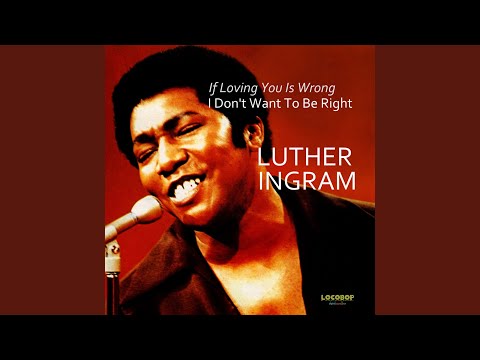
→ More from the 1970s File
View all 1970s hits →




Keep digging