The 1970s File Feature
It May Be Winter Outside, (But In My Heart It's Spring)
"It May Be Winter Outside (But In My Heart It's Spring)" — Love Unlimited's Barry White Connection Warmth Against the December Chill December 1973 was a comp…
01 The Story
"It May Be Winter Outside (But In My Heart It's Spring)" — Love Unlimited's Barry White Connection
Warmth Against the December Chill
December 1973 was a complicated moment in American culture. The Watergate hearings had been grinding through the national consciousness for months, oil prices were spiking in the wake of the Arab oil embargo, and the optimism that had characterized the late 1960s felt increasingly remote. Into that atmosphere, Barry White and the vocal trio he had assembled and was grooming for stardom delivered something almost perversely warm and celebratory. "It May Be Winter Outside (But In My Heart It's Spring)" announced itself with its title alone as a defiant piece of emotional insulation against whatever the world outside the window was doing.
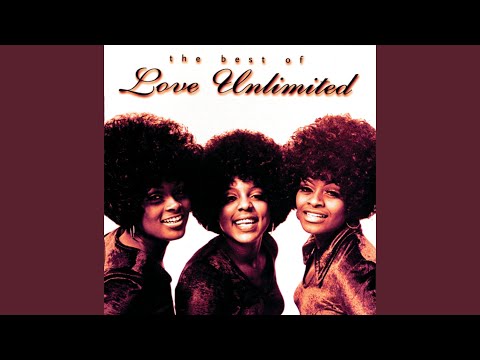
Love Unlimited consisted of three sisters from San Pedro, California: Glodean James (who would later marry Barry White), her sister Linda James, and their friend Diane Taylor. Barry White had discovered and signed the trio, and their recordings together were part of his larger effort to create a universe of interconnected artists and ensembles around his own production sensibility. Where his own recordings were built on his famously deep voice, Love Unlimited offered something more conventionally melodic, three female voices working in close harmony over lush orchestral arrangements.
Production as Emotional Architecture
The production on this track was orchestrated to match its title's promise. Barry White's arrangement employed the sweeping strings and warm orchestral textures that would become his signature across the 1970s, creating a sonic environment in which the listener was enveloped rather than merely entertained. The approach was maximalist in the best sense: every element served the central emotional proposition, which was that love constituted its own climate, capable of overriding the external world's conditions.
The vocal production placed the three voices in close dialogue, their harmonies creating a sense of shared conviction that reinforced the lyric's central metaphor. There is nothing tentative about the performance; the singers commit fully to the emotional premise, and that commitment is audible in every phrase. The song's emotional logic required that commitment. A half-hearted declaration that love could transform winter into spring would have undermined its own thesis.
Four Weeks and a Peak at Number 83
The single entered the Billboard Hot 100 on December 15, 1973, debuting at number 95. It climbed through the final weeks of the year, reaching its peak in the last chart week of December. On December 29, 1973, the track peaked at number 83 on the Hot 100. The single spent 4 weeks total on the chart, a brief but real showing during the holiday season, when radio competition was particularly intense and listeners' attention was divided among seasonal programming and year-end retrospectives.
The R&B chart was the more natural home for Love Unlimited's recordings, and the track's performance on urban radio reflected the strength of Barry White's developing production empire in that market. He had an instinctive understanding of what R&B radio programmers needed and how to deliver it, and his work with Love Unlimited benefited from that knowledge even when the pop chart response was modest.
Love Unlimited in the Barry White Universe
Understanding Love Unlimited's recordings requires understanding them as part of a larger artistic project. Barry White was not simply producing singles; he was constructing an elaborate world of romantic soul music, one that encompassed his own deep-voiced recordings, the Love Unlimited vocal group, and later the Love Unlimited Orchestra, whose instrumental single "Love's Theme" would reach number one on the Hot 100 in early 1974.
Love Unlimited occupied a specific role in that world, providing the melodic and harmonic warmth that balanced White's own more imposing presence. The group's recordings functioned as a kind of emotional counterpart to his solo work, the same production philosophy expressed through a different set of voices and a slightly different emotional register. Together, these elements created a coherent artistic world that listeners could inhabit.
A Season's Worth of Soul
The December timing of "It May Be Winter Outside" was not incidental. The song's central metaphor of internal warmth overcoming external cold aligned naturally with the holiday season's conventional emotional themes, making it a natural fit for winter radio programming. It offered something the season's explicitly religious or festive music could not: a secular warmth, a love song that used the season as context without being constrained by its iconography.
Put it on during the coldest evening you can find and let Barry White's strings do exactly what they promise.
"It May Be Winter Outside (But In My Heart It's Spring)" — Love Unlimited's singular moment on the 1970s charts.
02 Song Meaning
"It May Be Winter Outside (But In My Heart It's Spring)" — Love as Climate, Warmth as Resistance
The Seasonal Metaphor and Its Emotional Logic
The extended title of this Love Unlimited track is itself a complete emotional argument. Winter, with its associations of cold, withdrawal, dormancy, and difficulty, stands in for whatever hardships exist outside the protected space of romantic love. Spring, season of renewal and warmth and growth, describes what love creates internally regardless of external conditions. The song proposes that genuine emotional connection constitutes its own environment, one that can insulate the people inside it from whatever weather the world is producing.
This metaphorical framework is ancient in romantic poetry, but its deployment in a 1973 soul production gave it a contemporary resonance that connected with audiences navigating genuine uncertainty. The United States in late 1973 was a country experiencing significant political and economic turbulence, and a song that promised an internal refuge, a warmth that did not depend on external circumstances, offered something people genuinely needed.
Barry White's Emotional Philosophy
To understand what Love Unlimited was singing about in Barry White's productions, it helps to understand White's broader artistic philosophy. His recordings across this period were consistently preoccupied with love as a transformative, almost supernatural force, one capable of overriding circumstances and creating conditions that would not otherwise exist. That philosophy ran through both his solo recordings and his work with Love Unlimited, connecting the material thematically even as it was expressed through different sonic vehicles.
The orchestral arrangements White favored were themselves expressions of that philosophy. The sweeping strings, the warm horn voicings, the lush acoustic environments he constructed in the studio, these were not mere production decoration. They were attempts to create in sound the emotional experience the lyrics described, to make the listener feel, for the duration of the recording, what it was like to inhabit the kind of love being discussed.
Three Voices, One Conviction
Love Unlimited's performance of the seasonal metaphor worked partly because the group's tight harmonies embodied the unity the song described. Three voices moving together, supporting each other, creating something in combination that none of them could have generated alone, constituted a sonic metaphor for the love relationship at the center of the lyric. The form of the performance reinforced the content of the words in a way that solo vocal recordings of the same material could not have achieved.
The group's commitment to their delivery amplified this effect. There is no irony or detachment in the performance, no knowing wink toward the listener. The song's emotional premise is accepted completely, and that acceptance communicates to the listener a kind of permission to accept it as well, to be moved rather than merely entertained.
The Cultural Need for Warmth in 1973
Songs that offer emotional refuge tend to resonate most strongly when external conditions make that refuge feel necessary. The cultural atmosphere of late 1973 created precisely that kind of need. The disillusionment following the idealism of the late 1960s, the political scandals dominating the news cycle, the economic anxieties beginning to affect everyday life, all of these contributed to a climate in which music offering genuine warmth and emotional security found a ready audience.
Soul music in particular carried this function during the period. Its roots in gospel gave it a relationship to communal comfort and emotional sustenance that other genres could not as easily replicate. Love Unlimited's recording drew on that tradition even as it translated it into the contemporary production language of 1973.
A Seasonal Song That Transcends Its Season
Despite its winter framing, "It May Be Winter Outside" is not really a seasonal song in the conventional sense. Its emotional proposition, that love creates internal warmth independent of external conditions, applies in every season and every circumstance. That universality is what separates it from mere holiday novelty and gives it a claim on listeners in any month of the year.
"It May Be Winter Outside (But In My Heart It's Spring)" — Love Unlimited's singular moment on the 1970s charts.
→ More from Love Unlimited
View all Love Unlimited hits →

→ More from the 1970s File
View all 1970s hits →




Keep digging