The 1970s File Feature
I Wanna Be Free
Loretta Lynn Asserts Herself on I Wanna Be Free Picture the early 1970s, when country music was beginning to grapple with changing ideas about womanhood, and…
01 The Story
Loretta Lynn Asserts Herself on "I Wanna Be Free"
Picture the early 1970s, when country music was beginning to grapple with changing ideas about womanhood, and few artists pushed those conversations forward more boldly than Loretta Lynn. A coal miner's daughter who had risen to the top of country music through sheer grit and honesty, Lynn used her songs to speak plainly about the lives of working women. I Wanna Be Free carries that spirit, a declaration of independence from a singer who never shied away from telling the truth.
A Country Trailblazer at Her Peak
By 1971, Loretta Lynn had established herself as one of the most important voices in country music, a writer and performer who gave voice to the experiences of ordinary women with unusual candor. She had already become known for songs that addressed marriage, hardship, and a woman's right to stand up for herself. Lynn was a genuine pioneer for women in country music, unafraid to tackle subjects others avoided. Her authenticity and her willingness to write from her own life made her beloved by fans and respected by peers, and she was operating at the height of her powers during this period.
A Declaration of Independence
The title alone signals the song's stance, a clear expression of the desire for freedom and self-determination. In Lynn's hands, that theme carried real weight, fitting naturally alongside the other assertive, woman-centered songs that defined her catalog. The song reflects her gift for plain-spoken emotional honesty, giving voice to a longing for autonomy that resonated with many of her listeners. It was the kind of statement that helped make her a hero to women who saw their own lives in her music.
A Brief Chart Appearance
On the pop chart, the song's run was short, as was often the case for country records crossing over to the Hot 100. "I Wanna Be Free" debuted on the Billboard Hot 100 at number 94 on April 24, 1971, and held that same position the following week. It peaked at number 94, its debut spot, in that week of April 24, 1971. The single spent just two weeks on the Hot 100, a fleeting pop appearance that nonetheless marked another instance of Lynn's music reaching beyond the country audience. Her true chart strength always lay on the country side, where she was a dominant force.
The Voice of Working Women
What set Loretta Lynn apart was her unwavering commitment to writing from her own experience and speaking for women whose lives rarely made it into song. She had grown up in poverty in rural Kentucky, married young, and known hardship firsthand, and she never pretended otherwise. Her music gave dignity and voice to working-class women who saw their own struggles and dreams reflected in her songs. That authenticity made her more than a star; it made her a genuine cultural figure, a woman who sang plainly about subjects polite society often preferred to ignore. A song expressing the longing for freedom fit naturally into that mission, one more honest statement from an artist who built her career on telling the truth as she lived it. Her boldness on such themes helped expand what country music could address.
A Small Piece of a Towering Legacy
In the vast scope of Loretta Lynn's career, this song is a minor entry, yet it fits seamlessly into the larger story of an artist who spent her life singing about freedom, dignity, and the realities of women's lives. Her legacy as one of country music's most influential and outspoken figures is secure, built on a body of work this song quietly contributes to. Press play and hear that unmistakable voice; this is country honesty from one of its greatest tellers of truth.
"I Wanna Be Free" — Loretta Lynn's singular moment on the 1970s charts.
02 Song Meaning
The Cry for Freedom in "I Wanna Be Free"
The title says it all: this is a song about the longing for liberation, the deep human desire to be free from whatever holds one back. In Loretta Lynn's hands, that universal yearning takes on a particular resonance, connected to her career-long advocacy for women's autonomy and self-respect. The meaning lies in that clear, unflinching expression of the wish to live on one's own terms.
The Desire for Autonomy
The central theme is the longing for independence and self-determination. The lyrics express a wish to break free from constraints, to claim a measure of control over one's own life. The song is fundamentally about the need for freedom, a sentiment that runs through much of Lynn's most celebrated work. It speaks to anyone who has felt trapped and yearned for release.
Strength in Vulnerability
Emotionally, the song balances vulnerability with quiet strength. There is honesty in admitting the desire to be free, and courage in voicing it openly. The emotional message is brave self-assertion, the act of naming a longing that many feel but few express aloud. Lynn's plain-spoken delivery gives that assertion both tenderness and backbone.
A Voice for Women
The song fits within Loretta Lynn's broader role as a spokesperson for the experiences of ordinary women. It reflects her commitment to honest songs about women's lives, written at a moment when country music and the wider culture were reckoning with shifting roles. For her audience, hearing such longing voiced by a country star was both validating and empowering.
A Theme of Its Time
The song arrived during a period when ideas about women's roles were shifting throughout American society. The early 1970s saw growing conversations about independence and equality, and Lynn's music engaged with those currents in the plain language of country song. The longing for freedom carried particular weight in that cultural moment, resonating with women reconsidering the expectations placed upon them. Lynn never preached or theorized; she simply sang honestly about what women felt, and that directness made her songs feel like genuine reflections of real lives rather than statements about a movement. The personal and the cultural blended seamlessly in her work, which is exactly why her songs felt so true. A longing for freedom, voiced plainly by a woman who had lived hard, carried a weight that no abstract anthem could match.
Why It Resonated
The song connected because its central wish is one almost everyone shares, the desire for freedom and self-determination. Delivered by an artist known for her authenticity, that wish felt genuine and earned. Its appeal lies in that honest yearning, the way it gives voice to a longing for independence that transcends time and circumstance. In Lynn's hands, even a brief song became a small declaration of dignity.
→ More from Loretta Lynn
View all Loretta Lynn hits →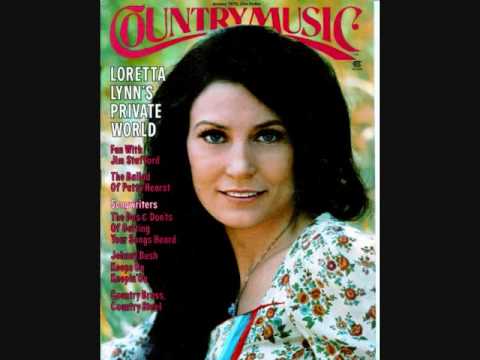
→ More from the 1970s File
View all 1970s hits →




Keep digging