The 1970s File Feature
Runaround Sue
Runaround Sue by Leif Garrett The Teen Idol Meets the Oldies Revival The late 1970s were a peculiar moment in American pop culture, a period when nostalgia f…
01 The Story
"Runaround Sue" by Leif Garrett
The Teen Idol Meets the Oldies Revival
The late 1970s were a peculiar moment in American pop culture, a period when nostalgia for the early rock and roll era was being commodified on a large scale. Grease had arrived in theaters in the summer of 1978, becoming one of the biggest films of the decade and sending its soundtrack to enormous commercial heights. American Graffiti had already mined similar territory five years earlier. Into this climate of engineered 1950s-and-1960s nostalgia stepped Leif Garrett, one of the teen idol phenomenon's most visible faces. Garrett had achieved considerable commercial success through the late 1970s with his wholesome image and covers-heavy catalog, targeting the young female demographic that teen magazines and radio stations were competing to reach.
A Cover With Deep Roots
Runaround Sue was originally recorded by Dion DiMucci, commonly known as Dion, in 1961, where it spent two weeks at number one on the Billboard Hot 100. The song's bouncy doo-wop energy and its cautionary tale of a faithless girl named Sue made it one of the defining records of its moment. Garrett's 1977 version leaned into the nostalgia factor that had made the song a recognizable title, polishing the original's rough doo-wop edges into something shinier and more contemporary in its production values while preserving the essential melodic hook that had made it a hit the first time.
A Fourteen-Week Run Into the Top 15
The single entered the Hot 100 on November 12, 1977, debuting at number 79 and beginning a steady climb through the winter months. Through December and into January it kept moving up the chart. Runaround Sue peaked at number 13 on January 21, 1978, spending fourteen weeks on the chart in total. That Top 15 placement was Garrett's strongest chart showing and confirmed that his audience was large enough and loyal enough to sustain a fourteen-week run, a significant commercial achievement for a cover record in a competitive market.
The Teen Idol Economy of the Late 1970s
To understand Garrett's chart success, you have to understand the economy that produced it. Teen idol pop in the late 1970s operated through a set of interlocking media channels: teen magazines like Tiger Beat and 16, Saturday morning television, and AM radio all fed one another. Garrett's image was as commercially important as his music, his face on magazine covers generating the kind of parasocial attachment that drove record purchases among his core demographic. The chart success of Runaround Sue reflected that machinery working at full efficiency.
The Winter Climb to Number 13
The single's chart run played out across the winter of 1977 and into the new year. It entered the Hot 100 at number 79 on November 12, 1977, then climbed quickly through the holiday season: 59, then 45, then 36, then 29 within its first five weeks, the kind of acceleration that pointed to a devoted and active fanbase rather than passive radio play. It kept rising into January, finally reaching its peak of number 13 on January 21, 1978 across a fourteen-week run. That was the strongest chart showing of Garrett's career, and the steadiness of the climb confirmed that his audience was both large and committed enough to push a cover record deep into the Top 15 during one of the most crowded stretches of the calendar.
Polishing a Doo-Wop Classic for a New Decade
The interpretive choices on the record are revealing. Dion's 1961 original had a rough, hand-clapped, street-corner energy, the sound of doo-wop in its natural habitat. Garrett's version sands those edges smooth, swapping the raw immediacy for a cleaner, brighter, more contemporary production built for late-1970s radio. The essential melodic hook survives intact, because that hook was always the song's engine, but the surrounding texture is glossier and more controlled. The result is a cover that trades authenticity for accessibility, a trade that made perfect commercial sense given the nostalgia market the record was designed to serve. It is doo-wop seen through the flattering lens of 1977, and for its intended audience that was exactly the point.
What Came After
Garrett's commercial peak was concentrated in the late 1970s, and the early 1980s brought a more complicated story as his personal life drew media attention of a different kind. Runaround Sue stands as his clearest statement of commercial pop at its most functional: a recognizable song, a likeable performer, and a production calibrated for maximum radio friendliness. It is a textbook example of the teen idol formula executed at full strength, with nothing left to chance. Press play and you will find it doing exactly what it was designed to do, delivering a three-minute dose of cheerful nostalgia without a single wasted moment.
"Runaround Sue" — Leif Garrett's singular moment on the 1970s charts.
02 Song Meaning
The Meaning Behind "Runaround Sue"
The Original and Its Warning
The song that Leif Garrett covered was itself built on a simple but durable narrative premise: a community warning about a woman who moves from man to man without settling, told by a narrator who learned this lesson at personal cost. Dion's original from 1961 gave the premise its definitive expression, and the song's cultural persistence is largely a product of how cleanly that narrative was constructed and how irresistibly the melody drove it forward. The lyric operates as a kind of folk cautionary tale, the sort of moral instruction dressed in a danceable package that pop music has always delivered with great efficiency.
Gender and Its Complications
Viewed from any distance, the narrative framing of Runaround Sue raises questions that its original creators were not necessarily interested in addressing. The song constructs a female character defined entirely by her effect on male narrators, and it warns men away from her as one might warn someone away from a natural hazard. The social values embedded in the lyric are thoroughly of their 1961 moment, reflecting assumptions about female behavior and male vulnerability that subsequent decades would examine and contest. By 1977, when Garrett covered it, those assumptions were already being questioned widely, though the song's nostalgic frame insulated it somewhat from direct critique.
Nostalgia as a Filter
Garrett's version is interesting precisely because the song arrived in 1977 already wrapped in historical distance. The original was sixteen years old, the entire doo-wop era it came from was the subject of active nostalgia. Listeners in 1977 were not engaging with the lyric as a contemporary statement but as an artifact from a stylized past, mediated through the same nostalgia machinery that had made Grease a phenomenon. The song's gender politics were simultaneously present and bracketed by the period-costume quality of the production.
The Mechanics of a Teen Idol Hit
For Garrett's core audience, the meaning of Runaround Sue was substantially shaped by its performer. A song delivered by a face that appeared on their bedroom walls carried emotional freight that had little to do with the original lyric's intent. The parasocial relationship between teen idol and fan transformed the listening experience, so that Garrett's voice carrying a cautionary tale about a faithless woman became a kind of intimate message from a desirable young man to his admirers. That transformation was a standard feature of teen idol pop, and it worked.
What Covers Reveal
A cover version is always, among other things, an interpretation: a new reading that emphasizes certain qualities of the original and mutes others. Garrett's version emphasizes the melody and the nostalgic atmosphere while the social content recedes into background. The choice of what to cover, and how, tells you something about what a performer and their audience find valuable in old music: in this case, the pleasure of a recognizable tune delivered with youthful warmth, without any particular obligation to the original's complex social framing.
→ More from Leif Garrett
View all Leif Garrett hits →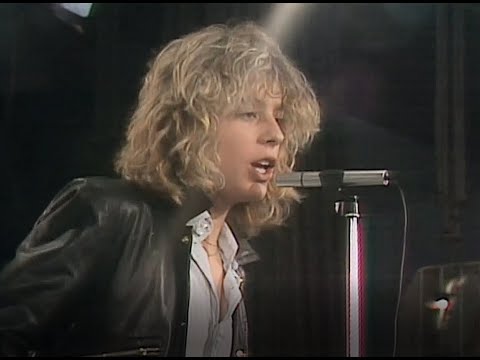




→ More from the 1970s File
View all 1970s hits →




Keep digging