The 1970s File Feature
Love Or Something Like It
Love Or Something Like It — Kenny Rogers and the Country Crossover of 1978 The Year Kenny Rogers Became Inescapable There is a particular kind of mid-summer …
01 The Story
Love Or Something Like It — Kenny Rogers and the Country Crossover of 1978
The Year Kenny Rogers Became Inescapable
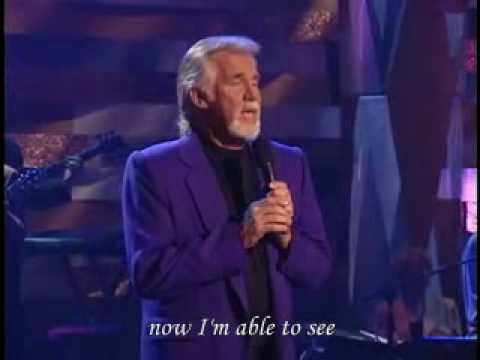
There is a particular kind of mid-summer afternoon in 1978 that belongs entirely to Kenny Rogers. The AM radio dial was thick with his voice, a low, warm baritone that communicated world-weariness without self-pity, the kind of voice that made listeners feel they were being confided in rather than performed at. Rogers had been a working musician for two decades at that point, through the New Christy Minstrels and the First Edition, building the kind of accumulated craft that makes success look easy when it finally arrives in full. By 1978, it had arrived completely.
"The Gambler" was still months away from release when "Love Or Something Like It" appeared on the charts, but Rogers was already operating from a position of considerable commercial momentum. His self-titled United Artists album had generated real traction, and the label understood they were working with an artist who had figured out how to speak simultaneously to country audiences and the broader pop market. That dual fluency was rare and valuable.
The Construction of a Hit
"Love Or Something Like It" was written by Kenny Rogers and Steve Glassmeyer, a co-writing partnership that produced one of Rogers's more musically satisfying recordings of the period. The song occupies a comfortable space between country storytelling and pop sensibility, with a production approach that keeps the instrumentation warm and accessible without stripping away the country character entirely. Rogers's performance leans into the slight ambiguity built into the title: the narrator finds himself caught up in something he cannot fully name, and that uncertainty gives the song its emotional texture.
The arrangement allows Rogers's voice to carry most of the weight. Acoustic guitar and understated production frame the vocal without competing with it, a choice that suited his strengths as a performer. Rogers had a gift for making lyrical ambivalence feel emotionally decisive, and that quality serves the song's central conceit well. The listener understands precisely what the narrator is feeling even as the narrator himself claims uncertainty.
The Chart Journey
The single debuted on the Billboard Hot 100 on June 3, 1978, entering at position 90. Its climb through the summer was methodical, moving from 90 to 85, then 75, then 65, with the steady momentum that characterized Rogers's chart runs during this period. The track reached its peak position of number 32 during the week of July 29, 1978, having spent 12 weeks on the Hot 100 in total. On the country charts, where Rogers's core audience lived, the song fared considerably better, cementing his reputation as one of country music's most commercially reliable acts.
The timing placed "Love Or Something Like It" in the middle of one of the most commercially successful stretches of Rogers's career. Between 1977 and 1979, he released a string of recordings that each found substantial audiences, building toward the blockbuster status that "The Gambler" and then "Lucille" would deliver. This song served as a bridge in that sequence, evidence that the crossover formula was working even before his biggest commercial moments arrived.
Rogers Among His Peers
The late 1970s saw country music in a complicated negotiation with the pop mainstream. The "outlaw country" movement associated with Willie Nelson and Waylon Jennings was pulling the genre in one direction, toward rawness and independence, while artists like Rogers and Glen Campbell were pursuing a smoother synthesis that could live comfortably on both country and pop radio. Rogers represented neither camp purely; his appeal cut across those distinctions in a way that made him difficult to categorize and commercially effective precisely because of it.
His vocal approach owed something to both sides of that divide: the storytelling economy of traditional country, the production polish and emotional directness of seventies pop. "Love Or Something Like It" sits comfortably in that synthesis, a song that would have worked on a drive across Texas or a shopping mall in New Jersey. That versatility was his defining commercial attribute.
A Footnote in a Remarkable Run
Measured against the peaks that followed, "Love Or Something Like It" occupies a supporting role in the Kenny Rogers catalog. Measured against almost any other artist's output from 1978, it stands as a well-crafted piece of work that did precisely what it needed to do: remind audiences why they trusted this voice. Rogers went on to sell more than 120 million records worldwide, accumulating honors that span both country and pop, and every hit in that sequence required the groundwork that songs like this one helped lay. Put it on and hear the craftsman at work, building toward something bigger without yet knowing how big it would get.
"Love Or Something Like It" — Kenny Rogers's singular moment on the 1970s charts.
02 Song Meaning
Naming the Nameless: Themes and Emotional Logic in "Love Or Something Like It"
The Usefulness of Uncertainty
Country music has always known that the most honest thing a person can say about an emotion is sometimes that they cannot quite define it. "Love Or Something Like It" builds its entire architecture on that admission. The narrator knows he is caught up in something powerful, something that has changed the quality of his days and sharpened his attention. What he cannot do is declare it with the absolute confidence that songs of romantic conquest typically require. That tentativeness is the song's most honest feature, and it explains why listeners who had been through complicated emotional terrain found it credible in a way that more declarative love songs sometimes fail to be.
The Voice as Emotional Guarantee
Kenny Rogers brings to the lyric a vocal quality that does considerable interpretive work. His baritone conveys a man who has been around long enough to know how hope can mislead, but who still finds himself leaning toward it. That combination, of experience and vulnerability, is not easy to perform convincingly. Rogers makes it feel like plain speech rather than performance, which is the particular gift his recordings carry across decades. The song asks the listener to trust that the narrator's uncertainty is genuine rather than coy, and the delivery makes that request easy to honor.
Country Storytelling and the Ordinary Emotional Life
The song participates in a long tradition of country music's attention to ordinary emotional experience. Where pop music of the era tended toward either ecstatic declarations or melodramatic suffering, country of this period carved out space for the in-between states, the slow burn, the growing awareness, the feelings that arrive before they have names. The cultural context of 1978 amplified the appeal of this kind of emotional honesty. American popular culture was processing considerable turbulence from the previous decade, and music that offered warmth and recognizable human confusion found receptive audiences.
Rogers occupied a specific cultural position in this landscape. He was not a young man's musician in the way that rock of the era was understood, but neither was he aligned with the nostalgia market. His audience was broadly the adult working population that had moved through the sixties and found itself in middle age wanting music that acknowledged complexity without wallowing in it.
The Legacy of the Lovable Uncertain Narrator
The narrator figure that "Love Or Something Like It" presents, the man who feels something strongly but hesitates to make grand pronouncements about it, recurs throughout Rogers's catalog. It appears in different registers in "The Gambler," where the philosophical framing serves a similar function of earned uncertainty, and in the romantic work that followed through the early eighties. Rogers understood that audiences trusted this persona because it matched their own experience of how emotions actually develop, gradually and without the precision that songwriting convention often imposes on them.
That consistency of character across his recordings is part of what gives this song its place in the larger arc of his career. It is not his most celebrated work, but it expresses something essential about why his voice worked: it suggested that the man singing actually understood what he was singing about, from the inside, as someone who had lived there. In a genre built on performed authenticity, that quality was the real currency.
→ More from Kenny Rogers
View all Kenny Rogers hits →
→ More from the 1970s File
View all 1970s hits →




Keep digging