The 1970s File Feature
Daytime Friends
The Lonesome Storytelling of Daytime Friends by Kenny Rogers It's the late 1970s, and country music is in the middle of a quiet revolution, crossing over int…
01 The Story
The Lonesome Storytelling of "Daytime Friends" by Kenny Rogers
It's the late 1970s, and country music is in the middle of a quiet revolution, crossing over into pop radio and selling records by the truckload. At the center of that crossover stands a silver-bearded singer with a warm, weathered voice and an instinct for songs that play like short stories. Kenny Rogers had just emerged as a solo force, and he was building a string of narrative singles about ordinary people caught in extraordinary emotional binds. This was one of them, a tale of loneliness and fragile arrangements told with his trademark plainspoken empathy.
A Late Bloomer Hits His Stride
By 1977, Kenny Rogers was no overnight sensation. He had spent years in groups, most notably the First Edition, before stepping out on his own. Earlier that year he had broken through massively with the storytelling smash Lucille, and he was riding that momentum hard. He had found his lane: country songs with cinematic plots, sung in a voice that sounded like a sympathetic friend rather than a judge. This single arrived as a follow-up, continuing his run of character-driven hits.
A Story Set to a Gentle Groove
The song unfolds like a piece of short fiction, sketching lonely people who find temporary comfort in one another's company. The production is smooth and radio-friendly, the kind of polished countrypolitan sound that helped Rogers cross from country stations onto pop playlists. His delivery is the centerpiece, conversational and unhurried, drawing you into the narrative as though he were recounting something he had seen happen to people he knew. There is no melodrama, only a clear-eyed sympathy for human frailty.
A Solid Climb Up the Hot 100
On the pop chart, the single performed respectably for a country crossover. It debuted on the Billboard Hot 100 on August 6, 1977, at number 82, then climbed briskly, reaching number 69, number 58, and number 47 over the following weeks. It continued upward and ultimately peaked at number 28 on October 1, 1977, spending a healthy twelve weeks on the chart. On the country chart it fared even better, the kind of dual success that defined Rogers's late-1970s dominance and confirmed he was one of the era's most bankable storytellers.
The Art of the Country Story Song
What set Rogers apart in this era was his mastery of the narrative single, a tradition deep in country music's roots. Country had always prized storytelling, the three-minute tale of heartbreak, hard luck, or hard choices, and Rogers became one of its finest modern practitioners. He did not simply sing about emotions; he built characters and situations, drawing listeners into small dramas that felt drawn from real life. This single exemplifies that gift. It does not preach or moralize; it observes, sketching a scenario and trusting the audience to feel the weight of it. That novelistic instinct, paired with his warm and approachable voice, made his records feel like short films you could carry around in your head. It also broadened his appeal, since a well-told story crosses genre lines as easily as it crosses generations.
A Chapter in a Legendary Run
This single sits in the early stretch of a remarkable hot streak that would soon produce some of the biggest crossover hits in country history. Rogers would go on to become one of the best-selling artists of all time, a fixture on pop and country radio alike, and a gifted interpreter of songs about love, regret, and the choices people make under pressure. He had a rare ability to make sad stories feel comforting, to wrap difficult subjects in a voice so reassuring that listeners leaned in rather than turning away. This track is a fine example of the formula at work, a small human drama delivered with craft and heart, the kind of record that helped make him one of the defining entertainers of his time.
Put it on and let Rogers tell you the story: a quiet tale of comfort, loneliness, and the deals people make to get through the night.
"Daytime Friends" — Kenny Rogers's singular moment on the 1970s charts.
02 Song Meaning
What "Daytime Friends" by Kenny Rogers Really Means
This is a song about loneliness and the quiet compromises people make to ease it. It tells of two lonely souls who find comfort in each other, and the complicated, unspoken arrangement they build to survive their isolation. Beneath the smooth melody lies a surprisingly frank look at human weakness and need.
The Ache of Loneliness
At the heart of the lyric is a deep, unspoken loneliness. The characters are not villains; they are people whose lives have left them isolated and aching for connection. Rogers frames their behavior with sympathy rather than condemnation, inviting you to understand the emptiness that drives them toward one another. The song treats loneliness as a powerful and often unmanageable force.
Comfort With a Catch
The relationship it describes is built on a fragile, temporary comfort. The arrangement these characters reach is convenient and quietly sad, a way to feel less alone without truly solving anything. Rogers captures the bittersweet nature of such bargains, the small relief they offer and the larger longing they never satisfy. It is a portrait of people settling for nearness when what they want is belonging.
Sympathy Over Judgment
What makes the song distinctive is its refusal to moralize. Rogers does not lecture or condemn; he simply observes, letting the listener sit with the complexity. This nonjudgmental stance was a hallmark of his storytelling, treating flawed people with dignity. The era's country audience responded to that honesty, to songs that acknowledged real life rather than tidy fairy tales.
The Quiet Cost of Compromise
Beneath the comfort lies a current of melancholy and unspoken cost. The arrangement these characters reach may ease their loneliness, but it cannot fully satisfy them, and the song quietly acknowledges that. There is a sadness in settling, in accepting a partial solution to a deep need. Rogers lets that bittersweet truth sit in the song without underlining it, trusting listeners to feel the gap between what the characters have and what they truly want. That honesty about compromise, about the imperfect bargains people strike to survive, gives the song an emotional depth that lifts it above simple melodrama.
Why It Resonated
The song connected because it spoke to a universal fear of being alone and the messy ways people try to outrun it. Listeners recognized the characters, perhaps even themselves, in the song's gentle account of imperfect comfort. Rogers's warm delivery made the subject feel safe to consider, a story to be understood rather than a sin to be punished. That nonjudgmental compassion was rare and valuable, treating ordinary human weakness with dignity rather than scorn. That compassion is why the song still resonates, a reminder that loneliness drives ordinary people to extraordinary tenderness, and that understanding is often kinder and truer than judgment.
→ More from Kenny Rogers
View all Kenny Rogers hits →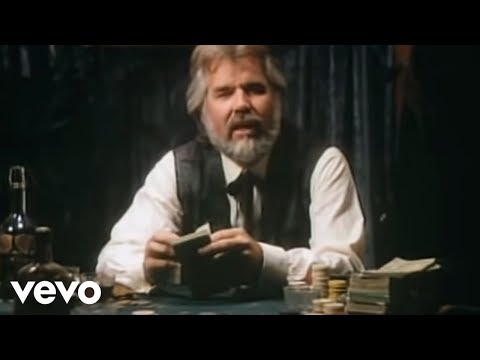




→ More from the 1970s File
View all 1970s hits →




Keep digging