The 1970s File Feature
We're Getting Careless With Our Love
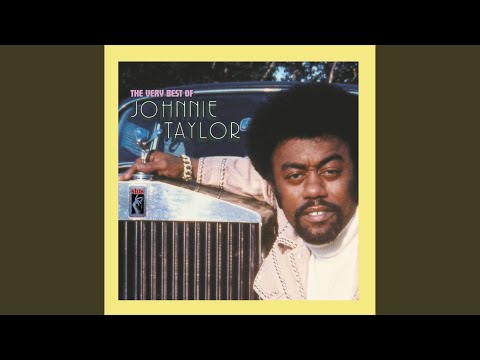
"We're Getting Careless With Our Love" — Johnnie Taylor's Soul Statement of 1974 The Philosopher of Soul Johnnie Taylor earned his nickname "The Philosopher …
01 The Story
"We're Getting Careless With Our Love" — Johnnie Taylor's Soul Statement of 1974
The Philosopher of Soul
Johnnie Taylor earned his nickname "The Philosopher of Soul" honestly. Where many R&B singers of the 1960s and 1970s were content to deliver the emotional content of their material with craft and conviction, Taylor consistently brought an analytical quality to his performances, a sense that the narrator of his songs was actually thinking through the situation rather than simply experiencing it. By early 1974, when "We're Getting Careless With Our Love" was climbing the Hot 100, Taylor had established himself as one of the most consistent and commercially reliable soul vocalists working on the Stax Records roster.
The early months of 1974 were a complicated moment for soul music broadly. Stax Records, the Memphis label that had defined a grittier, more spontaneous approach to soul than the Detroit sound coming from Motown, was in financial and legal difficulty that would ultimately result in its closure. Taylor was one of the label's flagship artists, and his consistent ability to generate chart results had been a significant asset through the years of the label's greatest success.
The Song and Its Construction
"We're Getting Careless With Our Love" addresses a specific and psychologically nuanced situation in relationship dynamics: the moment when two people who love each other have become complacent, taking for granted what was once carefully tended. The song treats romantic complacency as a kind of slow erosion, the gradual accumulation of small neglects that can undermine even genuinely strong relationships. This was sophisticated subject matter for a soul single, moving beyond the immediate drama of heartbreak toward the more insidious problem of inattention.
Taylor's vocal performance, as usual, brought the analytical quality that characterized his best work. He did not perform anguish on this track so much as concerned observation, the voice of someone who has noticed what is happening and is naming it clearly enough that both parties in the relationship can understand and respond. The production, consistent with the Stax approach to Taylor's material, provided a solid rhythmic and orchestral foundation without overwhelming the vocal intelligence that was always the song's primary asset.
The Chart Run Through Early 1974
The single debuted on the Billboard Hot 100 on January 26, 1974, entering at number 98. Its climb through the winter and early spring weeks was steady and significant, moving through 82, 72, 66, and 54 in successive weeks before continuing to climb toward its peak. The song reached its peak position of number 34 on March 23, 1974, a strong commercial result that reflected both Taylor's established audience and the song's genuine resonance. The ten-week chart run demonstrated the kind of sustained engagement that radio hits needed to achieve meaningful airplay saturation across different markets.
A peak of 34 on the Hot 100 was a meaningful showing for a soul record in early 1974, a period when the chart was being contested by rock, pop, country crossover, and various soul and funk acts. Taylor's ability to reach the mid-chart pop range while maintaining his core R&B audience was characteristic of his commercial positioning throughout this period.
Taylor's Place in the Stax Constellation
Johnnie Taylor had joined Stax Records in 1966, following in the footsteps of Sam Cooke, whose Soul Stirrers gospel group Taylor had also participated in during an earlier phase of his career. At Stax, Taylor worked with some of the most accomplished musicians in American soul, and the label's in-house creative environment had shaped his recording approach throughout the late 1960s and early 1970s. Songs like "Who's Making Love" in 1968 had demonstrated his capacity for commercial breakthrough, and his subsequent catalogue had maintained that quality through consistent and careful artistic execution.
By 1974, the Stax situation was deteriorating, and artists who had built their commercial identity on the label's particular sound and resources were facing uncertainty about their futures. Taylor would eventually move on to Columbia Records, where he would achieve perhaps his largest single commercial success with "Disco Lady" in 1976. "We're Getting Careless With Our Love" comes from the final productive years of his most artistically natural home.
Legacy and the Stax Sound
The Stax catalogue is now recognized as one of the foundational bodies of American popular music, and Taylor's contributions to it represent some of the most consistent and accomplished work in the label's output. Songs like "We're Getting Careless With Our Love" demonstrate the label's ability to translate genuine emotional intelligence into commercial soul without sacrificing the raw authenticity that made the sound distinctive.
Press play on this track and you hear a master of the form working at full capacity, bringing thought and feeling to a song that rewards both in equal measure.
"We're Getting Careless With Our Love" — Johnnie Taylor's singular moment on the 1970s charts.
02 Song Meaning
"We're Getting Careless With Our Love" — The Slow Erosion of What We Take for Granted
Complacency as the Theme
Most songs about relationships in trouble arrive at the moment of crisis: the argument, the betrayal, the final confrontation. What makes "We're Getting Careless With Our Love" interesting as a piece of lyrical analysis is that it arrives earlier in the timeline, at the pre-crisis stage when the damage is being done quietly and incrementally, before either party has been forced to acknowledge what is happening. The song's emotional intelligence is in its timing: it catches the relationship at the moment when intervention is still possible but not yet inevitable.
The Psychology of Inattention
Johnnie Taylor's vocal persona throughout his Stax years was that of a man who thought carefully about the emotional situations he found himself in. The narrator of "We're Getting Careless With Our Love" observes with analytical precision what is happening to the relationship: the small courtesies that have been dropped, the attention that has been redirected, the assumption that affection will maintain itself without maintenance. This is a psychologically accurate portrait of how long-term relationships often erode, not through dramatic betrayal but through the gradual withdrawal of the active care that sustained them in their early stages.
The song's title frames the problem in a word that carries a specific moral weight: careless. To be careless is not to be cruel, not to be deliberately harmful, but to fail in the responsibility of attention. The word suggests that something valuable is being handled without adequate care, and the lyric develops this idea into a full account of what that carelessness looks like in practice.
Soul Music and Relationship Analysis
The tradition of soul music that Taylor embodied had developed an extraordinary capacity for examining the internal states of relationships. Where earlier pop forms had tended toward simpler emotional declarations, the soul tradition of the 1960s and early 1970s found ways to articulate complex and ambivalent emotional positions, the person who loves and is frustrated, who stays and wonders whether staying is wise, who sees clearly and feels deeply at the same time. This combination of emotional intelligence and musical passion was what distinguished the best soul recordings from more conventionally crafted pop, and Taylor was one of its most consistent practitioners.
The genre's relationship to its gospel roots also informed how it handled themes of attention and neglect. Gospel music had long used the language of spiritual carelessness, the believer who drifts from right practice, to address fundamental human tendencies toward complacency. Soul music translated this framework into secular relationship terms, and the underlying logic is the same: things of value require active and sustained attention, and the failure to provide that attention has consequences.
The Cultural Context of 1974
American social life in early 1974 was under considerable strain, with Watergate occupying the political center of gravity and an oil crisis creating economic anxiety that touched daily life in direct and practical ways. In this environment, songs that addressed the maintenance of personal relationships through careful attention carried a kind of countercultural weight, suggesting that the private sphere offered possibilities for integrity and care that the public sphere seemed to be failing to provide.
This reading may be more than the song was consciously attempting, but cultural texts acquire meaning from their contexts as well as their contents, and the popularity of a song about the importance of attention and care in 1974 is at least worth noting.
Why the Message Remains Relevant
The core observation of "We're Getting Careless With Our Love" addresses a permanent feature of human relationships rather than a historically specific situation. Every generation discovers, usually through experience, that relationships require active tending and that the assumption of permanence is itself a form of carelessness. The song speaks to this discovery with unusual clarity and without the drama of crisis, which is perhaps why it retains the capacity to resonate for listeners encountering it long after its chart moment has passed. Good analysis ages better than melodrama, and this song is fundamentally analytical about its subject.
→ More from Johnnie Taylor
View all Johnnie Taylor hits →


→ More from the 1970s File
View all 1970s hits →




Keep digging