The 1970s File Feature
Let Her In
John Travolta's "Let Her In" and His Pop Music Career Before Saturday Night Fever In the summer of 1976, John Travolta became a genuine pop music phenomenon …
01 The Story
John Travolta's "Let Her In" and His Pop Music Career Before Saturday Night Fever
In the summer of 1976, John Travolta became a genuine pop music phenomenon with "Let Her In," a record that reached number 10 on the Billboard Hot 100 and spent twenty weeks on the chart, representing one of the more remarkable actor-to-pop-star crossover achievements of the decade. The success of the single predated by more than a year the twin film triumphs of "Saturday Night Fever" and "Grease" that would transform him into a global superstar, making "Let Her In" a significant artifact of the pre-fame phase of his entertainment career.
Travolta was born in Englewood, New Jersey, in 1954, the youngest of six children in an acting-oriented family. He left school at fifteen to pursue a performance career, moving to New York and then to Los Angeles, where he accumulated small television and theatrical roles before landing the part that would first bring him to broad public attention. His role as the lovably dim Vinnie Barbarino on the ABC sitcom "Welcome Back, Kotter," which premiered in September 1975, made him a teen idol almost immediately. The show attracted a young audience that responded intensely to Travolta's combination of physical charisma, comic timing, and a quality of vulnerable charm that distinguished him from more conventionally rugged male leads.
The teen idol market of the mid-1970s had a well-established precedent of pop music crossovers, from the earlier David Cassidy and Donny Osmond phenomenon to the concurrent success of Shaun Cassidy. Record companies understood that young audiences for television programs featuring attractive young male leads were natural purchasers of records by those leads, regardless of whether the actors had substantial musical training. Midland International Records, the label that signed Travolta, operated within this commercial logic and produced material designed to capitalize on his television visibility rather than to establish him as a serious musical"Let Her In" was written by Gary Benson and served as Travolta's debut single. The song was a gentle, melodically accessible piece of mid-seventies soft pop with production values typical of the era: acoustic guitar prominence, a soft rhythm section, and an orchestral backing that gave the record a romantic warmth suited to radio play on stations serving the teen and young adult demographics. Travolta's singing voice was pleasant rather than exceptional, occupying the range between modest natural ability and professional production support that characterized the best teen idol recordings of the era.dings of the era.
The single entered the Billboard Hot 100 on May 1, 1976, debuting at number 98. Its ascent was steady and eventually substantial, moving from 96 to 94 to 73 to 62 over its first five weeks as radio support built and the "Welcome Back, Kotter" audience found the record through their existing affection for its performer. The peak of number 10, reached during the week of July 24, 1976, was an exceptional performance for a first single by an actor with no prior music industry track record. The twenty-week chart run reflected genuine audience enthusiasm rather than simply initial novelty impact.
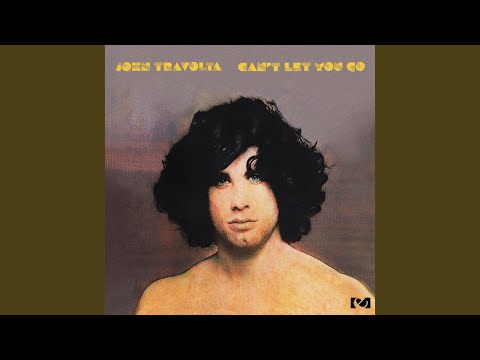
The success of "Let Her In" prompted further recording activity, and Travolta released additional singles and an album for Midland International Records during 1976 and 1977. None of these subsequent recordings matched the chart performance of the debut, but they sustained his presence in the pop music market during the period when his film career was ascending toward the stratosphere. "Whenever I'm Away from You," "Let Her In's" follow-up, reached number 38, and additional material was released with diminishing commercial returns.
The context of "Let Her In's" success would be dramatically reframed by what followed. When the "Saturday Night Fever" soundtrack was released in November 1977, it became one of the bestselling albums in history, and the Bee Gees dominated the associated music. When "Grease" followed in 1978, Travolta's musical contributions to that soundtrack, including "Summer Nights" and "You're the One That I Want," both recorded with Olivia Newton-John, became genuine pop hits in their own right. Against these later achievements, the more modest pop career that "Let Her In" represented appears as an interesting prologue, evidence that the entertainment industry had recognized Travolta's crossover potential before the films that fully realized it had been made.
For chart historians and collectors of mid-seventies pop, "Let Her In" remains a fascinating document of the teen idol mechanism at work in a pre-disco moment, a record that succeeded on the strength of its performer's television visibility and personal magnetism while also demonstrating that Travolta could hold his own in a commercial pop context that had high expectations for melodic accessibility.
02 Song Meaning
The Appeal and Meaning of John Travolta's "Let Her In"
"Let Her In" is a song about romantic openness, specifically about the decision to allow oneself to become emotionally vulnerable by welcoming another person fully into one's life. The instruction embedded in the title is directed either at the narrator himself, as a kind of internal encouragement to drop his defenses, or at an implied social circle being asked to accept the beloved. Either interpretation suits the emotional territory the song explores. John Travolta delivers the material with the earnest charm that made him a teen idol, and the sincerity of his delivery is central to the song's appeal.
The thematic content of romantic openness and the fear of emotional vulnerability was particularly resonant with the teenage audience that formed the primary market for Travolta's recordings in 1976. Adolescence is precisely the period when the question of how much of oneself to expose to another person feels most urgent and most fraught, and a song that frames this question in gentle, melodically accessible terms offered young listeners a vocabulary for feelings they were actively navigating. This kind of emotional mirroring between popular song and audience experience was the fundamental mechanism of the teen pop market.
The production of the record reinforced its emotional accessibility. The soft arrangement, featuring acoustic guitar prominently and keeping the rhythm section restrained, created an intimate sonic environment that suited the personal quality of the lyrical content. Lavish production would have created distance between the song and the listener; the relatively simple treatment brought the narrator's voice into the foreground and allowed the emotional content to communicate directly. Gary Benson's songwriting understood this dynamic and constructed a song that rewarded exactly this kind of production approach.
There is also a dimension of cultural meaning specific to 1976 that enriches the song's context. The mid-1970s, positioned between the communal idealism of the late 1960s and the more individualistic ethos of the 1980s, was a period in which American popular culture was negotiating questions about emotional expressiveness in new ways. Men in popular music were being given somewhat more permission than previous generations to express tender and vulnerable feelings, and a song like "Let Her In" participated in this gradual cultural shift, presenting a male narrator who was actively choosing openness over self-protection.
Travolta's specific appeal as a performer added another layer of meaning to the song's reception. His character Vinnie Barbarino was a swaggering tough kid, and the contrast between that persona and the gentle emotional vulnerability of "Let Her In" was part of what made the record interesting to his existing audience. Fans who knew him as Barbarino were being shown a different, softer side of their idol, and that contrast itself was meaningful, suggesting that the capacity for tender feeling was not incompatible with the kind of masculine confidence his television role embodied.
The song ultimately communicates that choosing emotional openness is an act of courage rather than weakness, that letting someone in is a decision with genuine stakes that requires genuine resolve. Travolta communicates this sentiment with the natural ease that would serve him across a career defined by his ability to make audiences feel that they are witnessing genuine rather than performed emotion, a quality that was already fully visible in this early pop recording.
→ More from John Travolta
View all John Travolta hits →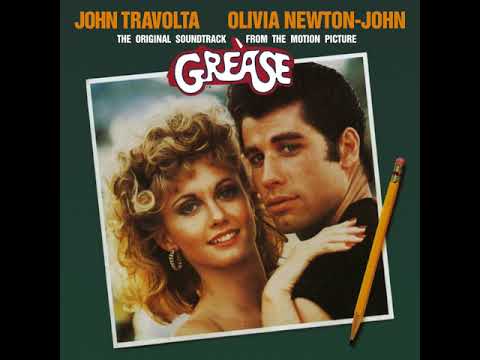
→ More from the 1970s File
View all 1970s hits →




Keep digging