The 1970s File Feature
Turn To Stone
Turn to Stone — Joe Walsh: Recording, Release, and Chart History Note: This entry concerns "Turn to Stone" by Joe Walsh, released in 1974 on ABC/Dunhill Reco…
01 The Story
Turn to Stone — Joe Walsh: Recording, Release, and Chart History
Note: This entry concerns "Turn to Stone" by Joe Walsh, released in 1974 on ABC/Dunhill Records as part of his solo career. It is an entirely separate song from the Electric Light Orchestra track of the same name, which was recorded several years later by Jeff Lynne's band. The two songs share nothing beyond their title.
Joe Walsh had established himself as one of American rock's most technically accomplished and creatively distinctive guitarists through his work with the James Gang and his early solo recordings before he became most widely known as a member of the Eagles. His solo career on ABC/Dunhill Records in the early to mid-1970s produced a body of work that demonstrated his range as a songwriter, arranger, and performer, and "Turn to Stone" stands among the more interesting artifacts of that period.
Walsh's approach to rock songwriting during this period was characterized by a willingness to blend the hard-edged guitar work that had defined his James Gang period with more expansive arrangements and melodic ambitions. He was also developing a lyrical voice that could be simultaneously sardonic and vulnerable, qualities that would become more pronounced in his later career but were already present in the early solo work. "Turn to Stone" reflects these qualities, combining guitar-driven energy with a melodic structure that invited the kind of radio play Walsh was beginning to achieve.
The record was produced with the kind of attention to sonic detail that Walsh consistently brought to his studio work, even in periods when his public persona was being constructed around a more casual, self-deprecating image. ABC/Dunhill had by 1974 become an important home for rock artists working outside the major-label mainstream, and the label's infrastructure provided Walsh with the distribution and promotional support necessary to reach a national audience for his solo material.
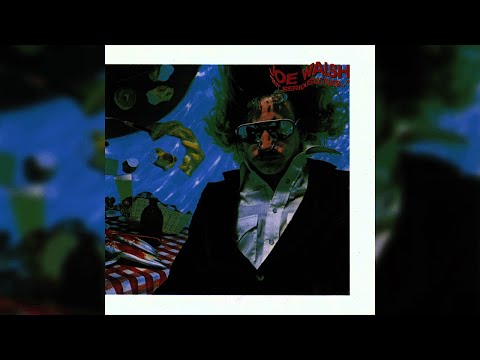
The track appeared on Walsh's album "So What," released in 1974, which also contained the song "Rocky Mountain Way," one of the most commercially successful recordings of Walsh's pre-Eagles career. The album demonstrated Walsh's ability to sustain musical quality across a full-length format, moving between hard rock, country-influenced passages, and more melodic pop-rock without losing a coherent artistic identity. "Turn to Stone" within this context represented the more melodically accessible end of Walsh's creative range.
Walsh joined the Eagles in 1975, replacing Bernie Leadon and contributing immediately to the sonic character of the Hotel California album. His arrival in the Eagles transformed the band's guitar sound and also raised his commercial profile significantly, ensuring that his earlier solo work would reach listeners who discovered it retrospectively through their interest in his Eagles contributions. This retrospective audience has given recordings like "Turn to Stone" a larger cumulative listenership than their original chart performance might suggest.
The rock radio environment of the mid-1970s was one in which album-oriented rock formats were rapidly consolidating their influence over FM broadcasting, and Walsh's solo recordings fit naturally within the aesthetic preferences of this new format. AOR radio's emphasis on guitar-centered rock with melodic sophistication and production values above the AM norm created an ideal context for Walsh's work, which consistently combined technical accomplishment with commercial accessibility.
Walsh's solo recordings from this period have been periodically reassessed by rock critics as evidence of a creative period that tends to be overshadowed by his subsequent Eagles work and his later career as a comic public persona. "Turn to Stone" and its album context deserve attention as documents of a moment when one of American rock's most gifted instrumentalists was also developing into a songwriter of genuine quality, working with a creative ambition that the larger commercial machinery of the Eagles would subsequently channel in directions both rewarding and constraining.
02 Song Meaning
Turn to Stone — Themes, Feeling, and Musical Meaning
"Turn to Stone," the Joe Walsh recording on ABC/Dunhill, engages with a theme that recurred throughout the blues and rock tradition: the emotional hardening that results from sustained disappointment, the gradual conversion of feeling into a kind of protective numbness. The image of turning to stone is a metamorphic one, borrowed ultimately from classical mythology but thoroughly domesticated by the time Walsh employs it, suggesting not literal petrification but the psychological experience of becoming progressively less responsive to emotional input as a defense against continued pain.
Walsh's approach to this material was characteristically direct without being unguarded. His songwriting during this period tended toward emotional honesty expressed through rock idioms that provided a degree of aesthetic distance: the guitar could say what the words only gestured toward, the riff could carry the weight of feeling that more confessional lyric writing might have struggled to bear without tipping into self-pity. The rock song in the early 1970s tradition offered its practitioners this specific combination of emotional access and formal distance, and Walsh used it with skill.
The guitar work throughout the track functions as commentary on the lyrical situation rather than merely as accompaniment. Walsh's playing during this period had a quality of controlled expressiveness, the sense that enormous technical capability was being deployed with restraint, which meant that moments of greater intensity registered with particular force. The guitar was the instrument through which Walsh most fully articulated what the words pointed toward but did not entirely capture.
The hardening of feeling described in the song is also a condition that rock music of the early 1970s understood from the inside, as a generation of musicians navigated the aftermath of the 1960s cultural moment with its collapsed utopian ambitions and the increasingly commercial pressures of the music industry. The personal experience Walsh described had a generational dimension that his audience could recognize, even if they did not translate it in precisely those terms while listening.
Walsh's humor, which became increasingly central to his public persona through the later 1970s, is largely absent from this recording, which operates in a more earnest emotional register. This earnestness is itself meaningful: it establishes that the hardening the song describes is something Walsh takes seriously as a human condition, not merely a lyrical conceit. The absence of ironic distance makes the emotional claim more rather than less convincing, which is a counterintuitive quality in a performer who would later build an entire public identity around self-deprecation.
In the context of Walsh's catalog, "Turn to Stone" represents a period of genuine emotional and artistic exploration that deserves more attention than it typically receives in retrospective accounts that jump directly from the James Gang to the Eagles. The song demonstrates that Walsh's musical intelligence was matched by emotional intelligence, and that the combination produced recordings of lasting interest even outside the commercial frameworks that would later define his largest audience.
→ More from Joe Walsh
View all Joe Walsh hits →



→ More from the 1970s File
View all 1970s hits →




Keep digging