The 1970s File Feature
Get Down, Get Down (Get On The Floor)
"Get Down, Get Down (Get On The Floor)" — Joe Simon's Summer of 1975 The Dance Floor Imperative of Mid-1970s Soul Something was happening to American popular…
01 The Story
"Get Down, Get Down (Get On The Floor)" — Joe Simon's Summer of 1975
The Dance Floor Imperative of Mid-1970s Soul
Something was happening to American popular music in the spring of 1975 that had been building for several years: the dance floor was becoming the primary battlefield. Disco was not yet at its peak, but the cultural hunger for music that moved bodies and elevated spirits on crowded floors was already enormous, and artists who understood how to serve that hunger were positioning themselves for remarkable commercial success. Joe Simon understood this as well as almost anyone.
Simon had been a significant presence in soul music since the mid-1960s, a Mississippi-born singer who had built his career through a series of recordings for Sound Stage 7 and then Spring Records that demonstrated his ability to navigate between deep soul, gospel-influenced balladry, and the kind of uptempo material that served dance floors. By 1975 he had years of experience reading what audiences wanted and delivering it with genuine soul conviction.
The Record and Its Production
"Get Down, Get Down (Get On The Floor)" was released on Spring Records, the label that had been Simon's home through his most commercially productive years. The track was built on a premise as simple and direct as its title: an extended groove with an irresistible rhythmic pulse and a vocal that functioned simultaneously as lead performance and crowd instruction. The song did not suggest dancing; it demanded it, using the direct-address mode of a great bandleader or preacher to create a call-and-response dynamic between the recording and anyone listening to it.
The arrangement deployed the trappings of the era's funk and soul vocabulary, a driving bass line, percussive guitar work, horn accents that punctuated the groove without overwhelming it, and Simon's voice riding the rhythm with the easy authority of a performer who had been working dance-floor audiences for more than a decade. The production was designed for maximum physical effect, for the experience of a body that cannot remain still in the presence of a beat this insistent.
A Chart Journey of Remarkable Patience
The Billboard Hot 100 chart story for "Get Down, Get Down" was one of the most patient and rewarding of 1975. The single entered the chart on April 5, 1975, at position 95, as deep in the rankings as a record can sit while still registering. What followed was a seventeen-week journey upward that reflected the song's genuine commercial depth and its ability to build audience week by week through radio play, club performance, and word of mouth.
The climb was steady and impressive: 89, 76, 66, 49, building toward the peak that finally arrived. On June 21, 1975, the record reached number 8 on the Hot 100, placing it within striking distance of the top five and establishing it as one of the summer's most successful singles. Seventeen weeks on the chart from a debut at 95 to a peak at 8 represents a remarkable climb, the kind of sustained commercial performance that reflects genuine audience enthusiasm rather than a temporary promotional spike.
The R&B Chart Context
As with virtually all of Simon's recordings, the Hot 100 performance was only part of the story. On the R&B charts, where his core audience was concentrated, "Get Down, Get Down" reached number 1, adding to a string of R&B chart successes that had made him one of the format's most reliable performers. The combination of a top-ten pop showing and an R&B chart-topper represented the kind of crossover success that most soul artists were actively pursuing in 1975, as the demographic walls between radio formats were becoming slightly more permeable.
The song's success arrived precisely as the infrastructure for what would become the disco era was being assembled. Club DJs were developing their craft, dedicated dance venues were proliferating in major cities, and the audience for music that served the dance floor was expanding rapidly. Simon's record landed in that expanding market at exactly the right moment.
Simon's Place in Soul History
Joe Simon's legacy sometimes gets overshadowed by the artists with larger pop profiles, those whose crossover success made them fixtures of mainstream American consciousness. But within the world of Southern soul and R&B, his catalog represents some of the most consistently satisfying recordings of his era. "Get Down, Get Down" belongs at the top of that catalog: a record that achieved everything it set out to achieve, that connected with audiences across racial and geographic boundaries, and that remains irresistibly listenable decades after the charts that once measured its success have long since been filed away.
This record commands exactly one response. Play it and feel the floor beneath your feet wanting to become a dance floor.
"Get Down, Get Down (Get On The Floor)" — Joe Simon's singular moment on the 1970s charts.
02 Song Meaning
The Meaning Behind Joe Simon's "Get Down, Get Down (Get On The Floor)"
The Command as Community
There is a tradition in Black American performance that runs from the church to the juke joint to the concert stage: the performer as leader, issuing calls that the community answers. The preacher says come forward and people come forward. The bandleader says get up and people get up. "Get Down, Get Down (Get On The Floor)" operates squarely in that tradition, using the language of command not to exercise authority over its listeners but to create a shared experience, a collective act of movement and release that requires everyone's participation to fully exist.
The repeated imperative in the title is not an assertion of power over the audience but an invitation extended in the most direct possible language. Get down. Get down. Get on the floor. The repetition is both musical device and performative insistence, the vocal equivalent of reaching out a hand and refusing to let go until you have someone dancing.
Dance as Spiritual Practice
The mid-1970s soul tradition from which this record emerged understood dance as something more than entertainment. The connection between the ecstatic physical release of dancing and the spiritual practices of the African-American church was explicit and acknowledged, a thread running through James Brown's most feverish performances, through the best of the Memphis and Philadelphia soul traditions, and into the emerging disco world that would inherit these energies and amplify them through an entirely new infrastructure of clubs and DJ culture.
Joe Simon's delivery carried this spiritual dimension without making it heavy or didactic. The record's joy was its argument. If the experience of hearing it and moving to it felt like something good, felt like release and connection and pleasure, then the philosophical case for the value of dancing on a floor with other people made itself through sensation rather than through words.
The Social Function of the Dance Record
Understanding what "Get Down, Get Down" meant to its original audience requires understanding what the dance floor meant in the mid-1970s. For many Black Americans, the shared space of a club or a party where the right music was playing represented one of the most unambiguously positive collective experiences available in a society that often made such positivity difficult to access. The dance floor was a space of autonomy, of self-expression, of community that did not require negotiating with hostile institutions or performing respectability for white audiences. A song that commanded you to get on that floor was, in the fullest sense, a liberatory invitation.
This context deepened the meaning of even the most apparently simple dance records of the era, giving them a weight and significance that their surface simplicity did not fully reveal.
Why It Climbed for Seventeen Weeks
The extraordinary seventeen-week chart run of this single reflects something specific about how great dance records build their audiences. The record did not depend on novelty or surprise; it depended on the quality of the experience it delivered on every play. A groove this reliable and this joyful does not wear out; it accumulates listeners over time as the word spreads from dance floor to dance floor, from radio listener to radio listener, that this is the song you need to hear this summer.
Seventeen weeks of climbing from 95 to 8 is a testament to that quality: music that earns its audience through sheer excellence of execution, through the undeniable physical fact of what it does to a body when the volume is right and the floor is waiting.
→ More from Joe Simon
View all Joe Simon hits →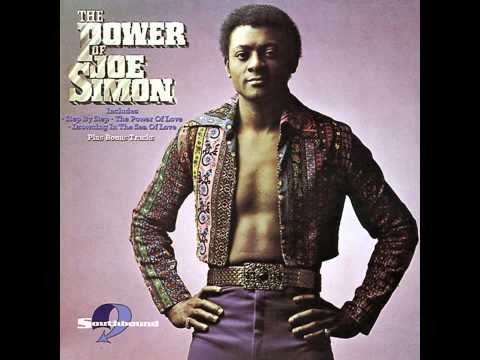

→ More from the 1970s File
View all 1970s hits →




Keep digging