The 1970s File Feature
Lies
"Lies" — J.J. Cale's Quiet Groove That Refused to Shout The Tulsa Sound and the Man Who Invented It Picture the American music landscape in the early 1970s, …
01 The Story
"Lies" — J.J. Cale's Quiet Groove That Refused to Shout
The Tulsa Sound and the Man Who Invented It
Picture the American music landscape in the early 1970s, when rock was turning louder and more theatrical by the month. Arena stages were growing, guitar solos were stretching into excess, and production budgets were ballooning to match the ambitions of bands who wanted to fill coliseums. Into that noisy world walked John Weldon Cale, known to everyone as J.J., a songwriter from Tulsa, Oklahoma who seemed constitutionally incapable of raising his voice. His approach to music was the opposite of spectacle. He played at a volume that made you lean in, at a tempo that felt like a summer afternoon with nowhere to go.
By 1972, J.J. Cale had already reshaped popular music without most listeners knowing his name. He had written "After Midnight," which Eric Clapton turned into a top-20 hit in 1970, and "Cocaine," which would define an era of Clapton recordings later in the decade. But Cale himself remained an artist's artist, beloved by musicians who studied his technique and baffled by how little mainstream recognition attached to his own recordings.
The Making of a Minimalist Classic
Cale's debut album, Naturally, arrived in 1971 and introduced the world to what critics and fellow musicians soon labeled the Tulsa Sound: a warm, unhurried blend of country, blues, and rock, recorded with deliberate looseness and intimate production values. "Lies" appeared on his second album, Really, released in 1972 on Shelter Records, the label founded by producer Denny Cordell and Leon Russell. The album continued the sonic philosophy of its predecessor, built on understated guitar tones, gently shuffling rhythms, and Cale's almost mumbled vocal delivery.
Cale's production style on "Lies" exemplifies his anti-bombast philosophy. The track breathes rather than pounds. The guitar lines curl around each other with a deceptive simplicity, the kind that takes real skill to execute without sounding empty. The rhythm section sits deep in a pocket that owes as much to country swing as to blues, and the whole arrangement feels like it was recorded at a comfortable speaking volume rather than concert levels.
Charting Quietly, Moving Steadily
Released as a single in the autumn of 1972, "Lies" debuted on the Billboard Hot 100 on November 4, 1972, entering at number 79. Over the following weeks, it climbed steadily through the chart. By the week of November 18 it had reached number 48, then settled at 46 the following week, before peaking at number 42 on December 2, 1972. The single spent eight weeks on the chart in total, a respectable run for an artist who refused to chase the formulas that propelled bigger acts to higher positions.
The peak of 42 on the Hot 100 was a reasonable commercial showing for a recording that sounded nothing like the dominant radio productions of the moment. Top 40 radio in late 1972 was trafficking in the lush orchestrations of soft rock, the early glam of T. Rex and David Bowie, and the Southern boogie of the Allman Brothers. Cale's stripped-back approach occupied its own frequency, attracting listeners who found the prevailing noise exhausting.
The Artist Who Taught the Teachers
What makes "Lies" significant in the larger story of American rock is not its chart position but its influence on how musicians understood economy in songwriting. Cale demonstrated that a groove could carry a song, that lyrics could trust the listener to fill in emotional gaps, and that production restraint could be its own form of power. His recordings became textbooks for guitarists and producers throughout the 1970s and beyond. Mark Knopfler of Dire Straits has named Cale as a primary influence, and the fingerprints of Cale's picking style can be heard across decades of American rock.
The song itself presents its central tension with characteristic brevity. A narrator confronts the gap between what someone says and what they do, treating deception with resignation rather than fury. There are no grand theatrical gestures. The melody drifts over the groove as if the singer has already made his peace with the situation and just wants to put it on record before moving on.
Legacy of the Reluctant Legend
Cale spent the rest of his career following the same principles that shaped "Lies." He released a series of critically admired albums throughout the 1970s and 1980s, collaborated with Eric Clapton on the 2006 project The Road to Escondido, which won a Grammy Award for Best Contemporary Blues Album, and maintained a profile that was simultaneously under-recognized by the general public and revered within the music industry. He passed away in July 2013, having spent four decades proving that quiet could be a kind of strength.
For anyone who has yet to spend time with Cale's catalog, "Lies" is a fine entry point. Let it wash over you at low volume and pay attention to what is not there as much as what is. The spaces between the notes, the unhurried pace, the voice that confides rather than declaims. Put the track on and feel the Tulsa afternoon come through the speakers.
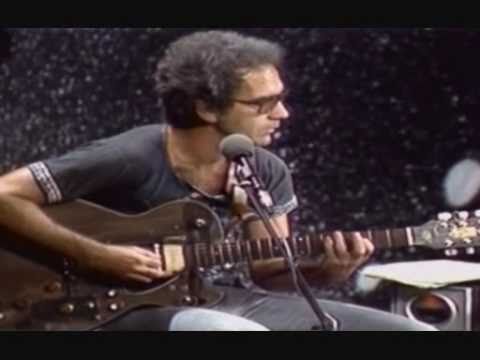
"Lies" — J.J. Cale's singular moment on the 1970s charts.
02 Song Meaning
"Lies" — The Quiet Honesty at the Heart of J.J. Cale's Art
The Theme of Quiet Betrayal
At its core, "Lies" is a song about the peculiar exhaustion that comes from realizing someone has been dishonest. J.J. Cale approaches the subject without melodrama. His narrator does not rage, does not plead, does not deliver a manifesto of wounded feeling. Instead, the song sits with the recognition of deception the way someone sits with a cold cup of coffee, acknowledging the situation clearly and without much fuss.
This emotional restraint is itself the artistic statement. Where many songwriters would use betrayal as a launching pad for grand expression, Cale turns it inward. The resignation in his vocal performance communicates something that no amount of operatic delivery could: the particular weariness of someone who has seen enough of human nature to find even its failures unsurprising.
Economy as a Form of Truth
The musical arrangement of "Lies" reinforces the lyrical stance. Sparse guitar work, a shuffling rhythm, and minimal ornamentation create a sonic environment where every word lands with weight precisely because nothing competes with it. This was Cale's guiding aesthetic philosophy, and it made "Lies" a concentrated expression of it.
In the early 1970s, many artists were pursuing maximalism: bigger productions, more ambitious concepts, thicker arrangements. Cale's minimalism stood as a counterargument to the era's excess. He was suggesting that less said with conviction carried more force than more said with spectacle. The song's plainspoken confrontation with dishonesty lands harder because it refuses to dress itself up.
Blues Roots and Country Stoicism
The emotional worldview of "Lies" draws from two deep wells in American music. From the blues tradition comes the practice of naming pain directly, of speaking difficult truths in simple language, of finding dignity in honest acknowledgment of hard experience. From country music comes a fatalistic acceptance, a sense that people are what they are and that grief over that fact has its limits.
Cale grew up in Tulsa during an era when both these traditions were present in the local music scene, and he absorbed their lessons thoroughly. The song occupies a productive space between these two traditions, treating emotional content with the directness of the blues and the stoic patience of country without fully belonging to either genre.
Why Listeners Connected
The resonance of "Lies" with its audience stemmed partly from how universal its emotional subject matter was and partly from the relief of hearing it handled without sentimentality. Radio in 1972 offered plenty of songs about heartbreak and deception, but most of them asked the listener to feel everything at maximum intensity. Cale offered something different: a song that acknowledged the truth of a situation and then let the groove do the rest of the talking.
There is something deeply reassuring about a piece of art that meets you where you are rather than demanding you follow it somewhere more dramatic. "Lies" does not escalate. It does not resolve with triumph or collapse with despair. It simply states what is, wraps itself in a warm guitar texture, and lets the listener bring their own experience to the space it creates.
The Cultural Footprint of Understatement
The lasting meaning of "Lies" cannot be separated from Cale's broader artistic legacy. He demonstrated over a long career that understatement was a viable and powerful creative strategy in popular music. His influence on subsequent generations of musicians was profound: the measured guitar work, the conversational vocal delivery, and the willingness to let silence function as part of the arrangement all became touchstones for artists across country, blues, and rock who wanted an alternative to the prevailing loudness of their respective eras.
In this way, "Lies" functions as a small masterclass in honest communication, both as a lyrical document about deception and as a musical example of how to say something true without overselling it.
→ More from J.J. Cale
View all J.J. Cale hits →
→ More from the 1970s File
View all 1970s hits →




Keep digging