The 1970s File Feature
Freedom
"Freedom" — Jimi Hendrix's Posthumous Anthem of Liberation A Legend Cut Short, a Song Still Ringing Picture the spring of 1971. The Woodstock generation had …
01 The Story
"Freedom" — Jimi Hendrix's Posthumous Anthem of Liberation
A Legend Cut Short, a Song Still Ringing
Picture the spring of 1971. The Woodstock generation had barely caught its breath when the world lost Jimi Hendrix in September 1970, and the music industry was still processing what that absence meant. Into that raw grief came The Cry of Love, the first posthumous studio album assembled from sessions Hendrix had been working on in his final months, and from it emerged "Freedom," a track that crackled with everything that made him irreplaceable: the molten guitar lines, the cosmic authority, the sense of a man reaching for something just beyond the horizon.
Hendrix had been one of the defining artists of the late 1960s, reshaping what an electric guitar could do and what rock music could mean. By 1970, he was deep into recording sessions at Electric Lady Studios, the Greenwich Village facility he had built specifically to have creative control over his sound. Those recordings were left unfinished at his death, but they contained extraordinary material. "Freedom" was among the most fully realized, a hard-driving blues-rock statement that his producers, Mitch Mitchell and Eddie Kramer, shaped into a releasable track.
The Sound of Raw Urgency
The track hits immediately, Hendrix's guitar arriving like a force of nature rather than a musical introduction. The rhythm is tight and insistent, the band locked in behind him with a groove that feels almost defiant. This was not the psychedelic shimmer of Are You Experienced or the orchestral ambition of Electric Ladyland. "Freedom" is leaner, more stripped back, built on the foundation of a blues-rock riff that could shake walls. Mitch Mitchell's drumming provides an athletic foundation, and the interplay between the rhythm section and Hendrix's lead work demonstrates how instinctive the Jimi Hendrix Experience's chemistry remained even in these studio fragments.
The production on The Cry of Love was handled with considerable care by Mitchell and Kramer, both of whom had worked closely with Hendrix and understood his artistic intentions. They made choices about arrangement and mixing that aimed to honor what Hendrix had been building toward, resisting the temptation to overpolish material that was raw by design. Eddie Kramer, who had engineered virtually all of Hendrix's key recordings, brought an intimate knowledge of how Hendrix wanted his guitar to sit in a mix.
Entering the Charts After Death
The single made its debut on the Billboard Hot 100 on April 3, 1971, entering at position 99. What followed was a slow but steady climb, the record moving up week by week as radio embraced it. By May 8, 1971, "Freedom" had peaked at number 59, spending a total of eight weeks on the chart. For a posthumous release from an artist who had died just months before, the chart performance reflected both the enduring appetite for Hendrix's work and the way radio programmers treated his voice as something to be heard rather than mourned from a distance.
The album The Cry of Love reached number three on the Billboard 200, a testament to how much the public needed to hear what Hendrix had left behind. "Freedom" was one of the album's most immediate tracks, accessible enough for AM radio while carrying enough intensity to satisfy those who had followed Hendrix through his most experimental phases.
Legacy and the Question of Completion
The posthumous release of Hendrix's recordings has never been without controversy. For decades, debates have circulated about which versions of which tracks best represent his vision, about whether certain albums should have been released at all, and about the decisions made by the estate and various producers over the years. "Freedom" has generally been considered one of the more authentic entries in that catalogue, a track that sounds like Hendrix playing with focus and intent rather than experimenting in the margins.
The song has appeared on numerous compilations over the years, maintaining its place in the broader Hendrix catalogue. For listeners discovering Hendrix through the archival releases and reissues that followed, "Freedom" offered a bridge between his classic period work and the direction he seemed to be heading in his final creative phase. It sounds like a man who had not run out of ideas, a quality that makes it both thrilling and bittersweet to hear.
The Weight of What Remains
Hendrix left behind a body of work that continues to influence guitarists and producers across genres. The recordings made at Electric Lady Studios in 1970 represent some of his most focused studio work, free from the commercial and logistical pressures that had complicated earlier periods of his career. "Freedom" captures him at a moment of creative confidence, driving forward with conviction even as the sessions remained unfinished at his death.
Put it on today and you can still feel the electricity in it, the way Hendrix makes the guitar sound like it is thinking out loud, working through something urgent and real. It is a reminder that great artists leave things behind worth hearing long after they are gone.
"Freedom" — Jimi Hendrix's singular moment on the 1970s charts.
02 Song Meaning
"Freedom" — The Drive Toward Liberation in Hendrix's Final Vision
A Declaration Without Apology
At its core, "Freedom" is exactly what it announces itself to be: a demand for liberation, delivered without equivocation. The lyrics circle around a plea for release from constraint, from the forces that diminish and confine. In Hendrix's rendering, this desire is not passive or polite; it carries the urgency of someone who genuinely feels the walls closing in. The song functions as a kind of testimony, the narrator asserting the right to exist on one's own terms, to move through the world without being diminished by forces external to the self.
The early 1970s context matters here. The civil rights movement had transformed American society through the previous decade, and the counterculture that Hendrix had become a symbol of was itself in a period of fragmentation and reassessment. Freedom as a concept carried specific weight in 1971, tied not just to personal liberation but to ongoing political struggle, to the Vietnam War, to the social movements reshaping what America understood itself to be. When Hendrix sang about freedom, he was speaking into a landscape where the word had real stakes.
Personal and Political Threads
Hendrix's position as a Black artist who had achieved enormous commercial success in predominantly white rock spaces gave his invocations of freedom a layered resonance. He had navigated complex expectations throughout his career, sometimes praised as a musical revolutionary, other times reduced to a spectacle. The desire for freedom in his music can be read against that biographical backdrop without forcing a single definitive interpretation.
The song's emotional architecture moves between assertion and appeal, between the confidence of someone who knows what they want and the rawness of someone who recognizes the difficulty of achieving it. This tension gives the track its emotional complexity. It is not a triumphant freedom anthem; it is a freedom plea, which is a more vulnerable and ultimately more honest kind of song.
The Guitar as Voice
Part of what makes the meaning of "Freedom" so compelling is how thoroughly Hendrix's guitar carries the emotional weight. The instrument does not simply accompany the vocal; it argues with it, answers it, amplifies what words cannot quite reach. The relationship between voice and guitar in Hendrix's work is often discussed in terms of technical virtuosity, but the deeper point is expressive: the guitar communicates states of feeling that extend beyond what language can hold. In "Freedom," that quality is unmistakable.
This is particularly significant given that the track was left as a studio work in progress, shaped posthumously. What survives is Hendrix reaching for something, the raw expression intact even if the final form was determined by others after his death. There is an authenticity in the incompleteness, a sense that what you are hearing is the genuine impulse before it was smoothed into a finished product.
Why It Still Resonates
Freedom as a theme never goes out of date. The specific social tensions of 1971 have shifted, but the underlying human desire to exist without constraint, to be seen and heard on one's own terms, remains universally recognizable. "Freedom" taps into that permanent emotional register, which is part of why Hendrix's posthumous catalogue has found new listeners in every subsequent decade.
The track also benefits from the mythology that surrounds Hendrix himself. He is heard here as someone who knew, at some level, that his time was limited, pouring urgency into sessions that would outlast him. Whether or not that reading is biographical accurate in a literal sense, it shapes how listeners receive the music, lending the song a poignant weight that purely contemporary releases rarely carry.
→ More from Jimi Hendrix
View all Jimi Hendrix hits →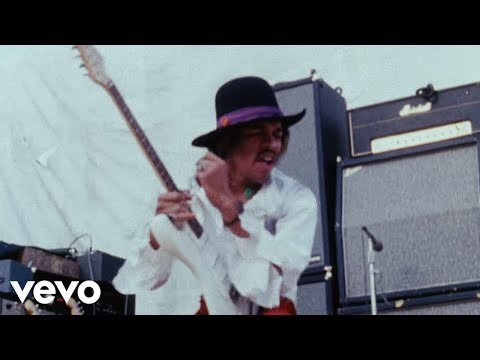
→ More from the 1970s File
View all 1970s hits →




Keep digging