The 1970s File Feature
One Less Set Of Footsteps
"One Less Set Of Footsteps" — Jim Croce A Songwriter in Full Flight There is something quietly devastating about returning to Jim Croce's catalog now, knowin…
01 The Story
"One Less Set Of Footsteps" — Jim Croce
A Songwriter in Full Flight
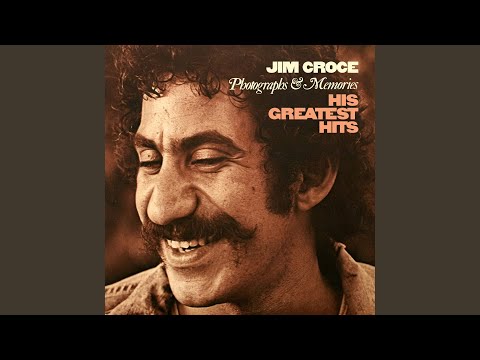
There is something quietly devastating about returning to Jim Croce's catalog now, knowing that the entire body of work that made him beloved was compressed into such a brief window. By early 1973, when "One Less Set Of Footsteps" was making its way up the Billboard Hot 100, Croce had transformed himself from a struggling Philadelphia folksinger into one of the most distinctive voices in American popular music. His gift for character-driven storytelling, for finding the universal inside the hyper-specific, placed him in a tradition that ran through Woody Guthrie and forward toward the singer-songwriters who would define the 1970s. "One Less Set Of Footsteps" appeared on his 1972 album Life and Times, the same record that contained "Operator (That's Not the Way It Feels)" and helped cement Croce's reputation as a chronicler of ordinary heartbreak told in extraordinary detail.
The Sound and the Session
The track carries the acoustic warmth that defined Croce's best work. His production partnership with Terry Cashman and Tommy West gave his recordings a clean, uncluttered sound that let the voice and the guitar do the heavy lifting. The arrangement on "One Less Set Of Footsteps" is spare enough to feel intimate, like something overheard rather than performed, which was entirely the point. Croce had developed a writing style that placed the listener inside a specific emotional moment rather than at a comfortable observational distance. The song builds its case through accumulated domestic detail, the kind of thing that makes a breakup feel real rather than abstract. The production by Cashman and West gave the track its radio-ready clarity while preserving the folk sincerity that separated Croce from the more polished singer-songwriters of the era.
The Chart Run of 1973
The single entered the Billboard Hot 100 on February 3, 1973, at position 80. From there it climbed steadily through February and into March: 74, then 62, then 57, then 50. The track peaked at number 37 on the Hot 100, reaching that position during the week of March 31, 1973. It spent 10 weeks on the chart in total, a solid if unspectacular showing that reflected the competitive environment of early 1973 pop radio. The charts that spring were full of artists navigating the same singer-songwriter lane that Croce occupied: Roberta Flack, Carly Simon, and Paul Simon were all regular chart presences, and the audience for emotionally literate acoustic pop was large but contested. "One Less Set Of Footsteps" held its own in that company, confirming that Life and Times was producing consistent singles rather than a single fluke hit.
The Shadow of September 1973
Hearing "One Less Set Of Footsteps" now, it is impossible to entirely separate it from what followed. On September 20, 1973, Jim Croce died in a plane crash in Natchitoches, Louisiana, at age 30. The tragedy froze his catalog in amber and transformed his modest chart successes into something more permanent in the cultural imagination. Songs that might have been eventually supplanted in radio rotation by new material instead became monuments. "One Less Set Of Footsteps" had done its work on the charts and radio in early 1973, but it acquired additional emotional weight in retrospect, heard now as a dispatch from a creative life that was building toward something even greater. The song stands as evidence of Croce at full artistic command, not yet the legend tragedy would make him, simply a working songwriter producing some of the best material of his generation.
A Lasting Place in the Catalog
Croce's legacy rests primarily on a small handful of tracks that became genuine pop standards, but the deeper catalog rewards attention precisely because songs like "One Less Set Of Footsteps" reveal the consistency of his craft. The track is not a curio from a lesser moment; it is a well-executed piece of early-1970s songwriting that holds up against the more famous entries. The folk-pop architecture Croce perfected across Life and Times influenced a generation of singer-songwriters who followed him. Listen to the track not as an artifact of grief but as a live document of a talent at work, finding the exact right words to describe the specific geometry of two people separating and the quiet, physical reality of solitude that follows.
Put it on and hear Croce working at the top of his game.
"One Less Set Of Footsteps" — Jim Croce's singular moment on the 1970s charts.
02 Song Meaning
"One Less Set Of Footsteps" — Themes and Emotional Landscape
The Physical Language of Departure
What separates "One Less Set Of Footsteps" from countless other breakup songs of its era is the specificity of its central image. Croce organizes the song's emotional argument around something concrete and sensory: the absence of a second pair of footsteps, the physical fact of now walking alone. In a period when pop songwriting frequently reached for abstraction or melodrama, Croce's instinct was always to find the particular detail that unlocks the universal feeling. The track grounds heartbreak in domestic, physical reality rather than elevated romantic language, and that grounding is precisely what gives the song its staying power. You can almost hear the quieter house, feel the different weight of solitude that follows the end of a shared daily life.
Bitterness and Relief, Held Together
One of the more sophisticated emotional moves in the song is its refusal to settle neatly into either pure sorrow or pure relief at the relationship's end. The narrator acknowledges both, holding them in uncomfortable proximity the way actual breakups tend to feel. Croce captures the ambivalence of separation with unsentimental honesty, not prettying up the emotional aftermath into something more narratively satisfying. The listener is not invited to feel simply sad or simply liberated; the song insists on the messy, honest middle ground where most human experience actually lives. That emotional complexity is what placed Croce above many of his contemporaries who wrote simpler, more palatable narratives about love and its ends.
The 1973 Singer-Songwriter Landscape
In 1973, introspective acoustic songwriting had reached a peak of cultural prestige. The previous year had given listeners Carole King's continued dominance, Cat Stevens at his most thoughtful, and the early stirrings of a folk-rock tradition maturing into something richer and more psychologically complex. Croce fit naturally into that landscape while maintaining a blue-collar specificity that was entirely his own. Where some singer-songwriters of the period leaned toward mystical or cosmic imagery, Croce stayed stubbornly, productively earthbound. His songs were set in diners and telephone booths, on roads and front porches, and "One Less Set Of Footsteps" carries that same geographic and emotional precision.
Why the Song Endures
Decades removed from its chart run, "One Less Set Of Footsteps" endures because the emotion it describes has not changed. The experience of a shared life becoming a solitary one, registered through the smallest physical details, is timeless. Croce's ability to translate that transition into simple, unadorned language without reducing it is the mark of genuine craft. The song rewards repeated listening because each time the central image lands with the same quiet force: one less set of footsteps, and everything that absence implies about the altered shape of daily life. In a catalog full of vivid characters and memorable turns of phrase, this track endures as one of his purest emotional statements.
"One Less Set Of Footsteps" — Jim Croce's singular moment on the 1970s charts.
→ More from Jim Croce
View all Jim Croce hits →


→ More from the 1970s File
View all 1970s hits →




Keep digging