The 1970s File Feature
I'll Have To Say I Love You In A Song
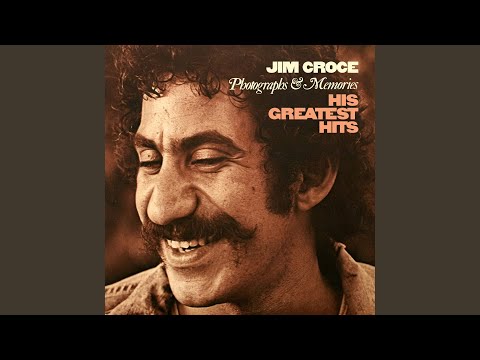
"I'll Have To Say I Love You In A Song" by Jim Croce A Career Cut Tragically Short September 20, 1973 was the night Jim Croce's plane went down in Natchitoch…
01 The Story
"I'll Have To Say I Love You In A Song" by Jim Croce
A Career Cut Tragically Short
September 20, 1973 was the night Jim Croce's plane went down in Natchitoches, Louisiana. The singer-songwriter was 30 years old, riding the crest of the most productive and commercially successful period of his life, and the loss registered across the music world as a specific kind of grief: the grief of potential extinguished at its peak. "Bad, Bad Leroy Brown" had reached number one that summer. The follow-up single "I Got a Name" was climbing the charts. There were more songs written, recorded, and waiting for release, which meant that in the months after his death, his audience found themselves in the strange position of receiving new music from someone who was gone.
"I'll Have To Say I Love You In A Song" was among those posthumous releases, arriving in early 1974 on ABC Records as a single from the album I Got a Name. Its timing gave it a particular emotional weight that most songs never acquire, no matter how well they are written.
The Story Behind the Creation
Jim Croce wrote "I'll Have To Say I Love You In A Song" in direct response to an argument with his wife Ingrid. The story, well documented in accounts of his life and work, is that after a dispute he found himself unable to articulate what he needed to say in the ordinary currency of conversation. Music became the vehicle he reached for instead. The song recounts that exact impasse: the words that should be there are not, everything that comes out sounds wrong, and so the narrator decides to let melody carry the declaration that speech cannot.
It is a remarkably honest premise for a song, and Croce's acoustic guitar arrangement kept it intimate and unadorned. The production, helmed by Terry Cashman and Tommy West, who produced most of Croce's catalog, understood that the song's power came from its directness. Adding orchestration or elaborate studio texture would have smothered it. Instead the track breathed, just a voice, a guitar, and a confession too large for normal conversation.
The Chart Run
The single debuted on the Billboard Hot 100 on March 2, 1974, entering at number 73. The climb was swift and purposeful, reflecting the enormous reservoir of public affection for Croce that had deepened in the months since his death. By April 27, 1974, the song had reached its peak of number 9, spending 14 weeks on the chart in total. For a record by an artist who would never make another, those numbers represented something beyond commercial success; they represented a farewell that millions of people chose to extend as long as possible.
The song's success in early 1974 placed it among the soft rock and singer-songwriter fare that dominated that period of the chart, sharing the dial with artists like Paul McCartney, Joni Mitchell, and Harry Nilsson. Croce fit that company naturally; he had always occupied that space where folk craft met mainstream accessibility.
Grief as Context, Song as Object
It would be easy to argue that the posthumous context is inseparable from the song's emotional impact, that "I'll Have To Say I Love You In A Song" resonates so deeply in part because of who could no longer be present to perform it. There is truth in that. But the song holds its own weight independent of biography. The scenario it describes, the inadequacy of words in the face of genuine feeling, is one that almost anyone who has loved someone can recognize.
Croce had a gift for compression, for finding the domestic detail or the specific emotional note that opened into something universal. This song is one of his purest expressions of that gift. The voice on the recording sounds unhurried and certain, which made the contrast with his absence all the sharper for listeners in 1974.
Enduring Presence in the Croce Canon
Decades later, the song remains among Croce's most beloved recordings, taught in guitar circles as a model of elegant simplicity and covered by artists across genres. It appears regularly on classic pop radio formats and on streaming playlists dedicated to early 1970s singer-songwriters. His estate has carefully maintained his catalog, and the song's YouTube presence reflects an ongoing connection with listeners who discover him through his hits and then stay.
Put the headphones on, listen to that guitar intro, and hear an artist saying something he could not find another way to say. The impulse is as old as music itself.
"I'll Have To Say I Love You In A Song" — Jim Croce's singular moment on the 1970s charts.
02 Song Meaning
"I'll Have To Say I Love You In A Song" — Meaning, Themes, and Legacy
When Words Fail and Music Steps In
The premise of "I'll Have To Say I Love You In A Song" is both specific and universal: a person has had an argument with someone they love, and in the aftermath, every attempt to repair things with spoken words comes out wrong. The solution the narrator lands on is the song itself, making the track a kind of self-referential confession in which the medium is also the message. Jim Croce captured in three minutes something that most people have felt but few have articulated so cleanly: the frustrating gap between what you feel and what you can say.
That gap is a genuine human condition. Language, for all its utility, breaks down at precisely the moments when it is most needed. Emotion at high intensity tends to produce either too many words or too few, and either extreme fails the person you are trying to reach. Music, with its combination of melody and text, can sometimes bypass the conscious resistance that keeps speech stuck, carrying feeling along a channel that direct conversation cannot access.
Domestic Love, Honestly Rendered
What distinguishes this song from more generic romantic balladry is its specificity of situation. The narrator has not fallen in love at first sight or survived some operatic separation. He has had an ordinary argument and is trying to find his way back. That domestic intimacy gave the song an accessibility that broader romantic gestures often lack. Listeners recognized the scenario immediately because they had lived versions of it.
Croce's gift was finding the universal inside the particular. His best songs observed real life with enough precision to feel personal and enough clarity to feel shared. This track exemplified that balance, locating its emotional power not in grand declaration but in the honest admission of inadequacy.
The Posthumous Dimension
Released after Croce's death in the plane crash of September 1973, the song arrived to an audience already in mourning. The context altered the listening experience in ways that no marketing strategy could have manufactured. Hearing an artist speak through music about the limits of spoken communication took on additional resonance when that artist could no longer speak at all. The song became, for many listeners in early 1974, a form of extended farewell, a last communication from someone whose communication had been cut off.
This does not diminish the song's inherent qualities but it does explain the particular depth of feeling the record generated on its release. Art that intersects with loss in this way tends to embed itself more permanently in cultural memory.
Legacy Among Singer-Songwriters
The track stands as one of the cleaner examples of what the singer-songwriter movement of the early 1970s produced at its best: acoustic guitar, honest lyric, minimal production, maximum emotional content. Croce belonged to a generation that trusted the song itself to do the work, without elaborate sonic architecture or genre signaling to shore up the meaning. That faith in directness has kept the song fresh across decades of changing musical fashion.
New listeners continue to find it through streaming and through the guitar communities where Croce's style remains a reference point for aspiring songwriters. The song's theme, the inadequacy of words and the compensatory power of music, speaks to why people reach for instruments in the first place.
→ More from Jim Croce
View all Jim Croce hits →


→ More from the 1970s File
View all 1970s hits →




Keep digging