The 1970s File Feature
Drinking Wine Spo-dee O'dee
Jerry Lee Lewis Reclaims the Boogie: "Drinking Wine Spo-dee O'dee" in 1973 When Jerry Lee Lewis walked into the studio to record his version of "Drinking Win…
01 The Story
Jerry Lee Lewis Reclaims the Boogie: "Drinking Wine Spo-dee O'dee" in 1973
When Jerry Lee Lewis walked into the studio to record his version of "Drinking Wine Spo-dee O'dee" in 1973, he was operating within a career that had undergone one of the more remarkable transformations in the history of American popular music. The man who had been rock and roll's most dangerous pianist in the late 1950s, whose recording of "Whole Lot of Shakin' Going On" had seemed to threaten the moral order of polite American society, had spent the intervening years repositioning himself as a country artist on the strength of recordings like "Another Place, Another Time" and "There Must Be More to Love Than This." His 1973 cover of the old R&B classic, released through Mercury Records and reaching number 41 on the Billboard Hot 100, was both a look backward and a demonstration of his continued vitality.
"Drinking Wine Spo-dee O'dee" had a history considerably older than Lewis's 1973 recording. The song originated with Stick McGhee, the brother of blues guitarist Brownie McGhee, who recorded an early version in 1947 that captured the loose, celebratory spirit of African-American roadhouse music in the immediate postwar era. The song's title, a piece of jive-talk nonsense phrasing that served as a rhythmic placeholder in the boogie tradition, signaled its roots in a musical culture that prioritized feel over formal structure, momentum over polish. McGhee's recording was raw and exuberant, full of the energy of a party that nobody wanted to end.
The song had passed through numerous hands before reaching Lewis. Johnny Burnette had recorded a version, and various rockabilly and country artists had approached the material with varying degrees of reverence and reinvention. But Lewis brought to it something that most of those other interpreters lacked: a direct biological connection to the rowdy, booze-soaked, cross-racial musical culture from which the song had emerged. Lewis's own musical formation in Ferriday, Louisiana, had occurred in close proximity to African-American music; he had spent his formative years absorbing barrelhouse piano styles and boogie-woogie rhythms at the same crossroads where country and blues had always mixed freely in the American South.
The 1973 recording reflected Lewis's particular genius for making old material feel freshly combustible. His piano playing remained ferociously rhythmic, anchoring the track with the kind of left-hand drive that had always been his signature, and his vocal delivery combined the mock-solemnity of country recitation with the gleeful abandon of his earliest rock recordings. The Mercury Records production gave the track a slightly glossier sound than the original's rough edges, but Lewis's energy was sufficient to cut through any studio polish and deliver the song's essential spirit intact.
The Hot 100 chart run of "Drinking Wine Spo-dee O'dee" began on April 7, 1973, with a debut at number 81, and the song climbed steadily through April and into May, reaching its peak of 41 on May 19, 1973, before beginning a gradual descent. The ten-week total chart presence represented a solid commercial performance for a Lewis single in the country-crossover market, where his audience was reliable if not enormous. The fact that the song appeared on the mainstream Hot 100 rather than solely on the country chart reflected Lewis's continued ability to appeal across format boundaries, a crossover quality that had defined his career from its earliest days.
The timing of the release placed "Drinking Wine Spo-dee O'dee" within a broader moment of nostalgia and retrospection in American popular music. The early 1970s had produced a significant revival of interest in the music of the 1940s and 1950s, fueled partly by the success of films like "American Graffiti" and partly by a generation of listeners who had come of age during the original rock and roll era and retained deep emotional connections to its repertoire. Lewis was not merely riding this nostalgia wave; he was one of its most legitimate representatives, a surviving architect of the music that the nostalgia was commemorating.
His decision to record "Drinking Wine Spo-dee O'dee" was also a statement about continuity in the American musical tradition. The song's journey from Stick McGhee's 1947 original through various rockabilly and country hands to Lewis's 1973 Mercury recording traced a line through several decades of American vernacular music, demonstrating how themes and styles passed back and forth across racial and regional boundaries in ways that official music history often obscured. Lewis's recording honored that tradition by approaching the material with the same unselfconscious joy that McGhee had brought to it a quarter-century earlier.
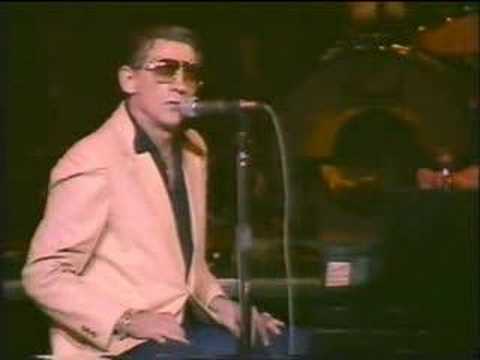
The song served Lewis well in his live performances throughout the 1970s and beyond, fitting naturally into a catalog that had always emphasized raw energy and physical momentum over studied refinement. In the context of his remarkable comeback arc, "Drinking Wine Spo-dee O'dee" stands as a document of an artist who understood his own deepest musical instincts and trusted them absolutely.
02 Song Meaning
Celebration, Excess, and the Boogie Tradition: What "Drinking Wine Spo-dee O'dee" Means
"Drinking Wine Spo-dee O'dee" occupies a particular and somewhat unusual position in the repertoire of American vernacular music: it is a song that celebrates excess without apology, that treats the act of communal drinking and the pleasures of the roadhouse as genuine goods worthy of celebration, and that does so with a rhythmic energy that embodies the spirit of the subject matter rather than merely describing it. The song does not reflect on drinking from a distance; it enacts the feeling of the party from within.
The phrase "spo-dee o'dee" is itself a piece of mid-century African-American jive that resists easy translation. It functions partly as rhythmic filler, partly as coded insider language, and partly as a signifier of a particular cultural world: the world of the urban Black tavern, the juke joint, the social gathering where music, liquor, and communal pleasure were understood as legitimate responses to the hardships of daily life. Stick McGhee's original recording was embedded in this world and spoke its language fluently, and the phrase carried that world with it as the song traveled through subsequent decades and across cultural boundaries.
When Jerry Lee Lewis recorded the song in 1973, he was working within a country-rock idiom that had its own relationship to the celebration of drinking. Country music had always maintained a more ambivalent relationship with alcohol than other American pop genres, producing equal numbers of cautionary tales and celebrations, but Lewis's version leaned firmly into the celebratory tradition. His reading of the material was not guilty or conflicted but joyful, treating the act of drinking wine as simply one of the pleasures available to human beings who know how to enjoy their time on earth.
This attitude connects "Drinking Wine Spo-dee O'dee" to a long tradition of what might be called hedonist folk music: songs that document and celebrate the physical pleasures of earthly life without the moral scaffolding that more conventionally respectable musical traditions tended to require. The boogie and barrelhouse traditions from which the song emerged had always operated in this register, and Lewis's musical formation in Ferriday, Louisiana, had given him a natural fluency in it that went beyond mere stylistic imitation.
There is also a social dimension to the song's meaning that becomes visible when it is placed in historical context. The world that McGhee was singing about in 1947, the world of working-class African-American recreation in the urban North and South, was a world defined in significant part by exclusion from mainstream American social institutions. The tavern and the juke joint were spaces of self-determination within a society that systematically denied self-determination in most other contexts. Celebrating those spaces was not merely hedonism; it was an assertion of the legitimacy and importance of a culture that the dominant society preferred not to acknowledge.
Lewis's 1973 version did not carry this social weight in the same way that McGhee's original had, but it did carry an analogous meaning: the assertion that wild, unrestrained musical joy remained legitimate in an era that sometimes seemed to privilege sophistication and irony over directness and exuberance. His piano playing and vocal delivery were advertisements for a kind of music-making that cared nothing for critical approval and everything for the direct communication of physical and emotional pleasure. In that sense, the song's meaning was inseparable from the manner of its performance, and Lewis performed it with the conviction of a man who had been living its spirit for his entire adult life.
→ More from Jerry Lee Lewis
View all Jerry Lee Lewis hits →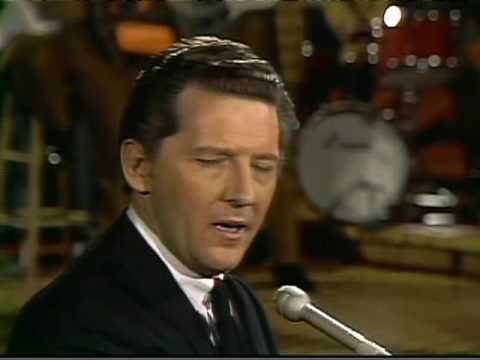
→ More from the 1970s File
View all 1970s hits →




Keep digging