The 1970s File Feature
Ride The Tiger
Jefferson Starship and the Reinvention Documented in "Ride The Tiger" Few transformations in the history of rock music were as formally significant or as fra…
01 The Story
Jefferson Starship and the Reinvention Documented in "Ride The Tiger"
Few transformations in the history of rock music were as formally significant or as fraught with internal tension as the evolution of Jefferson Airplane into Jefferson Starship. The Airplane had been one of the defining bands of the San Francisco psychedelic scene, their recordings between 1967 and 1970 standing as essential documents of that particular cultural moment. By the early 1970s, the group's original lineup was fracturing under the pressures of personal conflict, individual artistic ambitions, and the broader dissolution of the countercultural consensus that had animated the scene from which they had emerged. "Ride The Tiger," from the debut Jefferson Starship album "Dragon Fly" released in 1974, represented the first formal document of what the reconstituted entity would sound like.
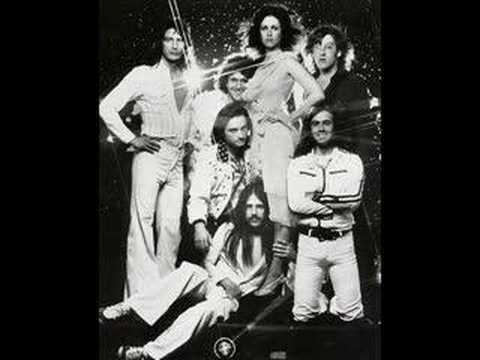
The formation of Jefferson Starship was a gradual process rather than a clean break. Grace Slick and Paul Kantner, who had been the most commercially prominent members of the Airplane, had already collaborated on several projects that moved in different directions from the band's original sound. Kantner's interest in science fiction themes and orchestral rock production had found expression in the "Blows Against the Empire" album from 1970, which was credited to "Paul Kantner/Jefferson Starship" in one of the earliest uses of the new name. By 1974, the lineup had stabilized into a configuration that retained some original members while incorporating new figures who would shape the group's subsequent sound.
The "Dragon Fly" album introduced David Freiberg more prominently into the group's vocal mix and welcomed a young Pete Sears on bass and keyboards. Crucially, it also featured early contributions from a new vocalist who would become central to Jefferson Starship's 1970s commercial success: Mickey Thomas was not yet involved, but the groundwork for a more radio-friendly approach was being laid. "Ride The Tiger" was written by Kantner and Craig Chaquico, whose guitar work brought a harder-edged, more propulsive quality to the sound that distinguished it from the more atmospheric and improvisational tendencies of the Airplane era.
The song entered the Billboard Hot 100 on November 16, 1974, debuting at number 91. It reached its peak of number 84 the following week on November 23, 1974, then began a gradual decline that took it to the edge of the chart before it disappeared after five weeks. The modest commercial performance reflected the challenges facing a group that was simultaneously asking longtime fans to accept a new name and new musical direction while attempting to attract listeners who had not been part of the Airplane audience. Neither task was straightforwardly accomplished, and the chart results reflected that difficulty.
The "Dragon Fly" album was received with a mixture of critical respect and commercial ambivalence that would become more clearly resolved in either direction with subsequent releases. Reviewers recognized in the material a genuine attempt at musical evolution rather than mere commercial recalculation, but the album did not produce the kind of breakout single that would have established Jefferson Starship on the 1970s mainstream rock landscape with the force that their subsequent work would eventually achieve. The transition period was genuinely uncertain, and "Ride The Tiger" documented that uncertainty in musical form.
Within a few years, Jefferson Starship would achieve commercial heights that the Airplane had never reached, with the 1975 album "Red Octopus" and its single "Miracles" bringing the group to a new level of mainstream success. That later success cast the "Dragon Fly" period in a particular retrospective light, as the necessary transitional moment between a historically significant past and a commercially triumphant future. "Ride The Tiger" occupies that transitional position precisely, documenting the moment when the old identity had been formally relinquished without the new one having fully consolidated.
The name change from Jefferson Airplane to Jefferson Starship carried symbolic weight that contemporaries understood clearly. The Airplane name was inseparable from the specific historical moment of the late 1960s San Francisco scene, laden with associations that were simultaneously prestigious and limiting. The Starship name, with its science fictional resonances that Kantner had been exploring in his solo work, suggested a different kind of ambition oriented toward an imaginary future rather than a remembered past. This reorientation in time was as significant as any musical change the new lineup represented, and "Ride The Tiger" was among the first recordings to carry the new name's promise into the commercial arena.
02 Song Meaning
Power, Risk, and Transformation in Jefferson Starship's "Ride The Tiger"
"Ride The Tiger" operates on multiple levels of meaning simultaneously, drawing on ancient mythology, countercultural philosophy, and the specific anxieties of an era navigating the aftermath of idealistic excess. The tiger as a symbol carries universal associations with power, wildness, danger, and the kind of intense vitality that cannot be domesticated without being destroyed. To ride the tiger is to engage with these forces directly rather than avoiding them, accepting the risk of contact with something ungovernable in exchange for the energy and momentum that only such contact provides. This image suited Jefferson Starship's transitional moment with particular aptness, as the group was itself attempting to ride the powerful and potentially destructive forces of change, artistic evolution, and commercial reinvention.
The tiger image also connects to Eastern philosophical traditions that Paul Kantner had engaged with during the countercultural explorations of the 1960s. In various traditions, tigers represent primal energy, transformation, and the necessity of engaging with difficult forces rather than retreating from them. The advice to ride rather than flee the tiger suggests a wisdom about the nature of overwhelming situations: that resistance or avoidance may be less viable than acceptance and engagement, that mastery of dangerous forces requires intimate proximity rather than safe distance.
The song's themes of risk and engagement resonated with the moment of its creation. By 1974, the generation that had embraced countercultural idealism in the late 1960s was confronting a very different cultural reality. The social movements of the previous decade had produced genuine changes but had also encountered the limits of their own ambitions. Many of the communal and utopian projects that the counterculture had animated had dissolved, and the survivors were engaged in various forms of renegotiation with the mainstream society they had briefly hoped to transform entirely.
In this context, "Ride The Tiger" can be read as a statement about continuing engagement with life's most intense demands rather than retreating into disillusionment. The counterculture's failure to achieve its grandest aims did not necessarily mean that withdrawal was the appropriate response; the tiger was still running, and the question was whether to stay mounted or be thrown. Jefferson Starship's own formal transformation from Airplane to Starship embodied this willingness to remain engaged with the challenge of making music that mattered rather than collapsing under the weight of historical expectation.
Craig Chaquico's guitar work on the track contributes substantially to its thematic content through purely musical means. The riff patterns he employed had a driving, forward-propelled quality that made the idea of riding rather than fleeing feel physically immediate. The music itself performed the action described in the title, moving with an urgency and force that suggested momentum already engaged rather than a decision still being weighed. This alignment between musical form and lyrical content is a characteristic feature of rock music at its most effective, when the sound makes the meaning unavoidable rather than merely decorating words that carry their significance independently.
The song's place on the debut Jefferson Starship album gave it a contextualizing function within the larger collection of material. As an opening statement about what this reconstituted entity intended to do and represent, "Ride The Tiger" communicated something essential about the new group's self-understanding: that the transition it was making required courage, that it was aware of the risks involved, and that it was committed to engaging with those risks directly rather than managing them through caution. Whether or not that commitment ultimately expressed itself in commercially successful terms, the sincerity of the intention was evident in the recording. That sincerity is what makes the song worth revisiting as a document of a specific moment in one of rock history's most significant ongoing institutional narratives.
→ More from Jefferson Starship
View all Jefferson Starship hits →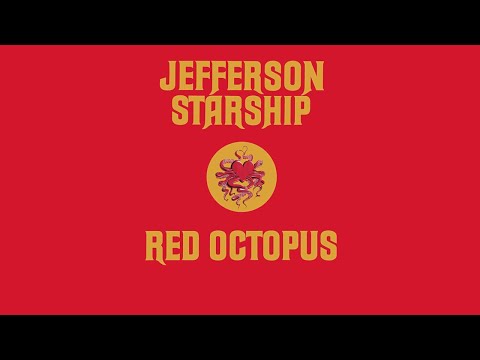

→ More from the 1970s File
View all 1970s hits →




Keep digging