The 1970s File Feature
Country Road
"Country Road" — James Taylor and the Sound of Early 1970s Introspection Singer-Songwriters and the New Intimacy The turn of the decade from the 1960s into t…
01 The Story
"Country Road" — James Taylor and the Sound of Early 1970s Introspection
Singer-Songwriters and the New Intimacy
The turn of the decade from the 1960s into the 1970s brought a significant shift in what popular music was asking of its listeners. The communal idealism of the late 1960s had run into the hard realities of Nixon, Vietnam, and cultural fatigue. What came to replace it, at least in one important strain of American music, was something more inward: the singer-songwriter tradition, built on acoustic guitars, honest confessional lyrics, and voices that sounded like they were talking to you personally rather than performing at you from a stage. James Taylor was one of the defining figures of that tradition, and "Country Road" captured him at the moment his sound was crystallizing into something that would shape popular music for years.
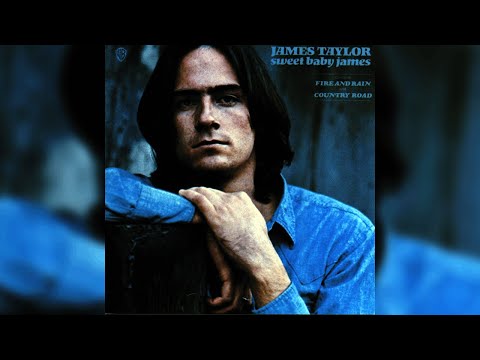
Taylor's trajectory to this moment was one of the more dramatic in pop music history. His early years had included a period of serious psychological difficulty and time spent in psychiatric care, experiences that fed directly into the confessional honesty that made his music so immediate. His 1970 breakthrough album Sweet Baby James established him as a major figure in the emerging singer-songwriter movement, producing the enduring "Fire and Rain" and setting the template for the more contemplative kind of pop that would define much of the early 1970s.
The Song and Its Place in the Catalog
"Country Road" appeared on Mud Slide Slim and the Blue Horizon, Taylor's 1971 follow-up to Sweet Baby James. The album arrived on a wave of critical and popular expectation, with Taylor now firmly established as one of the most compelling voices of his generation. The record continued the sonic approach of its predecessor: acoustic guitar at the center, warm but uncluttered production, and lyrics that pursued emotional honesty over dramatic effect.
"Country Road" is built around the image of travel and return, the pull of familiar landscapes and the complicated feelings that going home, or imagining going home, can generate. The arrangement is deliberately modest, placing Taylor's voice and guitar at the foreground in a way that made radio listeners feel they were overhearing a private reflection. The production, credited to Peter Asher, who was Taylor's primary producer through this period, maintained the gentle clarity that had made Sweet Baby James so distinctive. Asher's work with Taylor during these years helped define what acoustic pop production could achieve.
A Steady Climb Through the Winter Charts
The single debuted on the Billboard Hot 100 on February 6, 1971, entering at number 81. The climb that followed was patient and consistent: 67 the following week, 55 the week after that, 45 by late February. The track reached its peak position of number 37 on March 20, 1971, after eight weeks on the chart. That chart run placed it comfortably in the upper tier of the album's singles, a solid performer that reinforced the album's commercial momentum without requiring the kind of explosive chart breakthrough that would have made a Top 10 entry feel surprising given Taylor's profile at the time.
The album itself performed exceptionally well, reaching number 2 on the Billboard 200 and producing "You've Got a Friend," which became Taylor's first number 1 single on the Hot 100 in the summer of 1971. In the context of that campaign, "Country Road" served as an important early single that helped build the album's momentum before the title track and "You've Got a Friend" reached their own peaks.
The Lasting Tradition It Joined
The title "Country Road" places the song in a long tradition of American music organized around the symbolic resonance of rural roads as images of freedom, nostalgia, and identity. John Denver would find enormous commercial success with "Take Me Home, Country Roads" the same year, suggesting that the image carried genuine cultural currency in the early 1970s, when urban complexity was pushing many listeners toward a nostalgic engagement with simpler landscapes.
Taylor's version of that nostalgia was characteristically interior, more psychological than geographical. The country road in his song is as much a state of mind as a physical place, a path back to something essential about who the narrator is and what grounds him. That inward emphasis was central to the singer-songwriter tradition he helped define, and it distinguished his work from the more explicitly political or communal music that had preceded it in the late 1960s. Where that music wanted to change the world, Taylor's seemed content to understand it.
Taylor's Enduring Cultural Position
More than five decades after its chart run, "Country Road" remains a characteristic example of what made James Taylor's early 1970s work so influential. Countless artists in the singer-songwriter tradition have cited his recordings from this period as foundational, and the particular approach to acoustic pop that he and his contemporaries developed continues to inform how intimate, confessional music is made and received. The sound of those early 1970s records, warm and immediate and scrupulously honest, retains a freshness that period-specific production can sometimes eliminate.
Find a quiet afternoon, put on Mud Slide Slim and the Blue Horizon, and let "Country Road" take you somewhere that isn't quite geographical but is somehow exactly right. Press play and let the early 1970s show you what they understood about stillness.
"Country Road" — James Taylor's singular moment on the 1970s charts.
02 Song Meaning
"Country Road" — The Pull of Home and the Geography of the Self
Roads as Emotional Shorthand
American popular music has always known what to do with a road. From blues musicians documenting journeys of displacement and possibility to country artists mapping the distance between where they are and where they belong, the road serves as one of the most durable images in the tradition. James Taylor's "Country Road" arrives within that lineage but inflects it in a distinctly early-1970s manner. The road in this song is not primarily about physical travel or geographic restlessness. It is about the psychological tug of origins, the way that certain landscapes and memories carry a weight that the present can never fully displace.
The song's emotional center is the experience of homesickness understood not as sentiment but as a genuine orienting force. The narrator is drawn back not merely because home is pleasant but because it represents something fundamental about identity, some ground of being that the noise and complexity of the world away from it cannot provide. That distinction between nostalgia as preference and nostalgia as necessity gives the song more depth than a simpler celebration of rural life would carry.
The Singer-Songwriter Tradition and Its Particular Honesty
James Taylor was one of the central figures in establishing what the singer-songwriter tradition stood for in the early 1970s. That tradition's defining commitment was to emotional authenticity, to the idea that the most important thing a song could do was tell the truth about what it felt like to be a particular human being in a particular set of circumstances. The ornate productions and ambitious social commentary of 1960s rock had generated enormous cultural energy, but they had also created a kind of emotional distance. The singer-songwriters responded by pulling the lens closer.
"Country Road" operates at that close range. It is not trying to describe a universal experience so much as one specific, particular pull toward one specific, particular place. The listener's access to the song comes through recognizing that pull even if the specific destination is entirely their own. This is how confessional songwriting works at its most effective: the particular opens into the universal not by generalizing but by going deeper into specificity until the depth itself becomes shared ground.
The Cultural Context of Early 1970s Yearning
The early 1970s in America were marked by a pervasive desire for simpler truths. The upheavals of the previous decade, political assassination, urban unrest, the escalating chaos of the Vietnam War, had generated enormous cultural exhaustion. The popularity of acoustic, confessional music in this period reflects that exhaustion. Listeners wanted sounds that felt honest and human-scaled, that didn't require them to sustain the kind of heightened political engagement that the late 1960s had demanded.
Country road imagery fit that cultural mood precisely. The rural landscape implied a set of values and a pace of life that felt like relief from urban complexity and political noise. Even listeners who had never lived on a country road could project their own versions of simplicity and groundedness onto the image. The song met that projection generously, offering enough specificity to feel real while leaving enough open for personal identification.
What the Song Asks of Its Listener
One of the quieter achievements of "Country Road" is the quality of attention it rewards. Unlike many pop songs of its era, it does not announce itself dramatically or demand immediate engagement. It opens space and lets the listener inhabit it at their own pace. This reflects Taylor's broader songwriting philosophy, which trusted the emotional material enough not to oversell it. The arrangement makes the same bet: the acoustic guitar and understated production do not insist on significance; they simply create the conditions in which significance can be felt.
That kind of restraint was, and remains, relatively rare in popular music. Its presence in "Country Road" helps explain why Taylor's early 1970s recordings have worn so well: they do not exhaust themselves on their first listening but deepen with return, the mark of songwriting that had real substance behind its apparent simplicity.
→ More from James Taylor
View all James Taylor hits →


→ More from the 1970s File
View all 1970s hits →




Keep digging