The 1970s File Feature
Carolina In My Mind
"Carolina In My Mind" — James Taylor's Road Back Home A Young Voice at the Edge of Something New Picture London in 1968, cold and grey, with James Taylor sit…
01 The Story
"Carolina In My Mind" — James Taylor's Road Back Home
A Young Voice at the Edge of Something New
Picture London in 1968, cold and grey, with James Taylor sitting somewhere in its orbit trying to make sense of himself. He was barely twenty years old, fresh out of McLean psychiatric hospital in Massachusetts and hungry for a second chance. Taylor had found his way to England through a connection that almost defies belief: Peter Asher, the British pop star who had become a talent scout for Apple Records, heard Taylor play and signed him on the spot. The result was a debut album recorded for the Beatles' own label, featuring two of the Fab Four themselves in the studio. That context matters enormously for understanding what Carolina In My Mind represents, because it is both a debut statement and a letter home.
The Apple Records Session and Its Unlikely Collaborators
The song was recorded in London during sessions for Taylor's self-titled debut album, released on Apple Records in December 1968. Peter Asher produced the recording, bringing a sophisticated pop sensibility to Taylor's folk-rooted songwriting. The sessions had extraordinary company: Paul McCartney played bass and George Harrison contributed backing vocals on the track, lending the young American an almost surreal degree of credibility. Despite that pedigree, the debut album sold modestly in the United Kingdom and hardly at all in the United States upon its initial release. Apple was a label consumed by its own internal chaos during this period, and promotion for Taylor's record fell through the cracks.
The song itself arrived from a genuine ache. Taylor wrote it while living abroad, and the longing embedded in every line reflects the very real distance between him and the North Carolina landscape where he had grown up. The imagery he conjures reaches toward blue skies, friends, and a sense of belonging that felt far away. Acoustic guitar sits at the center of the arrangement, with Taylor's warm baritone threading through a production that manages to feel intimate even by the standards of the era.
Warner Bros., a Second Life, and Chart Recognition
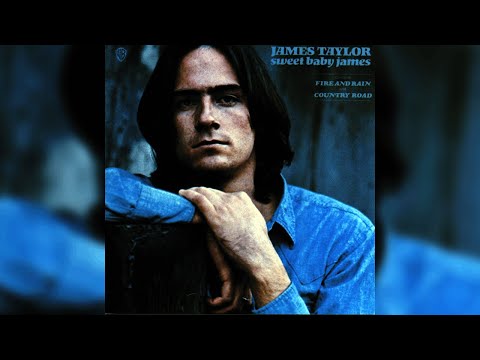
The commercial breakthrough did not come immediately. After Taylor signed with Warner Bros. and released Sweet Baby James in 1970, the label re-released Carolina In My Mind as a single to capitalize on his suddenly urgent momentum. That reissue is what brought the song to the Billboard Hot 100. Debuting on November 14, 1970 at position 99, it climbed steadily through the final weeks of the year, reaching its peak of number 67 on the chart dated December 26, 1970, and spending seven weeks on the chart in total. By that point, Taylor had already proven himself a genuine star with Fire and Rain reaching the top five earlier that same year. Carolina In My Mind benefited from that goodwill, finding listeners who were hungry for everything he had recorded.
Sound, Craft, and the Singer-Songwriter Moment
The early 1970s saw a fundamental shift in American popular music. The maximalism of late-1960s psychedelia was giving way to something quieter, more personal, more confessional. James Taylor stood near the center of that shift alongside Carole King, Joni Mitchell, and Cat Stevens, all of whom were redefining what a pop song could be. Carolina In My Mind fits that lineage perfectly. Its production layers acoustic guitar with tasteful orchestration, never overwhelming the voice or the emotional core. The song demonstrates Taylor's gift for writing melody that feels inevitable, as if the notes could not have arranged themselves any other way. Radio in 1970 was a hospitable place for this kind of song: FM stations were embracing album-oriented material, and listeners had developed an appetite for artists who felt genuinely confessional.
Legacy and the Long Resonance
Few songs capture the feeling of homesickness with as much grace and musical economy as this one. In the decades since its original recording, Carolina In My Mind has become one of James Taylor's most recognized and beloved compositions, a fixture of his live performances and a standard in the broader canon of American singer-songwriter music. It appears on compilations, streaming playlists, and late-night sets with equal ease, because its emotional content is so universal. The curious backstory of its Apple Records origins, the McCartney bass line, the Harrison harmonies, the London sessions, gives it a historical weight that only deepens on closer inspection.
Taylor himself has spoken about the song across many years of interviews as something close to a touchstone, a piece of writing that arrived from real need rather than craft calculation. That authenticity is audible. Press play and you can hear a twenty-year-old trying to find his way back to something solid, and finding it in three chords and a melody that has lasted more than fifty years.
"Carolina In My Mind" — James Taylor's singular moment on the 1970s charts.
02 Song Meaning
"Carolina In My Mind" — Distance, Longing, and the Pull of Home
The Geography of Yearning
Few emotional states are as universal as homesickness, and Carolina In My Mind distills that feeling into something almost architectural. James Taylor wrote the song while living in London, thousands of miles from the North Carolina landscapes that had shaped him. The result is a piece of writing that uses a very specific geography, real places and real skies, to reach toward a feeling that anyone who has ever lived far from home will recognize. The song does not sentimentalize or simplify; it admits to the sharpness of absence while still finding something beautiful in the act of remembering.
Memory as Shelter
The central emotional move of the song is the use of imagination as a form of comfort. When the physical world feels alienating or incomplete, the mind can reconstruct the places and people it loves with remarkable vividness. Taylor's lyrics move through images of light, landscape, and the faces of people he misses, treating memory not as a passive recording but as an active refuge. This is a sophisticated psychological insight dressed in the plainest possible musical clothes. The imagery touches on the quality of Southern light, the particular feeling of Carolina air, and the warmth of specific human connections.
There is also a spiritual dimension running beneath the surface. Taylor was a young man who had spent time in a psychiatric hospital, who had struggled with genuine darkness, and who was trying to find solid ground. The song carries the weight of someone who has experienced fragility firsthand, which gives its longing for home a deeper register than simple nostalgia. Home here means not just place but stability, belonging, and the possibility of wholeness.
The Cultural Context of 1968 to 1970
The song was written and first recorded in 1968, a year of extraordinary turbulence in American life. Assassinations, urban unrest, the deepening Vietnam War, and generational fracture were reshaping the country. Against that backdrop, a song about longing for the simpler textures of home carried enormous cultural resonance. By the time the reissue reached the charts in late 1970, the mood had shifted again: Woodstock had come and gone, the idealism of the 1960s was curdling, and many listeners were turning inward. The singer-songwriter movement that Taylor helped define offered personal feeling as an alternative to collective disruption.
Why It Endures
The song has outlasted its chart moment by decades because its emotional core remains accessible across time. Homesickness does not age. The feeling of having left something behind, of carrying a place inside you when you cannot be in it physically, is as available to a twenty-first-century listener as it was to someone in 1970. Taylor's melody reinforces this timelessness, moving with a naturalness that makes the song feel less like a composed piece and more like something that always existed and was simply discovered. The acoustic guitar arrangement, simple and warm, strips away any period-specific production choices that might date the track, leaving only the voice and the feeling.
The song also benefits from its unusual backstory. Knowing that Paul McCartney played bass on the original recording adds a layer of historical fascination. But the song does not need that context to work. It works because Taylor found the words and the melody to express something real, and real things tend to last.
→ More from James Taylor
View all James Taylor hits →



→ More from the 1970s File
View all 1970s hits →




Keep digging