The 1970s File Feature
Get Up Offa That Thing
Get Up Offa That Thing: James Brown's Funk Resurgence in 1976 By the mid-1970s, James Brown found himself navigating one of the most turbulent periods of his…
01 The Story
Get Up Offa That Thing: James Brown's Funk Resurgence in 1976
By the mid-1970s, James Brown found himself navigating one of the most turbulent periods of his commercial career. The dominant cultural conversation in Black popular music had shifted toward the lush orchestrations of Philadelphia soul and the glittering arrangements of disco, formats that seemed to leave less room for the raw, gritty, stripped-down funk that Brown had essentially invented. His record sales had softened, his chart presence had thinned, and critics and industry observers had begun to question whether the self-proclaimed Godfather of Soul still held relevance in a rapidly evolving marketplace. Into this context came "Get Up Offa That Thing," a 1976 single released on Polydor Records that would prove to be one of the most important recordings of his later career.
The track was recorded at a point when Brown was acutely aware of his commercial situation. Rather than chasing trends or softening his aesthetic to compete with the slicker sounds of the day, he doubled down on the percussive minimalism and call-and-response dynamics that had always been his signature. The production is lean and kinetic, built on interlocking rhythmic patterns that prioritize groove above all else. The horn stabs, bass line, and drum work operate as a single unified engine, propelling the song forward with the kind of insistent momentum that Brown's best recordings had always possessed. The arrangement strips away anything that might dilute the rhythmic intensity, leaving the track sounding almost skeletal by the standards of mid-decade funk production.
Brown's vocal performance on the record is simultaneously commanding and collaborative. He delivers his instructions with the urgency of a bandleader and the charisma of a revival preacher, deploying the grunts, shouts, and exhortations that had become his vocal trademarks. The call-and-response between Brown and his backing vocalists gives the track an energy that feels communal, as though the listener is being invited into a participatory ritual rather than simply observing a performance. This quality was entirely deliberate. Brown had always understood the relationship between performer and audience as fundamentally physical, and "Get Up Offa That Thing" was designed as a command as much as a song.
The single reached number 45 on the Billboard Hot 100, spending seven weeks on the chart. Those numbers may appear modest in isolation, but within the context of Brown's commercial trajectory at the time, the song represented a meaningful stabilization. On the R&B charts, the song performed considerably stronger, reinforcing its resonance within its core audience. The record demonstrated that Brown's foundational fanbase remained loyal and responsive to his uncompromising approach, even as the broader pop marketplace continued to evolve around him.
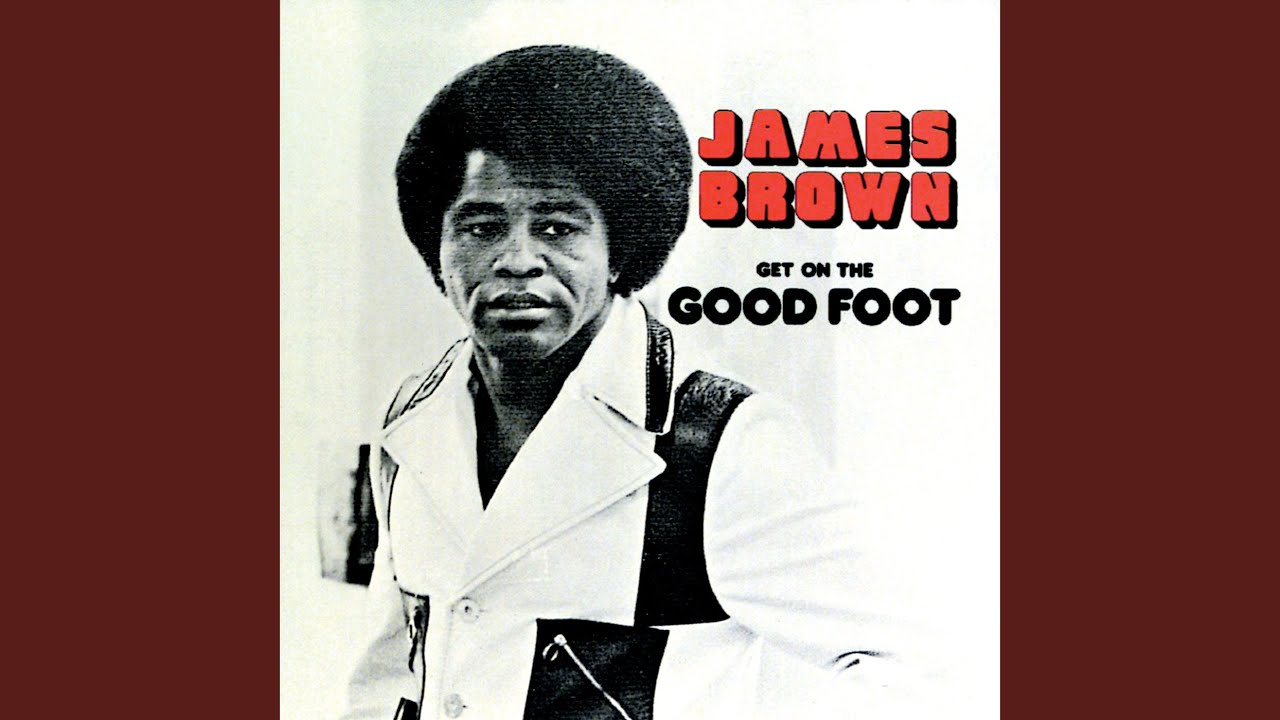
Polydor Records had signed Brown in 1971 following his long tenure at King Records, and the relationship had produced a series of ambitious and sometimes erratic releases across the first half of the decade. "Get Up Offa That Thing" arrived as part of an album of the same name, and it signaled a deliberate effort to refocus Brown's recorded output around the live energy and rhythmic directness that had always been his greatest strengths. The album itself was recorded with his band The J.B.'s, the collective of musicians who had been the backbone of his sound since the early 1970s and whose precision and cohesion gave the funk its structural integrity.
The song's legacy has grown considerably in the decades since its release. Its rhythm track has been sampled widely in hip-hop production, introducing the record to successive generations of listeners who encountered its sonic DNA embedded within new compositions. This pattern of recontextualization has been central to how Brown's entire catalog has survived and proliferated across the decades, and "Get Up Offa That Thing" has been among the more frequently revisited recordings in that regard. Hip-hop producers recognized in its stripped-down architecture the ideal raw material for reconstruction.
Historically, the song occupies a revealing place in the Brown narrative. It arrived at a moment when the commercial pressures on Black funk artists were genuinely significant. Disco was consolidating its grip on radio formats and record label priorities, and many artists who had flourished in the early funk era found themselves marginalized. Brown's decision to release a record as uncompromisingly physical as "Get Up Offa That Thing" was, in retrospect, an act of creative stubbornness that history has validated. He refused to dilute his identity at the precise moment when dilution might have seemed commercially rational.
The record also stands as evidence of Brown's remarkable consistency as a live-performance aesthetic translated to studio recording. Throughout his career, some of his most powerful records functioned less as conventional songs than as captured performances, and "Get Up Offa That Thing" belongs firmly in that tradition. Its energy is not composed so much as channeled, and the production serves primarily to document and organize that energy rather than to construct something artificially polished. That rawness is inseparable from the record's power and from its enduring capacity to motivate physical response in listeners across every subsequent decade.
02 Song Meaning
The Message Behind "Get Up Offa That Thing": Movement as Liberation
"Get Up Offa That Thing" operates on multiple levels simultaneously, functioning at once as a literal instruction, a motivational appeal, and a broader philosophical statement about the relationship between physical movement and psychological freedom. James Brown had long understood the dance floor as a space of genuine liberation, a place where the constraints and pressures of everyday life could be temporarily suspended through collective physical engagement. This song distills that philosophy to its most elemental and direct expression.
At its most immediate level, the song is an exhortation to move. Brown commands his audience to rise, to dance, to release whatever is holding them in place. The imperative register of the performance is unmistakable. He is not suggesting or inviting; he is instructing. But the instruction carries no coercive menace. Instead, it carries the warmth and urgency of someone who genuinely believes that movement will improve the condition of whoever is listening. The song promises that dancing will function as catharsis, a release of tension and trouble through the body rather than through contemplation.
Within the context of mid-1970s African American culture, this message carried particular weight. The post-Civil Rights era had brought legal victories but also new forms of economic and social stress, and the question of how communities maintained morale and collective energy was not trivial. Brown's music had always served a social function beyond entertainment, and "Get Up Offa That Thing" can be read as a communal prescription: when things are difficult, when circumstances are discouraging, the answer is to get up and move. The act of dancing becomes an assertion of vitality and resilience.
The song also functions as a statement about Brown's own artistic identity and persistence. Released during a period when his commercial standing had declined and the dominant music industry conversation had moved toward formats that seemed to exclude him, the title carries an autobiographical charge. "Get Up Offa That Thing" is in part a directive Brown was issuing to himself as much as to his audience. The record is an act of self-renewal, a declaration that the Godfather of Soul was not finished and would not accept commercial irrelevance without a fight conducted entirely on his own terms.
There is also a dimension of physical and spiritual connection embedded in the song's vision. Brown's conception of funk had always involved a near-mystical relationship between rhythm and the human body, a belief that the right groove could bypass rational cognition and speak directly to something more primal and authentic. "Get Up Offa That Thing" enacts this theory in its structure and delivery. The repetitive, hypnotic rhythmic pattern is designed not to be analyzed but to be felt, and the commands Brown delivers are meant to work on the body before they reach the mind. In this sense, the song is not merely about dancing; it is itself a demonstration of how music can function as a physical force.
The song's enduring resonance with listeners across subsequent decades suggests that its core message has remained legible across changing cultural contexts. The basic human need for release, for the physical expression of emotion, for communal movement as a response to individual or collective difficulty, is not era-specific. Brown articulated something genuinely universal in the song's central premise, and that universality is part of why the record has retained its power and continued to be discovered and valued by new audiences long after its original chart run ended.
→ More from James Brown
View all James Brown hits →



→ More from the 1970s File
View all 1970s hits →




Keep digging