The 1970s File Feature
Down And Out In New York City
Down And Out In New York City: James Brown's Urban Testimony of 1973 The Hardest Working Man at a Crossroads Spring 1973 found James Brown at a moment of gen…
01 The Story
Down And Out In New York City: James Brown's Urban Testimony of 1973
The Hardest Working Man at a Crossroads
Spring 1973 found James Brown at a moment of genuine artistic complexity. The man who had built his career on the most physically demanding performance ethic in popular music, the man whose rhythm innovations had shaped soul and funk for a decade, was navigating a changing commercial landscape with the instinct of a survivor. James Brown had entered the 1970s as an elder statesman of Black music while simultaneously being one of its most energetically contemporary forces. His political consciousness had deepened, his funk had hardened and become more radical, and yet he remained committed to commercial relevance in ways that some of his more avowedly underground peers had abandoned.
The early 1970s were a particularly creative period in Brown's long and extraordinarily prolific career. He had begun releasing music at a pace that seemed superhuman, contributing to multiple albums per year while maintaining a touring schedule that would have exhausted a performer half his age. His band, the JBs, had been reconstituted in the early part of the decade with players who understood exactly what the groove required, and the result was some of the most rhythmically sophisticated funk recordings ever made.
The Song and Its Cinematic Connection
Down and Out in New York City had an unusual genesis: it was recorded for the soundtrack of the 1973 blaxploitation film Black Caesar. The film, directed by Larry Cohen and starring Fred Williamson, was part of a wave of independently produced Black-cast action films that had been commercially significant since the breakthrough success of Shaft in 1971. Brown contributed the entire soundtrack, a commission that gave him the freedom to create music that was explicitly urban, socially aware, and grounded in the specific realities of Black city life.
The track's production had all the hallmarks of early-1970s Brown: a tight, interlocking rhythm section, horns that punctuated and propelled rather than merely decorated, and a vocal performance that moved between declaration and pleading with the ease of someone who had spent decades mastering the emotional range of Black American music. The song engaged directly with the difficulties of urban poverty and the specific quality of hardship that the city concentrated and intensified.
Seven Weeks on the Billboard Hot 100
The single debuted on the Billboard Hot 100 on March 10, 1973, entering at number 85. The climb was methodical over the following weeks, reaching the fifties before finding its commercial ceiling. The song peaked at number 50 on April 14, 1973, spending seven weeks on the chart. On the R&B charts, which were a better measure of Brown's core audience, the track performed with considerably more authority.
The Hot 100 performance reflected a characteristic pattern in Brown's commercial trajectory during this period: strong R&B success paired with more moderate crossover numbers, a reflection both of radio format segregation and of the degree to which Brown's music had always been rooted in Black musical traditions that mainstream pop radio engaged with selectively.
The Godfather in 1973: Politics and Groove
Brown's work in 1973 was politically engaged in ways that gave tracks like Down and Out in New York City additional resonance. His 1972 endorsement of Richard Nixon had provoked considerable controversy within Black communities, and his music of the period reflected a genuine engagement with the social realities of Black urban life that complicated any simple political categorization. Brown understood the city as a site of both vitality and devastating inequality, and his best work of the period held both of those truths simultaneously.
The blaxploitation soundtrack context gave the track a specific sonic identity: it was music for a visual world of urban grit, stylized action, and Black protagonism. Put it on now and feel the entire social atmosphere of a particular American urban moment rush in through the speakers.
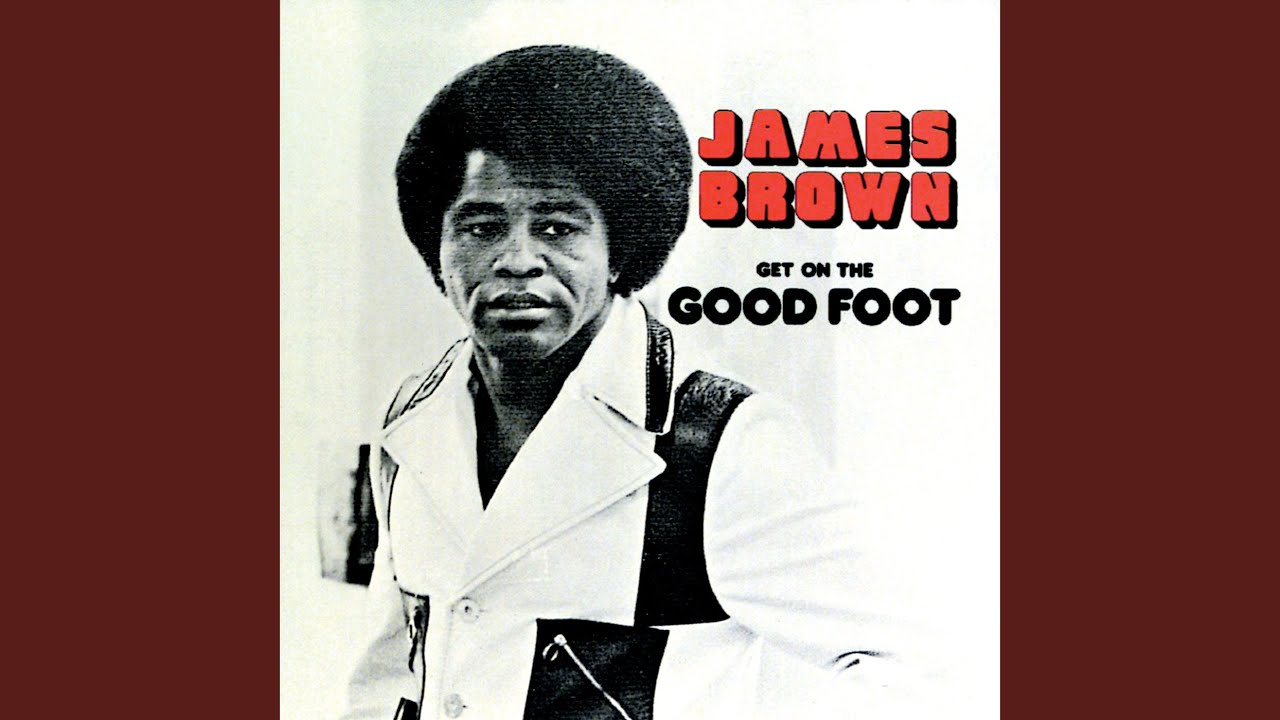
"Down And Out In New York City" — James Brown's singular moment on the 1970s charts.
02 Song Meaning
The Meaning of Down And Out In New York City by James Brown: Hardship, Dignity, and the Urban Blues
The City as Subject
New York City in the early 1970s was one of the most dramatically troubled urban environments in America. Fiscal crisis, rising crime rates, deindustrialization, and the social consequences of decades of concentrated poverty had combined to produce neighborhoods that felt genuinely embattled. The city that would later be mythologized as the birthplace of hip-hop was, in 1973, a place where large portions of the population were navigating material conditions of considerable severity. Down and Out in New York City placed that reality at the center of its emotional universe.
James Brown's engagement with urban hardship was not abstract or secondhand. His own biography, rising from extreme poverty in Georgia through the sheer force of musical talent and relentless work, gave him a particular authority when addressing the experience of being ground down by circumstance. The song did not romanticize poverty; it bore witness to it, using the groove as a form of testimony.
The Blaxploitation Context
The blaxploitation film movement of the early 1970s was, among other things, a formal experiment in representing Black urban life on screen for Black audiences. Films in the genre were often criticized for their violence and their sometimes reductive character types, but they also provided something that mainstream Hollywood had historically denied: Black protagonists with agency, Black urban spaces treated as full human environments rather than background, Black music at the center of the storytelling rather than on its margins.
Brown's Black Caesar soundtrack participated in that experiment. Music created explicitly to accompany images of Black city life carried a different weight than music produced for general pop consumption. Down and Out in New York City was written to be heard against a specific visual context, which gave its themes of urban struggle a documentary dimension. It was, in a meaningful sense, a piece of social observation as much as a pop song.
Dignity Through the Groove
One of the most characteristic features of James Brown's approach to difficult subject matter was his refusal to allow hardship to be the end of the story. The groove itself, relentless and propulsive, enacted a counter-argument to the despair that the lyrical content might otherwise suggest. To put a funk groove under a song about being down and out is to insist, implicitly but forcefully, that the people in that situation retain their vitality, their physicality, their right to dance and feel pleasure even amid difficulty. The music as form contradicts the content as statement.
This dynamic was central to the entire soul and funk tradition Brown had helped create. The blues had always operated on a similar principle, transforming suffering into something that could be sung and danced to, insisting on the humanity of people whose humanity the broader culture had worked systematically to deny.
Resonance Beyond the Moment
Urban poverty and the specific forms of alienation that city life intensifies have remained constant subjects in American popular music from the blues forward through soul, funk, hip-hop, and contemporary R&B. Down and Out in New York City sits at a crucial moment in that lineage. It belongs to the generation of socially conscious soul and funk that preceded hip-hop's emergence as the dominant voice of urban Black experience in the following decade. Songs like this one built the emotional and political vocabulary that later artists drew on and transformed. Heard in that context, it is not merely a period document but an originating source, music that helped make subsequent music possible.
→ More from James Brown
View all James Brown hits →



→ More from the 1970s File
View all 1970s hits →




Keep digging