The 1970s File Feature
The Way We Were/try To Remember
The Way We Were / Try To Remember — Gladys Knight And The Pips: Chart History and Recording Context Gladys Knight And The Pips released their medley of "The …
01 The Story
The Way We Were / Try To Remember — Gladys Knight And The Pips: Chart History and Recording Context
Gladys Knight And The Pips released their medley of "The Way We Were" and "Try To Remember" in 1975 on Buddah Records, combining two of the most emotionally resonant ballads in recent popular memory into a single recording that showcased Knight's extraordinary vocal gifts and the group's distinctive performance style. The medley format was not unusual for the era, particularly in live recordings and soundtrack contexts, but this combination carried particular commercial and emotional logic.
"The Way We Were" had been made famous by Barbra Streisand, whose version from the 1973 film of the same name had reached number one on the Billboard Hot 100 in early 1974 and won the Academy Award for Best Original Song. Written by Marvin Hamlisch with lyrics by Alan and Marilyn Bergman, it was one of the most successful movie songs of the decade. "Try To Remember," on the other hand, had a different lineage: written by Harvey Schmidt and Tom Jones for the long-running Off-Broadway musical The Fantasticks, which opened in 1960 and would go on to become the longest-running musical production in history, it was a song of gentle autumnal nostalgia that had circulated in the popular consciousness for over a decade by 1975.
The decision to pair these two songs was a conceptually elegant one. Both deal with memory, loss, and the emotional texture of things past, and their melodic characters are similar enough to make the medley feel unified rather than arbitrary. For Gladys Knight, whose vocal range and emotional depth had been established through years of work at Motown and then Buddah, the material was ideally suited. Knight's voice had a grain and authority that could honor the emotional weight of both compositions without reducing them to exercises in technical display.
The recording captured a performance quality suggesting the live-style immediacy that had always been one of the group's greatest strengths. The Pips, whose choreography and backing vocals had been a distinctive component of the group's identity since their earliest recordings in the early 1960s, provided the kind of harmonic and rhythmic support that elevated Knight's lead vocal rather than competing with it. The arrangement for the medley drew on orchestral resources that suited the lush, nostalgic character of both songs.
Buddah Records, where Gladys Knight And The Pips had relocated after their Motown years, had proved a productive commercial home. The group had scored several significant hits on the label, including "Midnight Train to Georgia," which had reached number one in 1973, and "I've Got to Use My Imagination." The medley release in 1975 appeared during a period when the group was consolidating their status as one of the preeminent soul vocal acts in American music.
The medley received considerable airplay on both R&B and adult contemporary radio, formats where Gladys Knight And The Pips had consistently found receptive audiences. The combination of a very recent hit associated with one of the biggest films of the period and a beloved show-tune standard gave the recording immediate name recognition across multiple listener demographics. Radio programmers who might have been uncertain about a straightforward cover of either song individually found the medley format an attractive proposition.
In the context of mid-seventies soul music, the recording reflected a broader trend toward orchestrated, emotionally expansive ballads that drew on the rich harmonic tradition of the Great American Songbook. Acts like Gladys Knight were navigating successfully between the rawer soul tradition from which they had emerged and the more polished, mainstream-oriented sounds that were dominating the pop charts. The medley was a precise expression of that navigation.
The recording documented Gladys Knight's remarkable ability to inhabit songs not originally written for her voice or her tradition and make them feel as though they had always belonged in that context. Her interpretive intelligence, which had been evident from her earliest recordings as a child performer in Atlanta, was fully mature by 1975, and the medley gave her an opportunity to demonstrate it in combination with some of the most beloved songwriting of the preceding two decades.
02 Song Meaning
The Way We Were / Try To Remember — Themes, Meaning, and Interpretive Legacy
The medley that Gladys Knight And The Pips constructed from "The Way We Were" and "Try To Remember" is a meditation on memory as both solace and sorrow, combining two songs that approach the same emotional territory from slightly different angles. Together, they form a more complete statement about the relationship between past experience and present consciousness than either could achieve individually.
"The Way We Were," with music by Marvin Hamlisch and lyrics by Alan and Marilyn Bergman, is a song about the selective power of memory, the way the mind preserves images of happiness from relationships that have ended and the complicated mixture of sweetness and pain that such remembering produces. The original film context, a romance between two people whose deep differences ultimately separate them, gave the song a narrative specificity that carried over into its life as a standalone pop hit. When Gladys Knight sings it, she brings a soulful directness that strips away some of the Hollywood gloss and emphasizes the raw emotional truth at the song's center.
"Try To Remember," from Harvey Schmidt and Tom Jones's The Fantasticks, approaches memory from a gentler direction. It is a song about the active cultivation of remembrance, an invitation to return to an emotional state associated with innocence and wonder. The autumnal imagery in the original lyric situates it in a specific season of life as much as a time of year, and the song functions as a kind of instruction manual for nostalgic contemplation. In 1975, with this song already having circulated for fifteen years through the long Off-Broadway run of the musical and through numerous cover versions, its status as a piece of shared cultural memory gave it additional resonance.
The decision to pair these two songs in medley form creates a meaningful dialogue between two modes of remembering. The first is involuntary and bittersweet, the way the mind surfaces images of a lost love uninvited. The second is deliberate and gently hopeful, a conscious exercise in returning to feelings of tenderness and openness. Together, they suggest that memory is not a single emotional experience but a complex faculty that operates in multiple registers simultaneously.
Gladys Knight's interpretive approach to both songs emphasizes emotional authenticity over technical display. Her voice carries a weight of lived experience that gives the songs' nostalgic themes a grounding in reality rather than sentiment. She does not merely perform the emotional content of the lyrics but appears to inhabit it, which is consistent with the soul vocal tradition from which she emerged. This interpretive depth is what distinguishes her version of these well-known songs from simple commercial covers.
For Knight's catalog, the medley represents the full development of her gift for inhabiting ballad material with psychological complexity. From her earliest recordings as a young performer in Atlanta through her Motown years and into her Buddah period, she had been progressively demonstrating a capacity for emotional nuance that set her apart from contemporaries who relied more heavily on raw vocal power. The medley format, which requires the performer to establish, maintain, and then shift emotional register across the transition between songs, is a particularly demanding vehicle, and Knight navigates it with characteristic authority.
The pairing also carries a cultural argument: that the emotional experiences encoded in these two songs, longing, remembrance, the ache of what has passed, are universal enough to transcend the specific contexts in which they were originally created. A Broadway musical and a Hollywood film score, combined and reinterpreted through the tradition of Black American soul music, produce something that belongs fully to none of those traditions and to all of them simultaneously. That synthesis is one of the more interesting achievements of the recording.
→ More from Gladys Knight And The Pips
View all Gladys Knight And The Pips hits →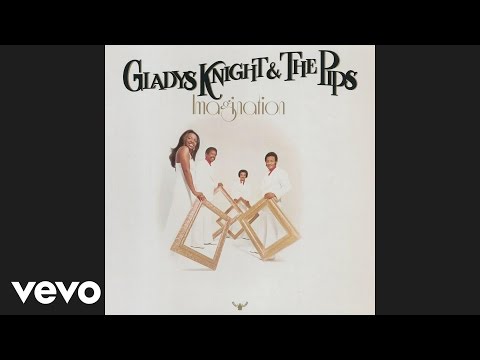


→ More from the 1970s File
View all 1970s hits →




Keep digging