The 1970s File Feature
I've Got To Use My Imagination
I've Got to Use My Imagination — Gladys Knight and the Pips (1973) By the autumn of 1973, Gladys Knight and the Pips were in the midst of one of the most pro…
01 The Story
I've Got to Use My Imagination — Gladys Knight and the Pips (1973)
By the autumn of 1973, Gladys Knight and the Pips were in the midst of one of the most productive and critically admired phases of their long career. Having relocated from Motown to Buddah Records earlier that year, the group brought with them a mature, soulful sound and a vocalist in Gladys Knight whose abilities had grown substantially since the group's early recordings in the 1960s. "I've Got to Use My Imagination" arrived in this context as one of the defining singles of the period, a sophisticated soul production that showcased both Knight's vocal authority and the group's ability to work within the emerging Philadelphia-influenced sound that was reshaping Black popular music in the early 1970s.
The song was written by Gerry Goffin and Barry Goldberg, a pairing that brought considerable craft to the project. Goffin, one of the great Brill Building-era lyricists whose work with Carole King had defined a substantial portion of early-1960s pop, brought his characteristic attention to emotional nuance and interior experience. Goldberg, a pianist and producer associated with Chicago blues and rock, provided a musical sensibility that fit comfortably within the gutsy, uptown soul direction that Knight's records were taking. The combination produced a song that operated at a higher level of sophistication than much of the pop-soul competition of the period.
The production of the single placed Knight's voice within an arrangement that was full without being cluttered, drawing on lush strings and rhythm section work that reflected the prevailing sound of early-1970s soul without sacrificing the directness that had always characterized the group's best work. The Pips, William Guest, Edward Patten, and Bubba Knight, contributed background vocals that framed and supported rather than competed with Gladys's lead, their harmonies providing a warm cushion that amplified the emotional content of the lyric.
Knight's vocal performance on "I've Got to Use My Imagination" was widely noted by critics as one of the most accomplished of her career at that point. She brought to the recording a quality that distinguished her from many of her contemporaries: the ability to communicate genuine emotional complexity rather than simply projecting intensity. The song's lyrical content, which deals with the psychological and emotional work of keeping a relationship alive through imagination and will, demanded this level of interpretive sophistication, and Knight delivered it without apparent effort.
The single was released in late 1973 and entered the Billboard Hot 100, climbing steadily through the winter months. It reached number four on the Hot 100 in early 1974, giving the group one of their highest-charting singles of the decade. The record also performed strongly on the R&B chart, where the group maintained a consistent and loyal audience. The crossover success of the single demonstrated that Knight's move to Buddah Records had been commercially astute, giving the group access to a promotional apparatus that could support ambitious records with appropriate market reach.
The single arrived in the same period as "Midnight Train to Georgia," which had become a massive hit for the group, reaching number one on the Hot 100 in the autumn of 1973 and winning the group Grammy Awards. "I've Got to Use My Imagination" thus entered the market with the benefit of exceptionally high public awareness and radio goodwill. The two singles together represented a remarkable sustained run of quality and commercial success that established this period as the peak of the group's mainstream impact.
Critical reception was enthusiastic. Music journalists who had followed Knight's career from the Motown years noted the expanded emotional range that the Buddah recordings demonstrated. The production quality of "I've Got to Use My Imagination" was held up as evidence that the early-1970s soul tradition at its best was capable of combining commercial accessibility with genuine artistic ambition. The Pips' vocal contributions were also noted as an element that distinguished the group from solo soul acts, providing a textural richness that few other acts could match.
The track became a staple of Knight's live performances and a reliable presence in her retrospective collections. Its position in the group's catalog represents a moment when everything that Gladys Knight and the Pips had built over more than a decade of recording came together in a single that was simultaneously artistically satisfying and commercially successful, a combination that is harder to achieve than it might appear.
The group's success during this period had a lasting effect on how their legacy was evaluated. The Buddah years, and "I've Got to Use My Imagination" in particular, became central exhibits in the argument for the group's place among the premier soul acts of their generation. Gladys Knight and the Pips were inducted into the Rock and Roll Hall of Fame in 1996, with critics and nominators frequently citing the depth and consistency of the early-1970s recordings as evidence of their sustained excellence.
02 Song Meaning
What "I've Got to Use My Imagination" Means: Willpower and Romantic Survival
"I've Got to Use My Imagination" is, at its core, a song about the internal resources that a person deploys to sustain love when external circumstances make that love difficult. The narrator acknowledges a gap between the romantic reality and the romantic ideal, and rather than treating that gap as a reason for despair or departure, the song frames the act of imagining a better version of the relationship as an act of agency and commitment. The title phrase functions as both confession and declaration: the narrator admits that sustaining the relationship requires work, and claims that willingness to do that work as a demonstration of devotion.
This is a more psychologically complex premise than most soul hits of the era attempted. The standard vocabulary of soul music in the early 1970s tended toward direct emotional declaration, the unbounded joy of mutual love, or the devastation of its absence. "I've Got to Use My Imagination" occupies a more ambiguous middle space, where love is neither entirely satisfying nor entirely lost, where the narrator is actively engaged in maintaining something that requires maintenance. Gerry Goffin's lyrical sophistication is evident in the way the song avoids the easy resolution of either celebration or mourning, choosing instead to sit in the more honest territory of sustained effort.
Gladys Knight's interpretation of this material is inseparable from its meaning. Her vocal approach communicates both the burden and the dignity of the narrator's position. She does not perform the song as a lament, which would suggest helplessness, nor as a simple affirmation, which would suggest that the imaginative work has already succeeded. The performance occupies the present tense of the emotional struggle, the moment in which the narrator is actively choosing to stay and to imagine, rather than the settled resolution of having done so successfully. This quality gives the recording a specificity and depth that distinguishes it from interpretively simpler material.
The broader significance of the song within Knight's catalog is considerable. Coming in the period immediately following "Midnight Train to Georgia," one of the most celebrated soul recordings of the decade, "I've Got to Use My Imagination" demonstrated that the group could operate across a range of emotional registers without sacrificing the core qualities that made their work distinctive. Where "Midnight Train to Georgia" dealt in grand romantic gesture and sacrifice, "I've Got to Use My Imagination" explored the quieter, less dramatic work of keeping love viable through ordinary time. Together the two singles present a remarkably complete picture of what mature romantic commitment actually looks like.
In the context of Black American popular music in 1973 and 1974, the song also carries meaning as an example of what the soul tradition could produce when given room to develop beyond the constraints of the classic Motown formula. Buddah Records gave the group the space to work with writers who brought additional emotional range, and the result was a series of recordings that expanded what soul music could say and how it could say it. "I've Got to Use My Imagination" sits at the center of that expansion, a record that used the genre's emotional vocabulary to explore psychological territory that required more than volume or passion to express.
The song has continued to resonate with listeners across generations because the emotional situation it describes is genuinely universal. The challenge of maintaining romantic commitment through periods of difficulty, of choosing imagination and will over simpler alternatives, is not specific to any era or demographic. Knight's performance makes the choice feel noble rather than naïve, which is perhaps the most important thing the song achieves.
→ More from Gladys Knight And The Pips
View all Gladys Knight And The Pips hits →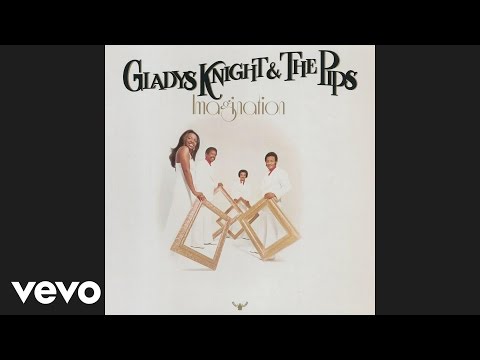


→ More from the 1970s File
View all 1970s hits →




Keep digging