The 1970s File Feature
If I Were Your Woman
If I Were Your Woman — Gladys Knight And The Pips A Voice Built for the Turning of a Decade The final weeks of 1970 carried a particular emotional weight. Th…
01 The Story
If I Were Your Woman — Gladys Knight And The Pips
A Voice Built for the Turning of a Decade
The final weeks of 1970 carried a particular emotional weight. The 1960s had closed with violence, upheaval, and an almost desperate yearning for something warmer, more intimate, more personal. Radio was responding in kind, and soul music was filling the space that psychedelia and protest had vacated. Into that landscape walked Gladys Knight, already a decade into her career, with a song that felt less like a single and more like a confession.
Gladys Knight And The Pips had been recording since 1961, first on the Fury label and then at Motown, where they spent years polished and packaged but never quite given the material that matched the full measure of Knight's voice. That changed when the group signed with Buddah Records and found a creative home that allowed them room to breathe. If I Were Your Woman arrived as part of that Buddah era, and it announced a new phase in the group's story.
The Making of a Soul Standard
The track was written by Gloria Jones, Pam Sawyer, and LaVerne Gage, a team with strong Motown connections who understood how to build a lyric around raw emotional longing. The production carries the hallmarks of early 1970s soul: lush strings arranged to shimmer rather than overwhelm, a rhythm section that moves with deliberate grace, and background harmonies from the Pips that frame Knight's lead without ever competing with it.
What makes the recording remarkable is how Knight inhabits the song's central conceit with complete conviction. The narrator is addressing a man who is with another woman, imagining what she would give him if the situation were different. It could have read as petty or desperate in lesser hands. Knight turns it into something dignified, even aching. Her phrasing on the verses is measured, almost conversational, building tension so that when the chorus opens up, the release feels earned and real.
Climbing the Charts Through the Winter
The single entered the Billboard Hot 100 on November 28, 1970, debuting at position 86. From there its ascent was steady and purposeful. Week by week through December it climbed: 59, 42, 32, 24. The momentum continued into the new year, and by February 13, 1971, If I Were Your Woman had reached its peak of number 9 on the Hot 100, spending a total of 15 weeks on the chart. It was one of the group's strongest pop crossover performances to that point in their career, proving that the Buddah move was exactly the right one.
On the R&B chart, the song performed even more emphatically, reaching number one and spending weeks at the top. That dual success, genuine soul credibility alongside mainstream pop penetration, was the combination that had always seemed just out of reach during the Motown years.
The Pips and the Architecture of Harmony
Any discussion of this recording must give proper credit to the Pips themselves. Bubba Knight, William Guest, and Edward Patten provided a harmonic cushion that gave Gladys room to take emotional risks. The call-and-response interplay between Knight and the Pips on this track is textbook soul group dynamics: the leads soar, the harmonies catch, and every breath feels shared. They were never mere backing singers. They were half the emotional argument.
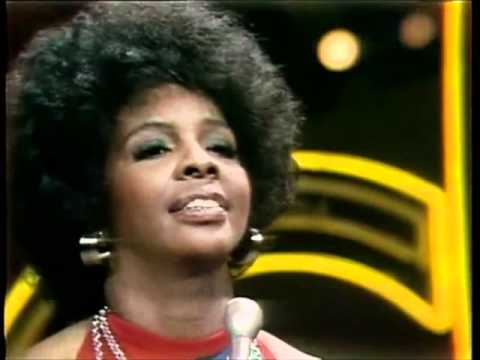
The group's choreography and live presentation were equally important to how the song landed in concert, where Knight's vocal authority combined with the Pips' synchronized movement created something that audiences of the era found genuinely thrilling. Television appearances during this period helped cement the song in public memory.
A Cornerstone of the Knight Legacy
Fifty-plus years on, If I Were Your Woman remains one of the definitive entries in Gladys Knight's catalog, which is saying something given that catalog includes "Midnight Train to Georgia," "Neither One of Us," and "I Heard It Through the Grapevine." The song has been covered, sampled, and referenced across multiple generations of R&B and soul, a testament to the durability of its emotional logic. Mary J. Blige recorded a celebrated version in 1992, introducing the lyric to a hip-hop generation and proving that its themes were as resonant as ever.
For listeners encountering the original for the first time, the reward is in the details: the way Knight colors individual syllables, the unhurried pace of the arrangement, the sense of a fully realized adult emotion captured in three and a half minutes of vinyl. Press play and give it the full attention it demands.
"If I Were Your Woman" — Gladys Knight And The Pips' singular moment on the 1970s charts.
02 Song Meaning
If I Were Your Woman — Themes, Longing, and the Soul of 1970
The Geometry of Unrequited Desire
There is a specific kind of pain that If I Were Your Woman anatomizes with almost clinical precision: the longing of someone who watches from the outside, certain that they could do better for a person who does not belong to them. The song's narrator is not passive. She is not wallowing. She is building a case, calmly and completely, for a love that has not been given the chance to prove itself. That rhetorical structure, the conditional "if," gives the lyric a restrained urgency that never tips into bitterness.
The emotional core of the song is competence and generosity. The narrator is not asking for the man to leave his partner out of selfishness. She is arguing, with quiet conviction, that she would care for him better, understand him more completely, and protect what they might have together. That framing separates the song from simpler narratives of romantic jealousy. It is more generous, more complicated, and more truthful.
Soul Music as Emotional Testimony
In the context of early 1970s soul, this kind of direct emotional speech was both commercially viable and culturally significant. Soul music in that era functioned as a form of community testimony, a way for Black American artists to articulate interior lives that mainstream entertainment rarely bothered to depict. Gladys Knight's delivery transforms the lyric from a personal plea into something that felt shared, communal, representative of a whole range of experiences that listeners brought to the song.
The production choices reinforce this. The arrangement is warm without being saccharine, and the Pips' harmonies create a sense that the narrator is not alone in her feeling. When the chorus swells, it carries the weight of collective emotion rather than individual complaint. That is the genius of the soul group format as applied here: intimacy scaled up.
Gender, Agency, and the Love Song of 1970
Read through the lens of its moment, the song carries a quiet assertion of female agency that was not always a given in the pop love songs of previous decades. The narrator is the active party in the emotional transaction being described. She is the one who sees clearly, who knows her own worth, who articulates what she would bring to the relationship. She is not waiting to be chosen so much as making a measured argument for being chosen. That confidence, delivered with Knight's particular combination of warmth and authority, gave the song a resonance that extended well beyond its immediate audience.
A Legacy Confirmed by Repetition
The fact that Mary J. Blige's 1992 cover became one of the landmark recordings of early 1990s R&B is telling. Blige's version arrived in a completely different sonic landscape, hip-hop-inflected and raw-edged, and yet the emotional logic of the lyric translated perfectly. That adaptability is the mark of a genuinely well-constructed song: the themes are human enough to survive radical recontextualization.
For contemporary listeners, the original Knight recording remains the definitive version because of what Knight adds to the lyric through sheer interpretive force. Her voice does not simply deliver the words; it enacts the emotions they describe. The hesitations, the surges of conviction, the moments of quiet restraint all tell a story that the written lyric alone could not fully contain. That is what separates a great song from a great performance, and this is emphatically both.
→ More from Gladys Knight And The Pips
View all Gladys Knight And The Pips hits →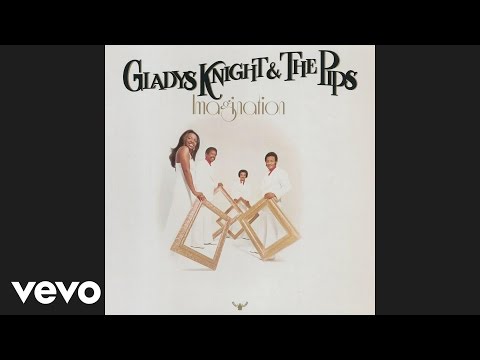


→ More from the 1970s File
View all 1970s hits →




Keep digging