The 1970s File Feature
Happiness Is Me And You
"Happiness Is Me And You" — Gilbert O'Sullivan The Irishman Who Made Melancholy Sound Cheerful There was nobody quite like Gilbert O'Sullivan in the early 19…
01 The Story
"Happiness Is Me And You" — Gilbert O'Sullivan
The Irishman Who Made Melancholy Sound Cheerful
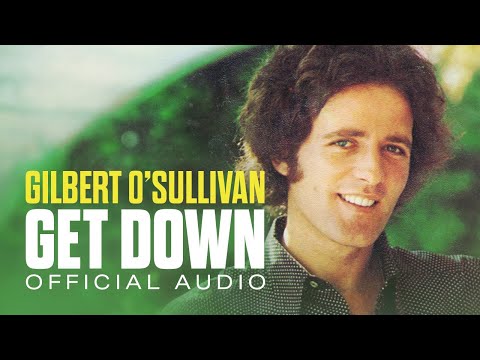
There was nobody quite like Gilbert O'Sullivan in the early 1970s pop landscape. The Irish singer-songwriter from Waterford had constructed an image that was simultaneously anachronistic and endearing: the pudding-basin haircut, the flat cap, the schoolboy clothes, as if someone had spirited a 1920s music hall performer into the age of glam rock and progressive ambition. The persona was calculated, but the songwriting was genuine. O'Sullivan possessed an uncommon gift for melodies that lodged in the memory and lyrics that handled complex emotions with a light, almost conversational touch. By 1974, he had proven himself repeatedly as a commercial force on both sides of the Atlantic, and "Happiness Is Me And You" represented another expression of the qualities that had made him one of the most distinctive voices of the decade's first half.
The MAM Records Era
O'Sullivan recorded for MAM Records, the label run by his manager Gordon Mills, who had built his career guiding Tom Jones and Engelbert Humperdinck to international success. Mills understood how to develop and sustain an artist's commercial appeal, and his work with O'Sullivan produced a remarkable run of chart success in the early 1970s. "Clair," the 1972 single about Mills's daughter, had reached number one in the UK and climbed to number two in the United States. "Alone Again (Naturally)" had performed similarly, establishing O'Sullivan's particular combination of gentle melody and unexpectedly dark lyrical content as a viable commercial formula for international audiences.
Charting in America's Top Forty Periphery
"Happiness Is Me And You" debuted on the Billboard Hot 100 on March 23, 1974, entering at number 87. The climb through March and into April was steady: 76, 66 in successive weeks. The single reached its peak of number 62 on April 13, 1974, where it held for two consecutive weeks before beginning its decline. The track spent seven weeks on the Hot 100. The peak position of 62 placed it outside the top forty, representing a noticeably weaker American performance than O'Sullivan's peak years had delivered. By 1974 his commercial momentum in the United States was beginning to ebb, and "Happiness Is Me And You" registered this shift even as it maintained a modest chart presence.
The Sound of Bittersweet Optimism
What distinguished "Happiness Is Me And You" from generic love song territory was O'Sullivan's characteristic awareness that happiness is neither simple nor guaranteed. His best songs acknowledged difficulty and loss even when their surface mood was celebratory, and this one maintained that quality. The production, characteristic of the period, was warm and slightly ornate, with string arrangements that added emotional weight without overwhelming the vocal. O'Sullivan's voice carried its usual combination of intimacy and slight detachment, as if he were observing his own happiness from a respectful distance rather than fully inhabiting it.
A Career at a Crossroads
The mid-1970s brought significant changes to O'Sullivan's professional life. A legal dispute with Gordon Mills that began in the mid-1970s and concluded in a landmark 1982 court ruling would reshape his career and the broader conversation about artist rights in the music industry. The case established important precedents regarding the rights of artists in relation to their managers and labels. "Happiness Is Me And You" appeared before these legal battles fully materialized, capturing the artist at a moment when his commercial fortunes were shifting but his creative voice remained distinctly his own. Press play and hear a craftsman at work, even when the larger machinery was beginning to show its cracks.
What makes "Happiness Is Me And You" worth revisiting beyond its chart context is its fidelity to the emotional truth of a particular kind of contentment. O'Sullivan was operating in a genre tradition that stretched back through the Brill Building songwriters and further into the pop songwriting of the mid-twentieth century, a tradition that valued precision of feeling over grandeur of statement. The song's quiet confidence in its subject matter reflected a songwriter who had not yet been worn down by the industry complications that would follow. In 1974, he was still making music from a position of creative security, and that confidence is audible in every bar.
"Happiness Is Me And You" — Gilbert O'Sullivan's singular moment on the 1970s charts.
02 Song Meaning
"Happiness Is Me And You" — Meaning and Legacy
The Simple Equation
The title of Gilbert O'Sullivan's 1974 single contains an entire worldview in five words. The claim that happiness reduces to the presence of another person beside you is ancient in love poetry and popular song, but O'Sullivan brought to it a characteristic specificity and vulnerability that made the familiar seem personal. The song did not reach for cosmic significance or dramatic narrative; it simply identified a feeling and named its source with the directness of someone who has figured something important out and wants to share it clearly. This modesty of ambition was, paradoxically, one of O'Sullivan's greatest strengths as a songwriter.
Happiness as Negotiated, Not Guaranteed
O'Sullivan's best work in the early 1970s consistently acknowledged that positive emotional states are earned rather than assumed, that joy exists against a backdrop of the possibility of its absence. "Happiness Is Me And You" carried this awareness in its structure. The happiness named in the title was not triumphant or uncomplicated; it was the quiet recognition of something that could just as easily not exist. This emotional register, somewhere between gratitude and relief, gave the song a depth that simpler celebrations of romantic love could not match. Listeners who had experienced the fragility of the feeling would recognize O'Sullivan's rendering of it immediately.
The Gentle Pop Tradition
O'Sullivan occupied a specific and somewhat undervalued corner of early 1970s pop: the tradition of gentle, melody-forward songwriting that prioritized emotional precision over sonic ambition. While the era's critical conversation centered on progressive rock, glam, and the emerging singer-songwriter movement, a significant portion of the commercial music market continued to want exactly what O'Sullivan provided. "Happiness Is Me And You" was a direct communication, a song that made no formal demands on the listener and delivered its emotional content with maximum efficiency. The production supported rather than dominated the lyric, and the result was a record that wore its craft without displaying it.
An Unassuming Legacy
Gilbert O'Sullivan's contributions to early 1970s pop songwriting have been somewhat obscured by the legal battles that interrupted and complicated his career trajectory, but "Happiness Is Me And You" and its siblings in his catalog deserve appreciation on their own terms. The song's particular achievement was to make something genuinely resonant from apparently simple materials: a direct lyric, an accessible melody, a production that served the song rather than the producer's ego. In an era when extravagance was often mistaken for ambition, that discipline represented its own kind of artistic statement. The 1970s produced many records that said too much; O'Sullivan's gift was knowing how little was actually required.
"Happiness Is Me And You" — Gilbert O'Sullivan's singular moment on the 1970s charts.
→ More from Gilbert O'Sullivan
View all Gilbert O'Sullivan hits →


→ More from the 1970s File
View all 1970s hits →




Keep digging