The 1970s File Feature
Little Green Bag
Little Green Bag — George Baker Selection (1970) "Little Green Bag" is a rock and funk-inflected track by the Dutch group George Baker Selection, released in…
01 The Story
Little Green Bag — George Baker Selection (1970)
"Little Green Bag" is a rock and funk-inflected track by the Dutch group George Baker Selection, released in 1969 in the Netherlands and achieving its broader international chart success throughout 1970. The song reached number 21 on the Billboard Hot 100 in the United States, representing one of the most notable transatlantic successes achieved by a Dutch pop act during that era. It was released on Colosseum Records in Europe and picked up for American distribution, bringing the group's distinctive sound to audiences far beyond their home country during a period when European pop acts faced significant barriers to American chart penetration.
George Baker Selection was formed by Hans Bouwens, who performed under the stage name George Baker, along with several other Dutch musicians. The group had established themselves in the Netherlands through a series of recordings that blended rock, funk, and pop elements in a way that reflected both American influences and a distinctively European sensibility. "Little Green Bag" was written by Jan Visser and George Baker himself, and the songwriting partnership produced a track that was simple enough to be immediately accessible while having sufficient rhythmic personality to stand out from the crowd of pop records competing for airplay in 1970.
The track's production is characterized by a driving guitar riff that opens the song and returns throughout as its central musical hook. The riff has a swaggering, confident quality that gives the recording an energy entirely appropriate to its lyrical subject matter, the search for something that seems to have been lost or misplaced. The rhythm section provides a funk-adjacent groove that was somewhat unusual for European pop acts of the period, suggesting an engagement with American Black music that went beyond superficial imitation to genuine rhythmic internalization.
The song's American success in 1970 was part of a broader period of unusual openness in the Billboard Hot 100 to international acts, particularly from the United Kingdom and continental Europe. Following the British Invasion of the mid-1960s, American radio audiences had demonstrated a willingness to embrace music from overseas, and the chart reflected this cosmopolitanism during the late 1960s and early 1970s. George Baker Selection benefited from this environment, finding an audience that responded to the track's confident energy without necessarily having any prior familiarity with the Dutch pop scene.
The band continued releasing music through the early to mid-1970s and achieved additional European success, but "Little Green Bag" remained their most internationally recognized recording. The song's relatively modest American chart position of number 21 belies its lasting cultural footprint, which was dramatically expanded by its prominent use in Quentin Tarantino's 1992 film "Reservoir Dogs." The film opened with a sequence in which "Little Green Bag" plays over the credits as the film's suited ensemble of thieves walks in slow motion, and the combination of the song's swagger and the scene's iconic visual composition created one of the most celebrated opening sequences in American independent film history.
The Tarantino placement introduced "Little Green Bag" to an entirely new generation of listeners and transformed its cultural status from a minor international hit to a genuine pop culture touchstone. In the years following "Reservoir Dogs," the track became one of the most recognizable examples of how a song can be revived and recontextualized decades after its original release, with its cool, driving energy proving perfectly suited to the aesthetic of American independent cinema of the 1990s.
The song's use in "Reservoir Dogs" generated substantial new commercial activity, with the soundtrack album selling widely and introducing the George Baker Selection to audiences across multiple continents who would never have encountered the original 1970 recording through conventional channels. This second life is one of the more remarkable examples in popular music history of a catalog recording achieving far greater cultural prominence through film licensing than it had at the time of its original release.
George Baker continued to record and perform in subsequent decades, and "Little Green Bag" remained the centerpiece of his live shows and a consistent source of licensing revenue. The song's resilience across more than five decades of popular culture shifts demonstrates the durability of its core musical identity: a driving groove, a memorable riff, and an irresistible combination of energy and cool that continues to resonate with listeners encountering it for the first time.
02 Song Meaning
The Meaning and Afterlife of "Little Green Bag"
"Little Green Bag" presents a lyrical puzzle that has occupied listeners for decades. The title object, a small green bag, functions as a MacGuffin of sorts, an item whose specific identity and significance are less important than the mood of searching and urgency that the narrator's pursuit of it generates. Various interpretations have circulated since the song's release, with some listeners reading the "bag" as a drug reference and others treating it as a straightforward image of something precious that has been lost. The song's deliberate ambiguity on this point is part of what makes it so durable; it accommodates multiple interpretive frameworks without definitively committing to any one of them.
The song's emotional register is one of cool determination rather than desperate anxiety. The narrator is looking for something, but the musical setting of that search is swaggering and confident rather than frantic. This tonal quality gives "Little Green Bag" its particular personality: it is the sound of someone who is certain they will find what they are looking for, and that certainty transforms the search from a source of anxiety into an expression of self-possession. The "bag" is almost incidental to this larger statement about attitude and confidence.
When Quentin Tarantino chose "Little Green Bag" to open "Reservoir Dogs" in 1992, he was responding to exactly these qualities. The song's swagger and forward momentum made it the ideal accompaniment for a sequence designed to establish the cool, menacing confidence of its suited ensemble of criminals. The pairing of the track with that specific visual context gave "Little Green Bag" a second meaning that layered over its original one, associating the song permanently in many listeners' minds with a particular aesthetic of stylized criminal cool that Tarantino's cinema was in the process of defining.
This cultural recontextualization raises interesting questions about how meaning accretes to popular songs over time. "Little Green Bag" in 1970 meant something specific to Dutch audiences encountering it in its original context. It meant something somewhat different to American listeners who encountered it through radio play that year, filtered through their own cultural frameworks. And it meant something quite different to the generation of viewers who first encountered it through "Reservoir Dogs," for whom it was inseparable from the film's visual and narrative context.
The song's musical construction is particularly well suited to carrying these accumulated meanings without being overwhelmed by them. The driving riff and the confident rhythm have a kind of purposeful neutrality that allows them to serve multiple emotional and narrative contexts without losing their identity. This musical adaptability is itself a form of meaning, a quality that distinguishes songs with genuine staying power from those that are too specifically tied to the circumstances of their original creation to survive recontextualization.
For George Baker Selection, "Little Green Bag" represents a creative achievement that exceeded anything else in their catalog, not because the other recordings are without merit but because this particular track achieved a combination of musical personality and cultural resonance that made it effectively indestructible. It represents the kind of pop art that starts with simple materials, a riff, a groove, an ambiguous lyrical image, and constructs from them something that outlasts its moment to become a permanent fixture in the landscape of popular culture.
→ More from George Baker Selection
View all George Baker Selection hits →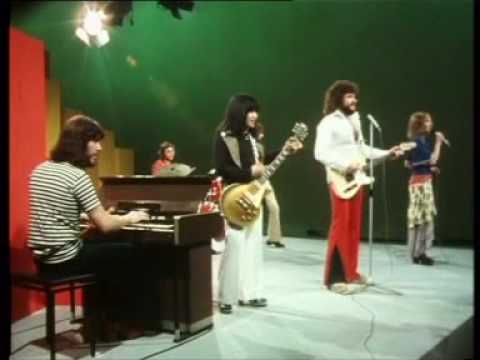

→ More from the 1970s File
View all 1970s hits →




Keep digging