The 1970s File Feature
You And Your Folks, Me And My Folks
Funkadelic's "You And Your Folks, Me And My Folks" and the Early Psychedelic Funk of George Clinton's Vision In 1971, Funkadelic was still in the process of …
01 The Story
Funkadelic's "You And Your Folks, Me And My Folks" and the Early Psychedelic Funk of George Clinton's Vision
In 1971, Funkadelic was still in the process of defining itself as a recording entity distinct from the Parliament side of George Clinton's expanding musical universe. The relationship between Parliament and Funkadelic, two groups sharing essentially the same core membership but operating under different labels and with different sonic emphases, was one of the more creative institutional arrangements in the history of American popular music, allowing Clinton to pursue different aesthetic directions simultaneously while maintaining a unified artistic vision across both projects. Funkadelic, on Westbound Records, was where Clinton's most experimental, psychedelic-rock-influenced impulses found their most explicit expression.
The early Funkadelic recordings drew explicitly on the late-1960s psychedelic rock tradition that had been developed primarily by white rock bands, fusing that tradition's extended improvisatory structures, distorted guitar textures, and cosmic lyrical sensibility with the deep rhythmic foundation of Black popular music. The result was a genuinely new musical hybrid, neither straightforward rock nor conventional R&B but something that combined elements of both in service of a psychedelic vision that was also distinctly grounded in the African American cultural experience.
"You And Your Folks, Me And My Folks" reached number 91 on the Billboard Hot 100 in 1971, spending two weeks on the chart. This was modest by commercial standards, but the context matters: Funkadelic's recordings in this period were not designed primarily for conventional radio programming, and their chart activity was as much a function of the underground and alternative distribution channels through which their music circulated as of mainstream radio promotion. A Hot 100 appearance at number 91 represented genuine national commercial penetration for a band operating at the edges of conventional popular music formats.
The title's structure, built on the pairing of "you and your folks" with "me and my folks," immediately signals the collective orientation that defined Clinton's artistic vision. This was not music about individual experience or private emotion; it was music about community, about the relationships between groups, about the shared experience of people who understand themselves as belonging to something larger than themselves. The "folks" framing carried specific resonances in 1971, a period of heightened Black political and cultural consciousness in which the concept of community solidarity had urgent contemporary meaning beyond its purely social dimensions.
Funkadelic's bassist Bootsy Collins had not yet joined the group at this stage; he would arrive in 1972 and transform the rhythm section's character significantly. But the core ensemble that recorded the early Funkadelic albums was already a formidable musical unit, capable of sustaining the extended, groove-oriented structures that Clinton's vision required. The guitarists in the group, including Eddie Hazel whose work on "Maggot Brain" from the same year would later be recognized as one of rock music's defining recorded guitar performances, brought to Funkadelic's recordings a quality of electric intensity that gave the psychedelic framework genuine visceral power.
The production on the early Funkadelic recordings reflected the aesthetic decisions of a group that was deliberately operating outside the polished mainstream of contemporary Black popular music. Where Motown and soul music more broadly had cultivated a production standard designed to maximize pop accessibility, Funkadelic embraced a rawer, more urgent sound that prioritized emotional and psychedelic immediacy over commercial finish. This was a deliberate artistic choice. Clinton was not failing to achieve the Motown standard; he was rejecting it in favor of something that felt more authentically connected to the moment's political and cultural energy.
The two-week Hot 100 presence of "You And Your Folks, Me And My Folks" is a small thread in the larger tapestry of a career that would eventually produce some of the most influential recordings in the history of funk and R&B. George Clinton's combined Parliament-Funkadelic universe would go on to chart significantly more prominently in the mid-to-late 1970s, and its influence on hip-hop through extensive sampling would eventually make it one of the most recycled bodies of music in the genre's history.
But in 1971, Funkadelic was still establishing the aesthetic foundation that would make all of that subsequent influence possible, and "You And Your Folks, Me And My Folks" was part of the documentary record of that establishment — a record that declared, in its title and its sound, that something new and specific was happening in a recording studio in Detroit.
02 Song Meaning
Community, Solidarity, and the Political Resonance of "You And Your Folks, Me And My Folks"
The meaning of "You And Your Folks, Me And My Folks" is embedded in its grammatical structure before a single musical note is heard. The title presents two parallel communities, yours and mine, and the act of naming them together in this way performs a kind of connection: it acknowledges difference while asserting relationship. This is not a song title that pretends to a false universalism; it recognizes that people belong to different groups, different communities, different traditions. And then it puts those groups in conversation with each other.
In 1971, this was not an abstract philosophical gesture. The period was one of the most politically charged in recent American history, with the civil rights movement's formal legislative achievements now coexisting with ongoing social resistance to racial equality, with the emergence of Black Power as a political and cultural framework, and with a broader national reckoning about who belonged to America and on what terms. A song that organized itself around the concept of "folks" (communities, extended families, people who claim each other) was participating in that conversation whether or not it addressed it in explicitly political terms.
George Clinton's artistic project across both Parliament and Funkadelic was never simply about music as entertainment. The psychedelic, cosmic framework that Clinton developed for Funkadelic was also a framework for community-building and consciousness-raising, a way of using music to create a shared imaginative space in which the people who inhabited it could understand themselves differently. The "one nation under a groove" philosophy that would become more explicitly stated in later Parliament recordings was already present in embryonic form in the early Funkadelic material.
"You And Your Folks, Me And My Folks" articulates a vision of connection that respects difference; it does not collapse the distinction between your community and mine, but it insists that the two can be in relationship. This is a politically meaningful position, particularly in a moment when American political culture was deeply invested in drawing and defending boundaries between communities rather than acknowledging the relationships between them.
The sonic environment that Funkadelic built around this thematic content was itself meaningful. The psychedelic rock influences that the group absorbed and transformed spoke to the late-1960s counterculture's investment in expanded consciousness and communal experience, values that Funkadelic recontextualized within an African American framework that gave them different and more specific meanings. The musical fusion was itself an enactment of the title's premise: bringing different traditions (rock, R&B, soul, psychedelia) into relationship with each other and discovering what they could produce in combination.
The song's meaning therefore operates on multiple registers simultaneously: as a statement about human community, as a contribution to a specific political moment, and as a demonstration through its own musical methods of the creative possibilities that cross-cultural encounter makes available. This multilayered quality is characteristic of the best Funkadelic work, and it is what makes the early recordings continue to reward serious engagement more than five decades after they were made.
→ More from Funkadelic
View all Funkadelic hits →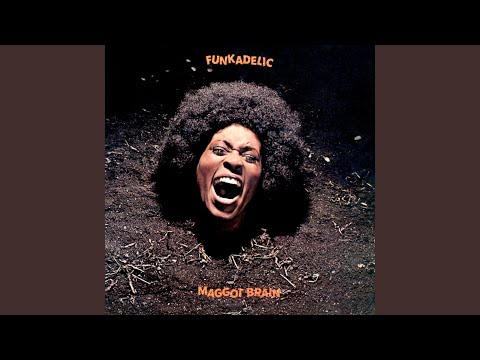
→ More from the 1970s File
View all 1970s hits →




Keep digging