The 1970s File Feature
Bad, Bad Leroy Brown
Frank Sinatra Covers "Bad, Bad Leroy Brown": The Chairman Meets Jim Croce In 1974, Frank Sinatra recorded a cover of "Bad, Bad Leroy Brown," the song that Ji…
01 The Story
Frank Sinatra Covers "Bad, Bad Leroy Brown": The Chairman Meets Jim Croce
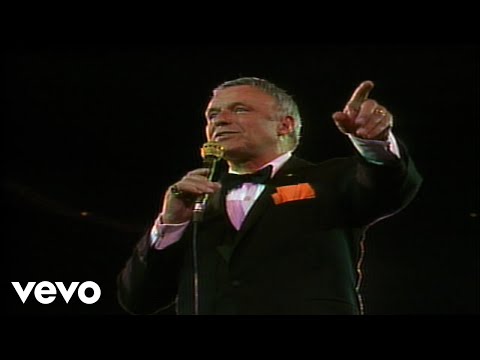
In 1974, Frank Sinatra recorded a cover of "Bad, Bad Leroy Brown," the song that Jim Croce had taken to number one on the Billboard Hot 100 in the summer of 1973. Sinatra's version peaked at number 83, spending 7 weeks on the chart, a modest showing that nonetheless captured something significant about Sinatra's continued commercial instincts and his willingness to engage with contemporary material regardless of its stylistic distance from his core catalog.
"Bad, Bad Leroy Brown" had been one of the defining pop hits of 1973, a narrative song with a driving rhythm, a vivid cast of characters, and a hook that lodged itself in the popular consciousness with unusual tenacity. Jim Croce wrote and recorded it with the storytelling specificity and rhythmic directness that characterized his best work. The song's success was enormous and bittersweet: Croce died in a plane crash in September 1973, shortly after "Bad, Bad Leroy Brown" had reached number one, transforming the song into part of the memorial framework through which his brief career was subsequently understood.
Sinatra's decision to record the song less than a year after Croce's death was characteristic of his approach to pop material throughout the 1960s and 1970s. Sinatra had built his career on the Great American Songbook but had always been willing to reach toward whatever was contemporary and commercially interesting when the material seemed worth engaging with. He had covered Beatles songs, Stevie Wonder compositions, and a range of other contemporary writers. "Bad, Bad Leroy Brown" was a natural candidate: it was a strong melody with a memorable narrative, and its rhythmic bounce translated well into the brassy, swinging arrangement that Sinatra's producers tended to favor.
The arrangement Sinatra used transformed the song considerably. Croce's original had a folk-rock simplicity, driven by acoustic guitar and a relatively spare rhythm section. Sinatra's version moved the song into a big-band context, with horns, strings, and the kind of orchestral weight that had been the signature of his work with arrangers like Nelson Riddle and Gordon Jenkins. This reimagining was not unusual for Sinatra covers; he consistently adapted contemporary material to his established sonic identity rather than attempting to reproduce the original arrangements, a practice that sometimes produced genuinely illuminating reinterpretations and sometimes simply revealed the distance between his aesthetic world and the material he was covering.
The performance itself was confident and technically accomplished. Sinatra's phrasing, always one of his primary gifts, gave the song's narrative passages a clarity and timing that the lyrical content required. The story of Leroy Brown, the South Side of Chicago's toughest man brought low by his own romantic ambitions, was well-suited to a singer whose entire career had been built on storytelling through song. Sinatra understood the song's comic deflation, its portrait of masculine bravado undone by desire, and his delivery made that understanding audible without overcooking the humor.
The commercial performance of Sinatra's "Bad, Bad Leroy Brown" was typical of his 1970s chart activity. By this point in his career, Sinatra was not primarily a hit-single artist; his commercial profile was built on album sales, concert attendance, and the kind of sustained celebrity that did not require constant chart presence to remain viable. The fact that the cover reached number 83 at all was evidence of his continued commercial relevance; that it did not go higher reflected both the competitive landscape of 1974 and the fundamental stylistic distance between the big-band arrangement and the musical preferences of the contemporary pop audience.
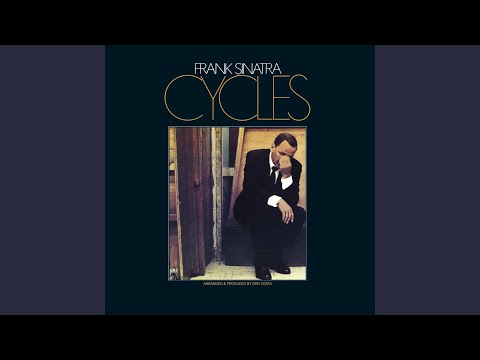
Sinatra was, in 1974, in the midst of a creative resurgence following his 1971 retirement. He had returned to recording and performing in 1973 with the Ol' Blue Eyes Is Back album and television special, and the period following his return saw him recording with renewed energy and selectivity. The decision to include "Bad, Bad Leroy Brown" in his repertoire reflected a desire to remain engaged with the contemporary pop landscape even as his primary artistic identity remained rooted in the traditions he had helped define three decades earlier.
The legacy of this cover is primarily anecdotal: it is frequently cited as evidence of Sinatra's range and his willingness to embrace material that most of his peers of that generation would have dismissed as beneath their dignity. Whether or not the cover succeeded on its own terms, the act of recording it was itself a kind of statement, a refusal to concede the present to younger artists and a demonstration that the instinct for a good song crossed generational and stylistic boundaries.
02 Song Meaning
Masculinity, Hubris, and Comic Deflation in "Bad, Bad Leroy Brown"
"Bad, Bad Leroy Brown" is a morality tale in pop song form, structured around the oldest and most reliable of narrative mechanisms: the mighty brought low. Leroy Brown is introduced as a figure of maximum intimidation, the baddest man in the South Side of Chicago, an individual whose physical and social dominance is established quickly and efficiently. Jim Croce knew exactly what he was doing with this setup: the more thoroughly a protagonist's invulnerability is established in the opening verses, the more satisfying the collapse that the third act delivers.
The cause of that collapse is romantic desire, specifically desire directed at a woman who is both clearly unavailable and clearly unimpressed by the qualities that have made Leroy Brown so formidable in every other context. This is one of the song's most durable comic insights: that the same qualities that make a man dangerous in a physical confrontation are entirely useless, perhaps even counterproductive, in navigating the emotional complexities of love. Leroy's toughness, his reputation, his "diamond rings and Eldorado" are no protection against being left looking worse than a junkyard dog.
When Frank Sinatra covered the song in 1974, he brought to this material a particular kind of knowing authority. Sinatra had spent his entire career performing songs about romantic vulnerability, songs in which even the most confident of men is left helpless by desire. The Leroy Brown narrative fit naturally within that tradition, even if its comic register was somewhat broader than the more elegiac love songs that formed the core of Sinatra's catalog. Sinatra understood the song's humor and its underlying tenderness, the affection that Croce clearly felt for his protagonist even as he arranged the man's public humiliation.
The big-band arrangement that Sinatra's team applied to the material recontextualized the song in ways that were genuinely interesting. Croce's original had a folk-rock directness that matched its everyman narrative frame; Sinatra's orchestral version placed the same story in a more glamorous setting, which actually sharpened the comic contrast. Leroy Brown with horns and strings behind him sounds, paradoxically, even more absurd in his eventual defeat, because the grandeur of the setting amplifies the gap between his self-image and his outcome.
The song's structure also rewards close attention. Croce builds the narrative in discrete stages, establishing Leroy's reputation, introducing the dangerous object of his desire, and then delivering the comic catastrophe in a final verse that is precise in its imagery of physical and social ruination. Each stage is handled with an economy that reflects the songwriter's craft; nothing is wasted, and the punchline lands with the timing of a well-told joke. This structural efficiency was part of what made the song translatable across different arrangements and performers: the narrative bones were strong enough to support different stylistic clothing.
The enduring appeal of "Bad, Bad Leroy Brown" across more than five decades lies in the universality of its central mechanism. The experience of watching (or undergoing) the humbling of the apparently invincible is one that virtually any audience can recognize and enjoy, and Croce's realization of that mechanism in this particular song is clean, specific, and affectionate enough to remain compelling long after its original cultural moment has passed. Sinatra's cover, whatever its commercial limitations, confirmed that the song's appeal extended across stylistic boundaries and generational divides.
→ More from Frank Sinatra
View all Frank Sinatra hits →


→ More from the 1970s File
View all 1970s hits →




Keep digging