The 1970s File Feature
Slow Ride
"Slow Ride" — Foghat Hard Rock in the Deep Freeze of 1975 Picture the American rock landscape in December 1975. FM radio was still perfecting the album-orien…
01 The Story
"Slow Ride" — Foghat
Hard Rock in the Deep Freeze of 1975
Picture the American rock landscape in December 1975. FM radio was still perfecting the album-oriented format that had begun reshaping listener habits a few years earlier, giving bands room to breathe, to run long, to be loud. Disco was ascending but had not yet claimed its full stranglehold on pop radio. In that window, a British-American hard rock band called Foghat found a groove so deep and so uncompromising that it would take seventeen weeks on the Billboard Hot 100 to fully work its way through the nation's collective system. Slow Ride arrived not as a carefully calculated radio single but as a force of nature that the charts had no choice but to accommodate.
The Band and the Moment
Foghat had been grinding since 1971, formed in London from alumni of Savoy Brown with a clear mandate: play hard rock and blues with maximum power and minimum apology. By 1975, the band had released five studio albums and built a loyal touring following in the United States, where their no-frills approach resonated deeply with audiences who wanted volume and groove over anything ornate or pretentious. Vocalist and guitarist Lonesome Dave Peverett led a lineup that understood the relationship between blues structure and rock amplification in their bones. They were not innovating a sound so much as perfecting one, and Slow Ride represented that perfection arriving at the right moment.
Recording and Sound
The track appeared on the album Fool for the City, released on Bearsville Records in 1975. The production captures Foghat at their most elemental: a relentless riff built for repetition, drums that anchor rather than decorate, and a guitar tone thick enough to lean against. The song runs long in its album form, a structure that would have been commercial suicide in earlier decades but fit perfectly with the FM rock format that was rewarding exactly this kind of extended, groove-heavy playing. Radio programmers working in the AOR format had the latitude to program deeper cuts, longer tracks, and harder sounds than their AM counterparts ever could.
The Chart Climb
The song's chart trajectory tells a revealing story. Entering the Hot 100 at number 77 on December 13, 1975, it climbed methodically week after week, reaching its peak position of number 20 on March 13, 1976. That seventeen-week run represented exactly the kind of sustained momentum that the FM-driven music economy could generate. Rather than exploding onto the chart with immediate peak performance and then fading, Slow Ride behaved like its own title suggested: steady, unhurried, building inevitably toward its destination. The chart history reads like a masterclass in album-rock ascent.
Cultural Permanence and the Riff That Refused to Leave
Few songs from the 1970s hard rock canon have embedded themselves more thoroughly into popular culture than Slow Ride. Its opening riff has appeared in countless film soundtracks, television commercials, and cultural references across the following five decades. The track became a cornerstone of the Guitar Hero video game franchise, introducing the song to generations of players who were not yet born when Foghat first recorded it. That kind of second-life cultural insertion is extraordinarily rare and reflects how the riff's primal power translates across contexts and eras without losing any of its impact. The song currently sits at over 5.4 million YouTube views, a number that keeps growing as new listeners find their way to the original recording.
Foghat After the Hit
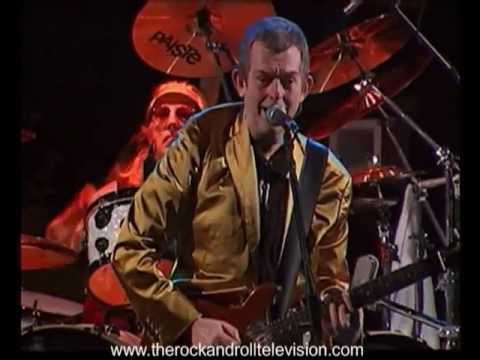
The success of Slow Ride gave Foghat a commercial foothold that sustained them through the second half of the decade. They continued touring relentlessly, building the kind of loyal regional audience that kept hard rock bands alive between albums in an era before streaming could maintain visibility. Their live show, always the engine of their reputation, grew more technically polished while retaining the raw energy that had characterized their recordings from the beginning. The band underwent personnel changes in subsequent years, with Roger Earl on drums remaining one of the consistent pillars across different lineup configurations. Fool for the City as an album demonstrated that they could write beyond the single format, and the album's broader success reinforced the label's confidence in their commercial viability. Slow Ride remained the track that opened doors, the song that preceded them into rooms where the band's name might not yet have registered.
Play Slow Ride loud, through something with adequate bass, and understand immediately why FM radio fell so completely in love with it.
"Slow Ride" — Foghat's singular moment on the 1970s charts.
02 Song Meaning
"Slow Ride" — Foghat: Themes and Legacy
The Pleasure Principle in Rock
There are songs that aspire to complexity and songs that aspire to pleasure, and the greatest achievements of rock and roll have often been the ones that recognize pleasure as a perfectly sufficient aspiration. Slow Ride belongs unambiguously to the second category. Its lyrical content orbits around physical desire and the savoring of a moment rather than rushing through it, a theme as old as music itself but delivered here with a directness and a groove that make the sentiment feel freshly minted. The song does not reach for metaphor or complication. It states its position and then proceeds to embody it musically for several glorious minutes.
Blues Roots and Rock Amplification
Foghat's musical DNA was rooted in British blues, that tradition of white musicians from the United Kingdom who absorbed the American blues canon and then amplified it through the sensibility of rock and roll. The blues tradition has always centered the body's experience, whether in work songs, field hollers, or the electrified Chicago style that became the template for British invasion bands. Slow Ride sits in direct lineage with that tradition. Its slow, grinding tempo is a blues tempo, its repetitive riff structure is a blues structure, and its lyrical preoccupation with physical pleasure is a blues preoccupation. What Foghat added was sheer volume and rock production values.
The Temptation of Sustained Intensity
One of the song's most interesting formal qualities is its refusal to accelerate. Where much hard rock builds toward climaxes, toward moments of release or explosion, Slow Ride maintains its deliberate pace almost pathologically. This formal choice mirrors its lyrical content perfectly; both the music and the words are about not hurrying, about drawing out rather than rushing toward an ending. That structural self-control is harder to achieve than it sounds, particularly in a genre that rewards excess and escalation. The discipline required to keep a groove at that tempo, without losing energy or attention, reflects real musicianship.
Why the Riff Became Immortal
The opening guitar figure of Slow Ride has achieved that rare status of being instantly recognizable to people who cannot name the song or the band. This kind of riff immortality happens when a melodic idea is simple enough to be absorbed immediately but distinctive enough to be unmistakable. The riff carries the whole emotional meaning of the track before a single word is sung: it communicates confidence, physical ease, and a kind of rolling inevitability that perfectly sets up everything that follows. Its appearance in Guitar Hero and other cultural contexts is less a coincidence than a recognition of what was always true about it: the riff works in isolation, stripped of everything else, as a pure kinetic pleasure.
Endurance as a Statement
Fifty years after its release, Slow Ride continues to find new listeners and new contexts. It appears on classic rock radio, in films set in the 1970s, in advertisements for products that want to borrow its aura of effortless cool, and in the personal playlists of people who were not alive when Foghat recorded it. That endurance is its own kind of meaning. Not every song that connects does so because of lyrical profundity or cultural significance; some songs simply nail the feeling they are after with such precision that the feeling itself keeps the song alive across generations of listeners looking for exactly that.
→ More from Foghat
View all Foghat hits →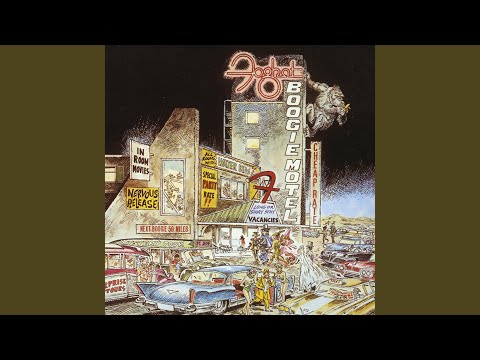


→ More from the 1970s File
View all 1970s hits →




Keep digging