The 1970s File Feature
Signs
"Signs" — Five Man Electrical Band's Counterculture Statement The Summer of Rules and the Refusal to Follow Them Imagine the summer of 1971: the Vietnam War …
01 The Story
"Signs" — Five Man Electrical Band's Counterculture Statement
The Summer of Rules and the Refusal to Follow Them
Imagine the summer of 1971: the Vietnam War still grinding on, the counterculture in its complicated late phase, young Americans navigating a world full of restrictions they had increasingly little patience for. Into that moment came an Ottawa rock band with a song about signs, specifically the proliferation of signs telling people what they could not do, where they could not go, what they could not be. Five Man Electrical Band's "Signs" turned an everyday annoyance into a political statement, and the result was one of the most unexpected top-five hits of the early 1970s.
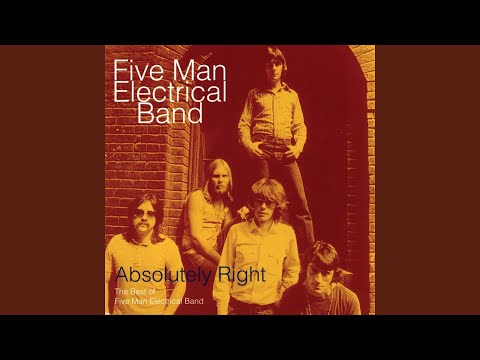
The band, led by vocalist and songwriter Les Emmerson, had been part of the Canadian rock scene for several years before "Signs" gave them their American breakthrough. They were working musicians with genuine craft, not media confections or overnight sensations, and the song they contributed to the cultural conversation of 1971 reflected a perspective shaped by real experience on the road and in the margins of the commercial music industry.
The Song's Origins and Construction
Les Emmerson wrote "Signs" in response to his own encounters with the proliferating private property signs and restriction notices he observed while touring through the American southwest. The song's specific images, the "long-haired freaky people" rejected by employers and barred from restaurants, the gates and fences carving up the landscape into zones of exclusion, were drawn from direct observation rather than abstract political philosophy.
The musical construction is deceptively simple. The guitar-driven arrangement builds on a folk-rock foundation that was deeply familiar by 1971, but the melody is immediately compelling and the lyrical hook, built around the repeated word "signs" and what they are doing to a free society, is perfectly calibrated for radio repetition. It is the kind of song that sounds uncomplicated on first listen and reveals its craftsmanship gradually.
The production has a warmth and directness appropriate to the material. There is nothing showy about the arrangement; every element serves the song's central purpose, which is to deliver a clear, passionate argument in the most accessible possible form.
Climbing to the Top Five
"Signs" debuted on the Billboard Hot 100 on May 29, 1971, entering at number 96. Its climb through the summer charts was one of that season's more striking chart stories. Week by week it ascended, moving from 88 to 73 to 69 to 61 as it built momentum through June and July. By the week of August 28, 1971, it had reached its peak of number 3 on the Billboard Hot 100, a remarkable achievement for a Canadian band with no major label machine behind them. The track spent 18 weeks on the chart in total.
Reaching number three in the summer of 1971 placed "Signs" in extraordinary company. The song's chart performance confirmed that its anti-establishment message was finding audiences well beyond the obvious counterculture demographic, resonating with mainstream listeners who may not have identified as political but who recognized something true in the song's irritation at being told what to do.
A Canadian Voice in the American Conversation
One of the more interesting dimensions of "Signs" is its Canadian perspective on specifically American cultural tensions. Emmerson wrote the song looking at the United States from a slight outside angle, which gave the observation a clarity and sharpness that might have been harder to achieve from the inside. The song is not angry in an aggressive way; its protest is tinged with bemused disbelief at the extent to which signs and restrictions had colonized the American landscape.
That tone of incredulous protest suited the moment perfectly. The counterculture was beginning to tire of the more earnest modes of protest music by 1971, and "Signs" offered something with a lighter touch: pointed without being preachy, political without being earnest to the point of self-parody.
The Tesla Cover and the Renewed Life
In 1991, twenty years after Five Man Electrical Band's original hit, the rock band Tesla released a cover of "Signs" that reached number eight on the Billboard Hot 100 and introduced the song to an entirely new generation of listeners. The cover demonstrated the durability of Emmerson's original composition: the themes had lost none of their relevance two decades on, and the song's musical architecture was solid enough to support a stylistically different but equally successful interpretation.
The Tesla cover also generated renewed interest in the original recording, bringing Five Man Electrical Band new recognition among rock listeners who had not been born when the song first charted. That kind of intergenerational transmission is among the clearest measures of a song's genuine artistic substance.
Press play on "Signs" and let that electric guitar bring back the sound of a summer when the question of who could go where, and on whose say-so, felt genuinely urgent.
"Signs" — Five Man Electrical Band's singular moment on the 1970s charts.
02 Song Meaning
"Signs" — Freedom, Property, and the Politics of Access
The Sign as Symbol of Control
Les Emmerson's central insight in writing "Signs" was to take an entirely mundane object, the roadside sign, and use it as a lens through which to examine the broader question of who controls space and who gets excluded from it. Signs say "Private Property," "No Trespassing," "Long-Haired Freaky People Need Not Apply." Each sign is a small assertion of authority, a claim about who belongs where and on whose terms. When you accumulate all those signs into a single narrative, as the song does, what emerges is a portrait of a society organized around exclusion, where the visible landscape is covered in directions about where certain people may not go and what they may not do.
This is not abstract political theory; it is the lived experience of anyone who has ever been turned away because of how they look, where they come from, or what they believe. The song works because its observations are specific and recognizable, not because its argument is sophisticated.
Class, Appearance, and Social Gatekeeping
One of the more durable aspects of "Signs" is its attention to the relationship between appearance and social access. The long-haired figure who cannot get a job and is refused service at a restaurant is a stand-in for anyone whose appearance signals non-conformity with the dominant culture's standards. The song makes the point that such exclusions are arbitrary, based not on the character or capability of the excluded person but on their visible departure from a norm that is itself contingent and historically specific.
This argument had particular resonance in 1971, when debates about dress codes, grooming standards, and the right of employers and businesses to refuse service on those grounds were genuinely contested. But the underlying dynamic it describes is not specific to that moment; the mechanisms by which dominant cultures police access to spaces and opportunities through appearance-based gatekeeping have proven remarkably persistent.
The Land and Who Owns It
Running through the song's critique of signs is a deeper argument about the privatization of land and the moral status of private property. The images of fences and "No Trespassing" signs invoke a long tradition of American political thought that questioned whether any individual's ownership of land gave them the right to exclude others from spaces that might once have been shared. This is a genuinely old argument in American political culture, one that predates the counterculture by many decades, but the song brings it into the specific context of late-1960s and early-1970s debates about land use, development, and the commons.
The song's most pointed irony lies in the image of standing on a mountain and looking out at a landscape covered in signs telling the viewer what they cannot do. The natural world is there; access to it is blocked by human legal constructions.
Why It Still Resonates
The reason "Signs" continues to find new listeners across generations is that the conditions it describes have not disappeared. The specific signs have changed; the underlying dynamic of spaces organized around exclusion, of appearance-based discrimination, of the privatization of shared landscapes, remains recognizable. Songs that identify durable structural conditions rather than purely ephemeral ones tend to outlast their moment, and this is precisely what "Signs" achieved.
The Tesla cover's success in 1991 confirmed this: the themes that made the song resonate in 1971 were equally accessible to audiences who came of age in a different economic and cultural context, because the basic experience of being told "you can't be here" had not become obsolete.
"Signs" — Five Man Electrical Band's singular moment on the 1970s charts.
→ More from Five Man Electrical Band
View all Five Man Electrical Band hits →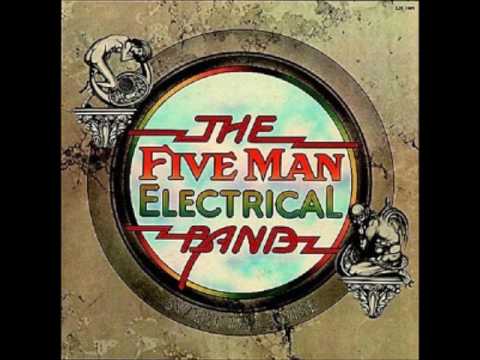
→ More from the 1970s File
View all 1970s hits →




Keep digging