The 1970s File Feature
Friends
Friends — Elton John (1971) Note: This entry covers Elton John's "Friends," the title theme composed for the 1971 British film of the same name, released on …
01 The Story
Friends — Elton John (1971)
Note: This entry covers Elton John's "Friends," the title theme composed for the 1971 British film of the same name, released on the Uni/Paramount label. It is distinct from other songs titled "Friends" in Elton John's broader catalog.
In 1971, Elton John was a rapidly ascending star who had already demonstrated through "Your Song" and the albums that preceded it that he possessed an extraordinary facility for writing music that was simultaneously artistically ambitious and emotionally accessible. When director Lewis Gilbert approached him to compose the score and songs for the film "Friends," a British romantic drama aimed at a young adult audience, John was receptive to the challenge. The project gave him an opportunity to work in an extended compositional context, writing not just individual pop songs but a suite of music designed to serve a specific narrative and emotional arc.
The film "Friends," released in 1971, told the story of two teenagers in France who fall in love, run away together, and attempt to build an independent life. The story's themes of youthful idealism, romantic escape, and the tension between innocence and experience aligned naturally with the emotional territory that Elton John and his lyricist Bernie Taupin had been exploring in their early work together. Taupin wrote the lyrics for the film's songs, and the collaboration produced material that was tonally consistent with their studio albums of the same period while serving the film's specific dramatic requirements.
The title song "Friends" was released as a single and appeared on a soundtrack album issued on the Uni Records label in the United States, with Paramount handling distribution in some territories. The production of the score was completed under the supervision of Paul Buckmaster, the orchestral arranger whose string arrangements had become integral to the sonic identity of Elton John's early recordings. Buckmaster's work on the "Friends" score gave the material a cinematic sweep that complemented the film's visual ambitions, and the title song in particular benefited from his orchestral sensibility.
The single reached number 34 on the Billboard Hot 100, a chart position that reflected the still-developing nature of Elton John's American audience in early 1971. His breakthrough in the United States had occurred in 1970 with his celebrated appearances at the Troubadour in Los Angeles and the commercial success of the "Elton John" album, but the building of a mass American audience was still in progress. The "Friends" soundtrack occupied an unusual commercial position: it was neither a conventional studio album nor a greatest-hits collection, and the film itself had limited theatrical distribution in the United States, which constrained the single's ability to reach the broadest possible audience.
In the United Kingdom, the film and its soundtrack generated a degree of critical attention appropriate to a rising star's foray into film composition. British critics noted the sophistication of the orchestral arrangements and the emotional coherence of Taupin's lyrics across the entire soundtrack, while acknowledging that the commercial trajectory of the individual songs was shaped more by the film's marketing than by conventional pop radio promotion. The soundtrack album nonetheless sold respectably and contributed to the ongoing documentation of Elton John's artistic range during a period of prolific creative output.
The "Friends" project came at a moment when Elton John was releasing material at a pace that would have been unsustainable for almost any other artist. Between 1970 and 1972, he released the albums "Elton John," "Tumbleweed Connection," "Madman Across the Water," "Honky Chateau," and the "Friends" soundtrack, along with multiple singles, demonstrating a creative productivity that was unprecedented in British pop at the time. The soundtrack was in some respects a byproduct of this remarkable period, a commission undertaken while the main body of his work was being assembled simultaneously.
The orchestral production that characterizes "Friends" connects it stylistically to "Madman Across the Water," the studio album released the same year, which also featured Buckmaster's elaborate string arrangements. Listeners who encountered the "Friends" soundtrack found it continuous in feel with the broader Elton John project of the early 1970s: melodically rich, lyrically introspective, and emotionally generous in a way that his competitors rarely achieved. The film context gave the material a specific dramatic framing, but the songs stood independently of the narrative they were written to serve.
For collectors and Elton John enthusiasts, the "Friends" soundtrack has occupied a slightly peripheral position in the catalog, less celebrated than the major studio albums of the period but valued as a document of his early compositional range. The title song in particular has been revisited in retrospective assessments of his 1971 output as an example of his ability to write for a specific emotional brief without sacrificing the distinctive qualities that made his work immediately identifiable. The Hot 100 chart appearance, modest by the standards of his later commercial dominance, captures a moment before the full weight of his American popularity was established.
02 Song Meaning
Meaning and Themes: Friends (Elton John, 1971 Film Theme)
Note: This analysis concerns Elton John's "Friends," the title song from the 1971 British film, with lyrics by Bernie Taupin. It should not be conflated with other recordings of that title.
"Friends" as a film theme operates on two levels simultaneously: it functions as a self-contained emotional statement and as a musical embodiment of the film's central premise. The song articulates the idea of friendship and romantic companionship as the most essential form of human connection, a theme that suited both the film's youthful romantic narrative and the broader emotional sensibility that Elton John and Bernie Taupin had been cultivating across their early collaborations.
Taupin's lyric for the song constructs friendship not as a secondary relationship that falls short of romantic love but as the foundation upon which all meaningful connection rests. In the context of the film, where two teenagers build an entire life together from almost nothing, the song's elevation of mutual loyalty and companionship over more conventionally dramatic expressions of romantic passion made particular sense. The lyric aligned the emotional stakes of the story with something quieter and more durable than passionate infatuation, suggesting that what the film's characters had found was something rare and genuinely valuable.
The orchestral setting that Paul Buckmaster provided for the song enhanced its emotional scale. String arrangements of the complexity and richness that Buckmaster brought to early Elton John recordings had a tendency to make intimate emotional statements feel universal, to take a sentiment expressed by one voice and expand it into something that seemed to speak for a broader human experience. This was the aesthetic logic of the entire "Friends" score, and the title song exemplified it most directly.
For Elton John's artistic development in 1971, "Friends" represented an important exercise in writing to serve a larger purpose. Most of his early work with Taupin was driven by the internal logic of their creative partnership, with songs emerging from Taupin's lyrical visions set to John's melodic instincts. Writing for a film imposed external constraints, requiring the music to serve specific dramatic functions, match particular narrative moments, and operate within the emotional world that the director and screenwriter had established. The successful navigation of those constraints demonstrated a compositional flexibility that would inform John's later work in musical theater and film.
The song's emotional register is one of reassurance and warmth rather than drama or urgency. It does not reach for the operatic heights that some of his later ballads would achieve, but instead offers something more understated and ultimately more enduring: the comfort of reliable companionship. That quality connected it to the folk-influenced emotional directness of the early 1970s singer-songwriter movement, even though John's musical language was considerably more ornate than the acoustic minimalism that characterized that genre's mainstream expressions.
The soundtrack's place in John's catalog as an early example of his film work made "Friends" a meaningful document beyond its chart performance. It confirmed that the melodic and emotional intelligence he brought to conventional pop and rock could be successfully applied to longer-form compositional projects, establishing a creative capability that he would revisit at significant points throughout his career. The song itself, gentle and generous in its emotional address, captures the particular quality of idealism that characterized his earliest and in some ways most unguarded work.
→ More from Elton John
View all Elton John hits →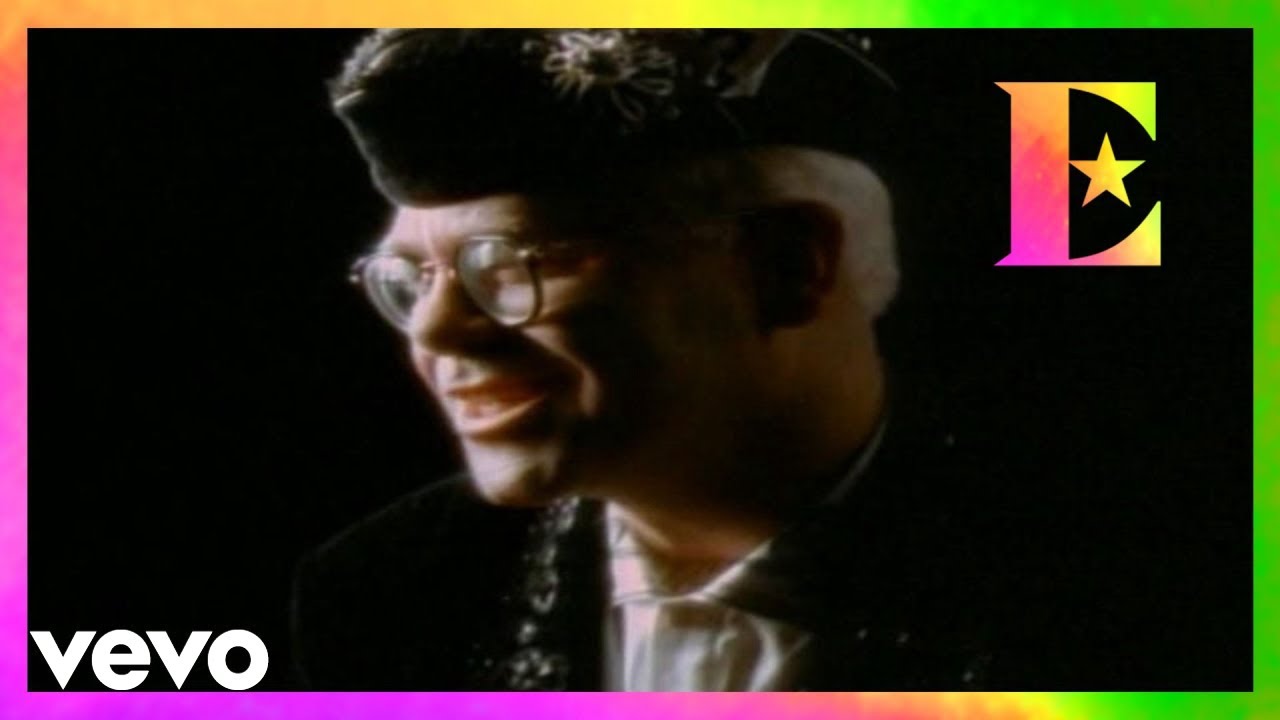




→ More from the 1970s File
View all 1970s hits →




Keep digging