The 1970s File Feature
Showdown
Showdown — Electric Light Orchestra The Unlikely Architects of a New Sound Picture Birmingham, England in the early 1970s. The city had already delivered som…
01 The Story
Showdown — Electric Light Orchestra
The Unlikely Architects of a New Sound
Picture Birmingham, England in the early 1970s. The city had already delivered some of rock's most thunderous figures, and now a new experiment was taking shape in rehearsal rooms and studios: a band that wanted to pick up where the Beatles left off, fusing classical string arrangements with rock rhythm sections to create something that had no clean genre name yet. Electric Light Orchestra, led by Jeff Lynne and co-founded with Roy Wood, was a proposition that the music industry regarded with genuine curiosity. Their first albums split critical opinion sharply. Then came "Showdown."
"Showdown" entered the Billboard Hot 100 on December 1, 1973, making its way steadily upward through an eighteen-week chart run. It reached its peak position of 53 on February 2, 1974, a respectable commercial showing for a band still establishing itself in the American market. In the United Kingdom, the song had already proven itself as a Top 12 hit, confirming that ELO's increasingly polished approach was connecting with mainstream audiences on both sides of the Atlantic.
Roy Wood's Departure and the Shape of the New ELO
The story of "Showdown" cannot be separated from the story of a significant personnel shift. Roy Wood, one of the founding creative forces behind ELO and the man whose eccentric genius had shaped the band's earliest records, departed before the recording that would produce this single. His exit left Jeff Lynne as the undisputed creative director, and the music changed accordingly.
Lynne's instincts ran toward melody, precision, and the kind of lush production that rewarded headphone listening. "Showdown" reflects those priorities. The arrangement layers strings and rhythm tracks in a way that feels deliberate and controlled, quite different from the more chaotic energy of the band's debut work. The production on "Showdown" pointed directly toward the sound ELO would perfect on their later albums: full, warm, orchestral rock designed to fill arenas as readily as living rooms.
Eighteen Weeks of Steady Climbing
An eighteen-week stay on the Hot 100 is a notable achievement for any single, particularly from a band in the early stages of American market penetration. ELO's climb was gradual rather than explosive. The track debuted at position 90, moved to 87, then 84, 76, and 67 across its first five weeks, the pattern of a record finding its audience incrementally through airplay and word of mouth rather than through a single concentrated promotional push.
That kind of sustained chart presence is often more commercially valuable than a fast peak followed by rapid decline. Radio programmers who added "Showdown" to rotation in December 1973 were still spinning it in February 1974, which meant that listeners who missed the initial wave had multiple opportunities to discover it. For a band building an American fan base from scratch, that extended exposure was invaluable.
Between Glam and Progressive: Finding the ELO Niche
The early 1970s American radio landscape was navigating between several competing impulses. Glam rock was generating headlines but struggling to find consistent mainstream traction outside certain markets. Progressive rock commanded critical respect but could be challenging for casual listeners. Singer-songwriter introspection dominated album sales. ELO occupied a peculiar position in this landscape, too orchestral to be straightforward rock, too melodic to be prog, too polished to be glam.
"Showdown" succeeded partly by refusing to fit neatly into any of those categories. Its string arrangements gave it a cinematic quality. Its rhythm section gave it energy. Jeff Lynne's vocal delivery had enough grit to prevent the whole thing from tipping into easy listening territory. The song demonstrated that rock and classical orchestration could be combined without either element losing its force, which was the core argument ELO would spend the rest of the decade winning.
The Foundation of a Decade-Long Run
Looking back at "Showdown" from the vantage point of ELO's mid-to-late 1970s commercial peak, when albums like A New World Record and Out of the Blue sold in the millions and tours filled the largest venues in the world, the single appears as a hinge point. It was the record that established the band's commercial viability in America and gave Lynne the confidence to pursue his vision without compromise or qualification.
The eighteen weeks on the Hot 100, culminating at number 53, were quiet proof that something was working. What ELO did with that proof over the next several years remains one of the more remarkable commercial ascents in rock history. Press play on "Showdown" and you can hear exactly where the journey began.
"Showdown" — Electric Light Orchestra's singular moment on the 1970s charts.
02 Song Meaning
Showdown — Meaning, Themes, and Legacy
Confrontation as Creative Energy
The title "Showdown" carries an inherent dramatic charge, evoking the Western tradition of two opposing forces meeting at a point of reckoning. In ELO's hands, that confrontation is less physical than emotional, a tension between two states of being or two people at an irreconcilable crossroads. The lyric concerns itself with the specific texture of an ending, the moment when one party in a relationship recognizes that continuation is impossible.
What distinguishes the song from conventional breakup material of the era is the tone. The arrangement refuses to be merely melancholy. The strings surge, the rhythm section drives forward, and the whole production carries an energy that reads more as determination than grief. The emotional register is complex: there is loss, but there is also the particular clarity that comes when a difficult decision is finally made.
The Classical Framework and What It Does to Emotion
Jeff Lynne's genius in the early ELO period was understanding that classical instrumentation does not automatically equal classical emotional restraint. The strings on "Showdown" are not decorative. They amplify the emotional temperature of the lyric, functioning more like a film score than a traditional rock arrangement. When the strings swell around moments of lyrical intensity, they communicate something that words alone cannot carry.
This approach drew on a tradition of orchestral pop that stretched back through the Beatles' later work and the baroque pop experiments of the late 1960s. ELO took those techniques and applied them to material with a heavier rhythmic foundation, creating a hybrid form that felt genuinely new in 1973. Listeners who had grown up with both classical music and rock found in ELO a bridge between worlds they had previously kept separate.
Confrontation, Resolution, and the Early 1970s Mood
The early 1970s were a period of sustained cultural renegotiation. The idealism of the 1960s had collided with harsher realities: political assassination, economic instability, the slow unwinding of the counterculture's promises. Popular music in this period often dealt with endings and disillusionment, sometimes with anger, sometimes with resignation.
"Showdown" fits within that broader cultural moment without being a direct commentary on it. The personal confrontation in the lyric resonated with listeners navigating their own endings, whether romantic, political, or existential. The song offered emotional catharsis through music that was simultaneously sophisticated and accessible, a combination that defined the ELO appeal and helps explain why the track's chart run extended across eighteen weeks.
Why It Holds Up
Songs from the early 1970s that lean heavily on period production often struggle to survive their era. The particular texture of specific studio sounds can date a recording as surely as the fashions in a photograph. "Showdown" avoids this trap partly because its string arrangements, while clearly of their time, are attached to a genuinely strong melodic core.
Strip away the production and the song's fundamental emotional shape remains effective. That durability reflects Jeff Lynne's strengths as a songwriter: the ability to construct a melodic and harmonic argument that does not depend entirely on its surface for impact. The track endures as evidence of what ELO was reaching toward in its earliest successful phase, a blend of emotional directness and orchestral ambition that the band would refine for a decade.
"Showdown" — Electric Light Orchestra's singular moment on the 1970s charts.
→ More from Electric Light Orchestra
View all Electric Light Orchestra hits →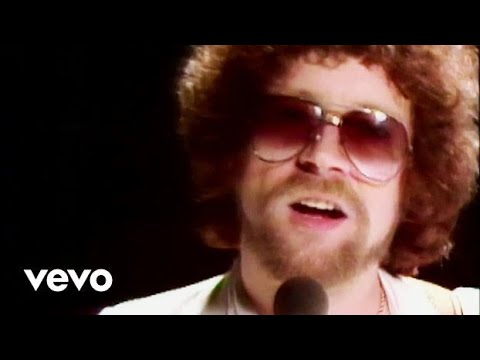
→ More from the 1970s File
View all 1970s hits →




Keep digging