The 1970s File Feature
Sing A Song
Sing A Song: Earth, Wind and Fire at the Top of the Hot 100 "Sing A Song" was released by Earth, Wind and Fire in late 1975 and became one of the defining po…
01 The Story
Sing A Song: Earth, Wind and Fire at the Top of the Hot 100
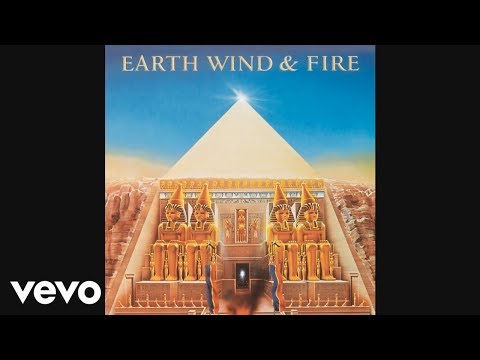
"Sing A Song" was released by Earth, Wind and Fire in late 1975 and became one of the defining pop moments of that year's holiday season, climbing to number five on the Billboard Hot 100 and demonstrating the band's extraordinary commercial reach at a moment when they were becoming one of the most important acts in American popular music. The song appeared on "Gratitude," a live double album that Columbia Records released in November 1975, a record that itself performed remarkably well commercially and helped consolidate the band's status as a crossover phenomenon capable of reaching audiences across racial and format lines.
Earth, Wind and Fire had been built over several years of relentless touring and recording under the leadership of Maurice White, a drummer and producer who had a clear artistic vision of what the band should be. White wanted to create music that was simultaneously rooted in the African American musical tradition, encompassing gospel, R&B, jazz, and funk, while also achieving the kind of melodic accessibility that would bring in pop listeners who might not have sought out more genre-specific recordings. By 1975, that vision was being realized at a scale that few people in the music industry had anticipated.
"Sing A Song" was written by Maurice White and Al McKay, the band's rhythm guitarist, and it was produced by White and Charles Stepney, one of the most gifted and eclectic producers working in American music at the time. Stepney had an orchestral background and a deep interest in sophisticated harmonic structures, and his collaboration with White produced some of the most sonically rich recordings in the Earth, Wind and Fire catalog. The production on "Sing A Song" balanced the band's full-ensemble energy, including the distinctive horn section featuring Don Myrick, Michael Harris, Rahmlee Michael Davis, and Don Freeman, with a melodic simplicity that made the record immediately accessible.
The fact that "Sing A Song" appeared on a live album was itself significant. "Gratitude" was structured as a document of the Earth, Wind and Fire concert experience, which by 1975 had become one of the most spectacular in popular music, featuring elaborate stage productions, costuming, and the kind of unified musical performance that came from a band that had spent years developing its live craft. Including "Sing A Song" on the record gave listeners a sense of how the band's new material was received in performance, and the energy of the recording conveyed the excitement of a band at the peak of its powers.
Columbia Records supported the release aggressively, and radio programmers across both pop and R&B formats embraced the single. The song performed well on the R&B charts as well as the Hot 100, demonstrating the crossover appeal that was central to Earth, Wind and Fire's commercial strategy. The band had already established significant R&B credibility through earlier albums including "Head to the Sky" and "Open Our Eyes," and the question by 1975 was whether they could translate that base into genuine pop mainstream success. "Sing A Song" and the broader "That's the Way of the World" and "Gratitude" period answered that question definitively in the affirmative.
The recording featured the full Earth, Wind and Fire ensemble at a moment when the band's lineup was exceptionally stable and accomplished. Philip Bailey's falsetto vocal, one of the most distinctive voices in 1970s pop and soul, played a central role in the song's delivery, weaving with Maurice White's warmer baritone to create the harmonic texture that had become an Earth, Wind and Fire signature. The band's brass arrangements, more sophisticated and jazz-inflected than what most pop acts were deploying at the time, gave the recording a full-band richness that stood out on radio.
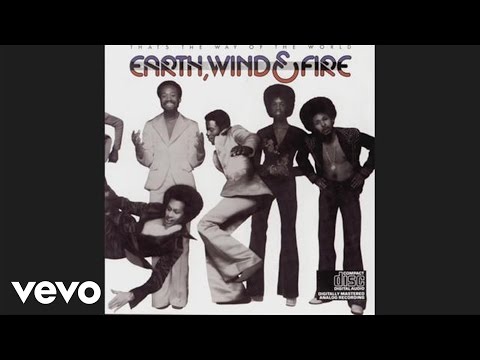
In the months before "Sing A Song," Earth, Wind and Fire had already achieved major success with the "That's the Way of the World" album and its title track, establishing them as album artists of the first order. "Sing A Song" demonstrated that their appeal was not confined to the longer-form album experience, that they could produce compact, radio-ready singles that carried the same emotional and musical weight as their more ambitious album tracks. This double competence, as both album artists and singles makers, placed them in an elite category in mid-1970s popular music.
The song's commercial success continued into early 1976, and it remained a fixture in the band's live performances for the rest of their career. "Gratitude" itself was certified platinum and became one of the best-selling live albums of the decade, helping to sustain Earth, Wind and Fire's commercial momentum through the latter half of the 1970s. "Sing A Song" stands as one of the purest expressions of what the band was trying to achieve: music that was joyful, inclusive, musically sophisticated, and commercially powerful all at once.
02 Song Meaning
Joy as Resistance: The Message Inside "Sing A Song"
"Sing A Song" operates on what might seem at first like a deceptively modest premise: the exhortation to make music as a response to the difficulties of daily life. The narrator encourages the listener to sing, not because everything is fine, but precisely because it is not, because music is one of the tools available to human beings for coping with hardship, lifting the spirit, and feeling connected to something larger than immediate circumstances. This is not a naive celebration; it is an affirmation that acknowledges what it is affirming against.
Earth, Wind and Fire's music in the mid-1970s was consistently preoccupied with themes of spiritual elevation, collective joy, and the capacity of art and music to transform experience. Maurice White's philosophical framework, which drew on Egyptian mysticism, spirituality, and a strong sense of collective African American cultural identity, ran through the band's work in ways that were sometimes explicit and sometimes embedded in the emotional tenor of the music itself. "Sing A Song" represented the more accessible end of this thematic spectrum, translating these concerns into a direct and universal invitation rather than a more esoteric meditation.
The genius of the song lies partly in how it positions music itself as the subject of a piece of music. There is a self-referential quality to a song about singing that, rather than becoming tiresome or circular, actually reinforces the song's message. By singing about singing, Earth, Wind and Fire were enacting their own argument. The music was not just describing the value of music; it was demonstrating it. Philip Bailey's soaring vocal performance made this demonstration vivid and immediate, giving the abstract invitation a physical form that listeners could feel.
The song also carried particular cultural resonance in the context of mid-1970s African American experience. The years following the Civil Rights movement had brought significant social change but also significant disillusionment, and the cultural conversation among Black Americans in the mid-1970s included serious debates about the relationship between art, politics, and communal life. Earth, Wind and Fire's approach, rooted in joy and elevation rather than explicit political statement, represented one answer to these debates, an assertion that the creation and sharing of music was itself a meaningful act of community and affirmation.
For general audiences across racial lines, "Sing A Song" worked as a straightforward feel-good record, and there was nothing wrong with that function. The late 1970s produced a significant body of music designed to lift spirits and encourage movement, and the best of it, including this song, achieved that effect through genuine musical craft rather than calculation. The horn arrangements and rhythm section work gave the record a physical energy that made it difficult to remain passive while listening, which was ultimately the most direct expression of the song's thematic content.
In Earth, Wind and Fire's catalog, "Sing A Song" occupies a position as one of their most purely joyful recordings, a record that distilled the band's fundamental message into an immediate and accessible form. It did not require knowledge of Maurice White's philosophical interests or familiarity with the band's deeper catalog to work on a listener; it worked simply by being good music about the goodness of music. That simplicity was hard-won, the product of a band that had spent years developing the craft necessary to make complex musical ideas feel effortless. As a document of Earth, Wind and Fire in 1975, it captures a moment of genuine artistic and commercial triumph, a band doing exactly what it set out to do and doing it better than almost anyone else.
→ More from Earth, Wind & Fire
View all Earth, Wind & Fire hits →

→ More from the 1970s File
View all 1970s hits →



Keep digging