The 1970s File Feature
Take It To The Limit
Take It to the Limit — Eagles: Recording, Release, and Chart History Note: "Take It to the Limit" is the Eagles ballad sung primarily by bassist Randy Meisne…
01 The Story
Take It to the Limit — Eagles: Recording, Release, and Chart History
Note: "Take It to the Limit" is the Eagles ballad sung primarily by bassist Randy Meisner, taken from the 1975 album "One of These Nights." It should not be confused with any other recording of this title.
The Eagles had by 1975 established themselves as one of American rock's most commercially potent and artistically ambitious operations, a band whose blending of country sensibility, California soft rock, and melodically sophisticated pop had made them among the most significant recording artists of the decade. The album "One of These Nights" represented the group at a creative and commercial peak, reaching number one on the Billboard 200 and producing multiple hit singles that established the group's range across moods and tempos. "Take It to the Limit," written primarily by Randy Meisner with contributions from Don Henley and Glenn Frey, emerged from this album as one of its most emotionally distinctive moments.
Randy Meisner's role within the Eagles has been periodically underappreciated in retrospective accounts that focused more prominently on the songwriting and public presence of Henley and Frey. As a bassist and background vocalist, Meisner provided a sonic foundation that was essential to the band's sound, but his upper-register lead vocal capabilities gave him a specific and irreplaceable contribution to the group's palette. "Take It to the Limit" was written to showcase that vocal range, and the recording demonstrated that Meisner was capable of sustaining an emotional intensity across a full-length lead performance that few voices in rock could match.
The production of the track was handled by Bill Szymczyk, who had been working with the Eagles since "On the Border" and who understood how to translate the band's live energy into studio recordings without sacrificing the warmth and clarity that their arrangements demanded. Szymczyk's production approach on "One of These Nights" was among the most accomplished of his career, balancing the technical precision that the Eagles' multi-tracked vocal harmonies required with an overall sonic texture that felt organic rather than manufactured.
The recording was made at Record Plant in Los Angeles, where the Eagles and Szymczyk had developed an efficient working relationship that allowed the band to work quickly without sacrificing quality. The arrangement builds from a relatively sparse opening to a more fully realized conclusion, mirroring the lyrical movement from depletion and longing toward the aspiration embedded in the song's central phrase. The harmonies that support Meisner's lead in the final sections are among the most elaborate the Eagles ever recorded.
"Take It to the Limit" was released as a single from "One of These Nights" and reached number four on the Billboard Hot 100 in early 1976, confirming the band's ability to generate top-five pop hits from material that operated in a contemplative, emotionally complex register. The record spent multiple weeks in the top ten and performed strongly on the adult contemporary chart as well, reflecting its dual appeal to rock and pop audiences.
The song became a concert staple for the Eagles throughout the remainder of their career together, though performing it live created challenges that ultimately became a significant source of tension within the group. Meisner's vocal demands during live performance were considerable, and the high notes in the song's climactic section placed substantial stress on his voice during concert tours. This physical and psychological pressure contributed to his eventual departure from the Eagles in 1977, making "Take It to the Limit" both his greatest showcase moment and a contributing factor in his exit from the band.
The song has remained one of the Eagles' most beloved recordings in their catalog, consistently appearing on compilations and retrospective collections, and it continues to receive significant airplay on classic rock radio formats. Its emotional directness and the distinctive quality of Meisner's vocal performance have given it a durability that transcends the specific commercial context of its release, establishing it as one of the defining ballads of the classic rock era.
02 Song Meaning
Take It to the Limit — Themes, Feeling, and Musical Meaning
"Take It to the Limit" is a song about the exhaustion of a certain kind of life, the road-worn, pleasure-seeking, connection-avoiding existence that the mythology of rock and roll both celebrated and, in its more honest moments, interrogated. Randy Meisner's lyric, shaped with contributions from Don Henley and Glenn Frey, describes a narrator who has spent considerable energy pursuing experience and pleasure and finds himself, at some unspecified moment of reckoning, depleted and searching for something more sustaining. The person he addresses, directly and with unusual vulnerability for a rock ballad of this period, represents the possibility of that more sustaining alternative.
The emotional logic of the song is not that the narrator has given up on his previous life but that he is beginning to understand its limitations from the inside. The "limit" of the title is both an aspiration and an acknowledgment of exhaustion, the idea that he has taken this particular way of living as far as it can go and is now ready, or hoping to be ready, to reach toward something different. The ballad form is ideally suited to this emotional content because it allows the building of intensity over time, the gradual accumulation of emotional weight that makes the final vocal outpouring feel earned rather than arbitrary.
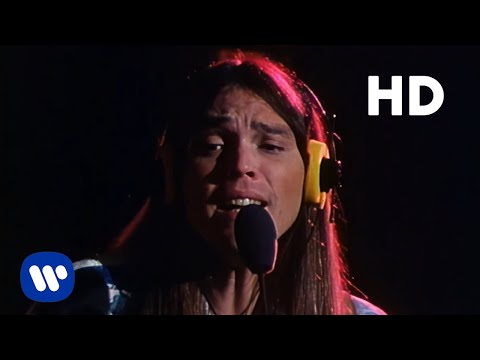
Randy Meisner's vocal performance is inseparable from the song's meaning, because the physical experience of listening to his upper register carrying the climactic passages communicates a kind of emotional extremity that the words alone cannot. The voice sounds genuinely pushed to its limit, which creates a doubling of meaning: the narrator describing the experience of reaching a limit and the singer demonstrating it simultaneously. This convergence of lyrical content and vocal performance is one of the most effective moments in the Eagles' recorded legacy.
The song also speaks to a specifically generational condition of the mid-1970s. The generation that had come of age in the 1960s with its promises of unlimited freedom and perpetual youth was beginning in 1975 to encounter the physical and emotional costs of attempting to live by those promises indefinitely. "Take It to the Limit" articulates the emotional experience of that reckoning without being programmatic about it, rendering the particular experience of one narrator in terms sufficiently specific to feel authentic and sufficiently general to generate broad recognition.
The Eagles as a band were themselves living a version of the experience the song describes: the relentless touring, the commercial pressures, the personal tensions that came with sustained proximity and mutual dependence under demanding conditions. Meisner's outsider position within the band's dynamic, as the quieter, less publicly assertive member relative to Henley and Frey, gave his performance of this material a credibility that came from genuine personal experience of feeling one's limits being approached.
The song has remained meaningful to listeners across decades in part because the experience it describes, of living a certain way until it no longer works and reaching for something that might, is not historically specific. Each generation discovers it for itself, and the song's melodic beauty and Meisner's vocal performance provide a vehicle for that recognition that has not dated. Its presence in the classic rock canon is deserved not merely on commercial grounds but on the grounds of genuine emotional intelligence and formal accomplishment.
→ More from Eagles
View all Eagles hits →


→ More from the 1970s File
View all 1970s hits →



Keep digging