The 1970s File Feature
Puppy Love
"Puppy Love" — Donny Osmond The Sound of a Generation's First Crush In the late winter of 1972, Donny Osmond was fourteen years old and already one of the mo…
01 The Story
"Puppy Love" — Donny Osmond
The Sound of a Generation's First Crush
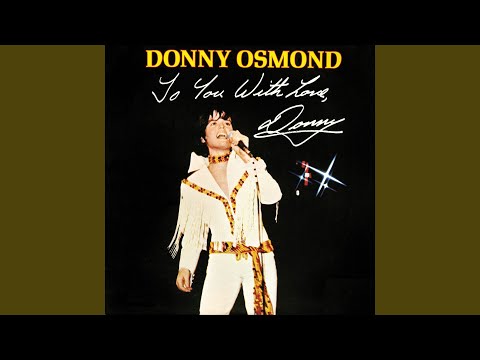
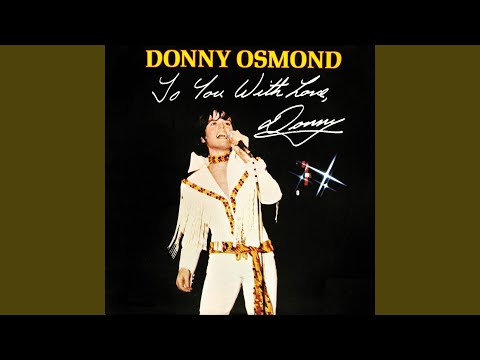
In the late winter of 1972, Donny Osmond was fourteen years old and already one of the most recognizable faces in American entertainment. The Osmond family had been performing professionally since the early 1960s, appearing on The Andy Williams Show as child entertainers before transitioning into their own recording career, and Donny's emergence as a solo teen idol had given him a visibility that extended well beyond the family act. But visibility and genuine solo commercial impact are different things, and "Puppy Love" was the single that definitively proved the second.
"Puppy Love" was not a new song. Paul Anka had written and recorded it in 1960, scoring a number-two hit on the Hot 100 at a moment when his own teen idol career was at its height. Anka's version had been a defining document of a specific moment in pre-rock teen pop, the kind of uncomplicated, heartfelt romantic expression that sold to young audiences who were just beginning to experience romantic feeling and wanted music that named what they were going through. Donny Osmond's version, recorded twelve years later, worked the same territory with an updated arrangement that suited the early 1970s pop landscape while preserving the essential innocence of the original.
MGM Records and the Teen Pop Machine
By 1972 the Osmond family had signed with MGM Records, where their recordings were produced with the polished, accessible sound that defined mainstream pop for young audiences at the turn of the decade. The production of "Puppy Love" reflects this approach: clean, warm, and built around Donny's voice, which at fourteen already had a quality of natural expressiveness that suited the material perfectly. The arrangement balanced sentiment with enough rhythmic energy to keep it from becoming saccharine, a delicate calibration that the production team achieved successfully.
Donny Osmond's voice in this period had a transparency and emotional directness that communicated teenage feeling with an authenticity that was genuinely rare. His delivery of "Puppy Love" was not a performance of innocence but an expression of it, which may be the primary reason the track connected so powerfully with the enormous audience of teenage girls who made him one of the defining pop idols of the early 1970s.
A Rocket to the Top of the Chart
"Puppy Love" entered the Billboard Hot 100 at number 60 in the chart dated February 26, 1972. What followed was one of the more dramatic ascents of that year: in its third week on the chart, the single jumped to number 11, and it continued climbing to reach its peak position of number 3 in the chart dated April 1, 1972. The twelve-week chart run reflected not only strong initial sales but sustained radio presence as the single established itself as one of the season's signature pop recordings.
Reaching number three on the Hot 100 was a significant achievement for any artist, and for a fourteen-year-old it was extraordinary. The chart performance confirmed that Donny Osmond's solo potential was as significant as his work with the Osmond family had suggested, and it positioned him for the extended run of teen idol success that would define his early solo career.
The Osmond Phenomenon in Context
The early 1970s produced a remarkable number of teen idol acts, and the competition for the attention of the young pop audience was fierce. The Jackson 5 had redefined what a family act could achieve commercially, and the Osmonds were frequently discussed as a counterpart and competitor to that group. Donny Osmond occupied a specific position within this landscape: wholesome, accessible, and projecting a kind of gentle romantic feeling that parents could approve and teenagers could respond to with full enthusiasm.
The teen idol machinery that surrounded him included television appearances, fan magazine coverage, and a promotional apparatus designed to maximize personal connection with a young audience. "Puppy Love" was the perfect vehicle for this machinery: a song about the experience of young romantic feeling, performed by a young romantic figure, delivered to an audience who were themselves in the middle of that exact experience. The symmetry was complete, and the chart numbers reflected it. Press play and the early 1970s come rushing back with all their particular sweetness intact.
"Puppy Love" — Donny Osmond's singular moment on the 1970s charts.
02 Song Meaning
"Puppy Love" — Meaning, Themes, and Cultural Resonance
The First Feeling, Taken Seriously
The phrase "puppy love" exists in the culture as a term of gentle dismissal, a way of categorizing young romantic feeling as something cute but not quite real, a training ground for the serious emotions that come later. Paul Anka's original song, and Donny Osmond's hugely successful 1972 cover, work against that dismissal, insisting that the feeling described is genuine and deserves genuine expression. The speaker knows his love will be called puppy love by others; his response is to assert that what he experiences is real, whatever name people put on it.
This is a quietly subversive position for a teen pop song. Most music marketed to young audiences either avoids the question of legitimacy entirely or implicitly concedes it by keeping the emotional register light and playful. "Puppy Love" meets the dismissal head-on, making the song's central argument about whether young feeling counts as real an argument that its target audience was primed to find urgently meaningful.
Identification and the Teen Audience
The pop success of "Puppy Love" depended fundamentally on identification: listeners hearing their own experience reflected back at them from a performer close to their own age and situation. Donny Osmond at fourteen was not pretending to have teenage feelings; he was a teenager, experiencing the world through the same emotional lens as his audience. That alignment between performer and audience created a quality of authenticity that more polished, adult-produced teen pop could not always achieve.
For the young girls who were the primary consumers of Osmond's music in 1972, the song also offered something more personal. Donny was widely understood to be singing to a specific someone, which made every listener a potential candidate for that "someone" role. The music industry around teen idols has always understood this mechanic: the performer must seem simultaneously attainable and exceptional, close enough to be imagined as a romantic partner and elevated enough to be worth the imagining.
Generational Memory and Repeated Returns
Songs that capture first romantic experience tend to carry extraordinary staying power in individual memory. The first song you heard when you experienced a particular feeling becomes associated with that feeling permanently, and retrieving the song in later life retrieves something of the original emotion. "Puppy Love" functioned this way for an entire generation of early-1970s teenagers, becoming attached to the particular intensity of adolescent longing in a way that has kept it resonant for those listeners across decades.
The intergenerational transmission of the song also matters. Parents who grew up with Donny Osmond introduced their children and grandchildren to the recording, extending its reach into new audiences who might not have encountered it through their own cultural experience. That pattern of transmission is what turns a hit single into a genuine standard, and "Puppy Love" has followed exactly that path.
Innocence in Pop History
The track belongs to a specific tradition in pop music: the innocent romantic ballad that has no cynicism, no irony, no qualification. By 1972 this kind of unguarded sincerity was becoming less common in rock-oriented music, where sophistication and irony were increasingly valued. Teen pop maintained the tradition longer, and Donny Osmond was one of its most effective practitioners.
The value of that innocence is not trivial. Music that takes simple feeling seriously, without condescension or self-consciousness, provides something that more complicated artistic statements cannot: pure, direct emotional resonance that requires no critical distance to access. "Puppy Love" does this completely, which is why it worked in 1960, why it worked again in 1972, and why it continues to find listeners who recognize in it exactly what the title promises.
→ More from Donny Osmond
View all Donny Osmond hits →
→ More from the 1970s File
View all 1970s hits →




Keep digging