The 1970s File Feature
Bad Girls
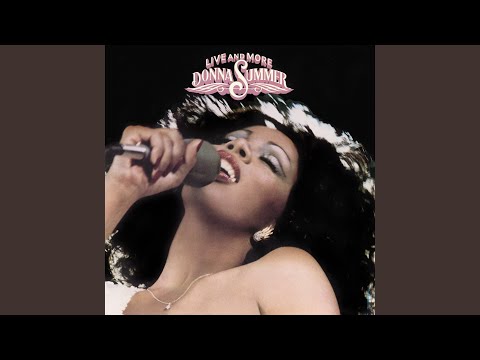
"Bad Girls" — Donna Summer The Queen of Disco at Her Absolute Peak There is no summer in pop history quite like the summer of 1979, and there is no artist wh…
01 The Story
"Bad Girls" — Donna Summer
The Queen of Disco at Her Absolute Peak
There is no summer in pop history quite like the summer of 1979, and there is no artist who owned that summer more completely than Donna Summer. The discotheque was at the height of its cultural saturation: the music was everywhere, from the obvious nightclubs to suburban shopping malls, from car radios playing in New Jersey to hotel lobby systems in Tokyo. And at the center of it all, the voice that defined what the genre could achieve at its most ambitious and most human, was releasing one of the defining records of the entire era. "Bad Girls" was not just a hit; it was a statement about what Donna Summer had become and where pop music could go.
Giorgio Moroder and the Sound of Now
By 1979, the creative partnership between Donna Summer and Giorgio Moroder had already produced some of the decade's most forward-thinking music. Moroder's production on "I Feel Love" in 1977 had essentially predicted the electronic dance music landscape that would dominate the following decades, and his work with Summer on subsequent projects had pushed that vision further. "Bad Girls" arrived as a co-production between Moroder and Pete Bellotte, the team that had been shaping Summer's sound since the mid-1970s.
The track is a masterclass in arrangement. The production combines the four-on-the-floor disco pulse with a rock guitar sound that gives the record a harder edge than much of its chart competition. The horn section punches with genuine force, the rhythm guitar chops with an insistence that keeps the body engaged, and Summer's vocal navigates the material with a control and range that makes the technical difficulty look effortless. The talking parts in the song, where Summer embodies her characters with actorly commitment, add a narrative dimension that elevates the track above pure dance floor function.
From Debut to Number One
The chart trajectory of "Bad Girls" is a study in methodical ascent. The single debuted at number 55 on May 26, 1979, and began its climb through the summer weeks. It moved through the 40s, the 20s, the top ten, before finally reaching its peak of number 1 on July 14, 1979. The record spent 20 weeks on the Billboard Hot 100 in total, a run that demonstrated staying power across both the peak of its commercial moment and an extended tail of radio presence afterward.
Reaching number one in July 1979 made "Bad Girls" one of the signature chart achievements of the disco era's final summer. The single from the double album of the same name sat atop the chart during the height of summer airplay season, giving it the kind of cultural saturation that comes from being the right song at the right moment. Donna Summer had now achieved multiple number-one singles, cementing her position as the dominant commercial figure in a genre that was reaching its commercial apex even as cultural backlash was beginning to organize against it.
The Double Album and Commercial Ambition
The Bad Girls album from which the single was drawn was itself an ambitious project, a double album that demonstrated Summer and her collaborators' confidence that the audience would follow them into an extended artistic statement. Double albums were commercial risks; they required sustained listener investment and production resources that most pop acts could not justify. The fact that both the album and its lead single succeeded so spectacularly reflected the extraordinary commercial moment Donna Summer was inhabiting.
The album reached number one on the Billboard 200, making Summer one of a very small group of artists who had achieved simultaneous number-one singles and albums. That dual achievement, in a period already dense with significant pop music, underlined just how completely she dominated her genre in that specific window of time.
Disco's Last Great Summer
By the end of 1979, the cultural moment that had made "Bad Girls" possible would be under serious siege. The "Disco Sucks" movement, the famous Disco Demolition Night at Comiskey Park in July 1979, and a broader radio and industry backlash against the genre were coalescing into a force that would fundamentally reshape the chart landscape within twelve months. "Bad Girls" arrived at the precise hinge of that transition, a triumphant capstone for a form of music that was about to be driven underground before its eventual rehabilitation and influence became impossible to deny.
Turn it up and feel the summer of 1979 vibrate through the speakers.
"Bad Girls" — Donna Summer's singular moment on the 1970s charts.
02 Song Meaning
"Bad Girls" — Autonomy, Nightlife, and the Politics of Pleasure
Reclaiming the "Bad Girl" Label
The title of the song and album arrived with a particular cultural charge in 1979. The phrase "bad girls" had long been used as a label for women who transgressed social expectations, who moved through nightlife on their own terms, who claimed spaces and pleasures that polite society reserved for men. Donna Summer's track takes that label and wears it without apology, centering the perspective of women who are fully present in the night economy, aware of how they are perceived and unbothered by it. That reclamation was not lost on listeners, particularly women who recognized the social geography the song was describing.
The Night Economy and Female Agency
Disco as a genre was built substantially on nightlife culture, and nightlife culture in the 1970s was a contested space. The club was one of the few environments where certain freedoms were available outside of conventional social structures, where identity could be performed, tested, and celebrated in ways that daylight society would not permit. "Bad Girls" maps this terrain with considerable specificity, evoking street corners and clubs and the self-possessed women who move through them with authority. The song positions its subjects as agents of their own experience rather than objects of male attention, a distinction that mattered enormously in 1979 and that continues to resonate in retrospect.
Donna Summer's Complex Position
The meaning of "Bad Girls" is somewhat complicated by the broader arc of Donna Summer's public identity in this period. She was simultaneously embraced as a disco queen and subject to reductive readings of her music that focused on surface sexuality at the expense of the vocal artistry and thematic complexity she consistently brought to her work. Summer herself was a more nuanced artist than the "Queen of Disco" label suggested, and "Bad Girls" reflects that nuance: it is a song about social observation, about empathy for women navigating difficult circumstances, as much as it is a pure celebration of nightlife.
The Song's Enduring Cultural Position
Forty-five years after its release, "Bad Girls" remains one of the most recognizable recordings in the disco canon. Its production has influenced electronic dance music production in ways that are traceable through the decades, and its chart achievement, 20 weeks on the Hot 100, climbing to number one, marked it as one of the defining commercial documents of its era. The song's continued presence in retrospective programming, film soundtracks, and streaming playlists reflects the quality of the production and the universality of its emotional content.
It is a record about freedom, about claiming space, about the particular pleasure of a summer night when the music is right and the possibilities seem briefly limitless. That feeling does not age.
"Bad Girls" — Donna Summer's singular moment on the 1970s charts.
→ More from Donna Summer
View all Donna Summer hits →



→ More from the 1970s File
View all 1970s hits →




Keep digging