The 1970s File Feature
Loving Arms
Loving Arms — Dobie Gray: History Dobie Gray's recording of "Loving Arms" arrived in 1973 on MCA Records and became one of the most warmly received records o…
01 The Story
Loving Arms — Dobie Gray: History
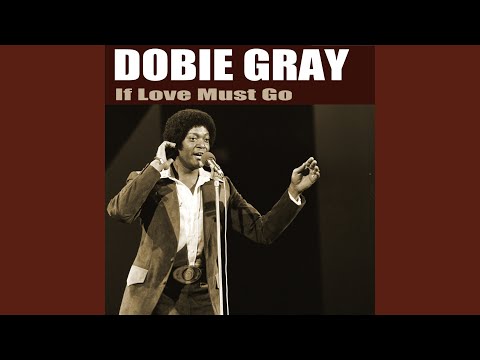
Dobie Gray's recording of "Loving Arms" arrived in 1973 on MCA Records and became one of the most warmly received records of his career, a career that had already demonstrated remarkable resilience across nearly a decade of commercial ups and downs. Gray had first reached national attention in 1965 with "The In Crowd", a Top Ten pop hit that seemed to position him for sustained stardom but was followed instead by a long stretch of commercial inconsistency. "Loving Arms" and its companion release "Drift Away," which preceded it on the same album, restored him decisively to the pop and country crossover conversation.
The song was written by Tom Jans, a California singer-songwriter with a gift for spare, emotionally resonant composition. Jans had written "Loving Arms" as a gentle, introspective ballad about finding comfort and safety in a relationship after a period of difficulty or wandering. The melody is unhurried and searching, built around a simple chord structure that gives the lyric room to breathe. Gray's reading brought a quality of lived experience to the material, his baritone voice conveying a sense of genuine emotional weight that made the song feel autobiographically true even when performed by different artists.
The recording was produced during the same sessions that yielded the album "Drift Away," a record that represented a conscious repositioning of Gray as a mature, album-oriented artist rather than a singles-focused pop commodity. Producer Mentor Williams, who also wrote the title track "Drift Away," crafted arrangements that emphasized warmth and intimacy, surrounding Gray's vocals with understated instrumentation that let the voice carry the emotional burden of each song. The approach paid off commercially and critically, with "Drift Away" reaching the top five on the Billboard Hot 100 and the album establishing Gray as a significant figure in the early-seventies soft rock and blue-eyed soul landscape.
"Loving Arms" was released as a follow-up single to "Drift Away" and reached the top forty on the Billboard Hot 100, continuing the momentum the album had generated. It also performed well on the Easy Listening chart, where Gray's smooth, controlled delivery found a particularly receptive audience. The song demonstrated that Gray's appeal extended across genre boundaries, finding listeners in pop, country, and adult contemporary formats simultaneously.
One of the notable aspects of "Loving Arms" as a recording is how many artists found it compelling enough to cover. Kris Kristofferson and Rita Coolidge recorded a celebrated duet version that brought the song to country radio with considerable success. Elvis Presley recorded it in the mid-seventies, a fact that cemented its status as a song of genuine quality rather than merely a commercial product. The range of artists drawn to the material, spanning country, rock, and pop traditions, speaks to the universality of Tom Jans's composition and to the durability of its emotional premise.
Gray himself had a background that made him particularly suited to material crossing genre lines. Born in Brookfield, Texas, and raised with exposure to gospel, rhythm and blues, and country music, he had developed a vocal versatility that allowed him to inhabit different stylistic registers without sounding displaced in any of them. His MCA recordings of the early seventies drew on all of these influences, producing a body of work that sat comfortably in the crossover space where southern soul, country, and soft rock overlapped.
The production of "Loving Arms" reflects the broader shift in popular music production that was occurring in the early 1970s, away from the dense orchestrations and elaborate arrangements of late-sixties pop and toward a more stripped-back, organic sound influenced by the singer-songwriter movement and by the country-rock fusion that artists like the Eagles, Linda Ronstadt, and Jackson Browne were simultaneously developing in Los Angeles. Gray was not part of that California scene, but his MCA recordings breathe the same air, sharing a sensibility that valued emotional directness and tonal warmth over studio complexity.
"Loving Arms" has continued to appear in compilations and retrospectives of early-seventies soft rock and soul, and it remains one of the two records, alongside "Drift Away," most closely associated with Dobie Gray's name. The album "Drift Away" on MCA is now understood as one of the genuinely accomplished recordings of its era, a record that rewards close listening and that captured a particular moment in American popular music when genre boundaries were temporarily more porous than they had been before or would be again.
Gray continued recording through the decade and beyond, achieving additional country chart success in the late 1970s and early 1980s, but "Loving Arms" remained central to his legacy, a record that demonstrated his ability to bring emotional conviction to a song of quiet but genuine complexity. The Tom Jans composition found its most widely heard interpreter in Gray, whose recording has become the standard version against which subsequent covers are typically measured.
02 Song Meaning
Loving Arms — Meaning and Themes
"Loving Arms" is a song organized around one of the most fundamental human desires: the wish to return to a place of safety and warmth after a period of being lost or unsettled. Tom Jans's composition describes this desire in terms that are both specific and universal, naming the physical comfort of being held as the thing the narrator most wants, a displacement of emotional need onto the body that makes the feeling tangible and concrete rather than abstract.
The emotional movement of the song is from distance to approach, from isolation to the anticipation of reunion. The narrator has been away, in some state of difficulty or wandering, and the return to "loving arms" is presented as the resolution of that difficulty. What distinguishes the song from simpler treatments of the same theme is its acknowledgment of earned need, the sense that the narrator's desire for comfort is not naivety or weakness but the legitimate recognition of what makes life bearable. The arms being described are not idealized but real, belonging to a specific relationship that the singer trusts precisely because it has survived the kinds of difficulties that break less durable connections.
For Dobie Gray, the song carried particular resonance given his own career trajectory. Gray's long period of commercial difficulty between "The In Crowd" in 1965 and his MCA resurgence in the early 1970s gave him a biography that rhymed with the song's narrative of returning after a period of absence. Whether or not Gray consciously drew on that parallel, his vocal performance communicates the quality of someone who actually knows what it feels like to come back from a long way off and to find welcome on the other side.
The song also works within a specifically southern American emotional tradition in which gospel language about shelter and refuge is secularized into the vocabulary of romantic love. The idea of arms as a place of sanctuary, of another person as a kind of home, has deep roots in both sacred and secular African American musical traditions, and Gray, with his background in gospel and rhythm and blues, brings that tradition to bear on the material without making the connection explicit. The result is a song that feels spiritually grounded even when its subject is entirely romantic.
The production's deliberate warmth, with its unhurried tempo and understated instrumental support, amplifies the lyrical meaning by creating a sonic space that itself feels safe and welcoming. The listener is drawn into the same atmosphere that the narrator is describing, which is why the record functions so effectively as what might be called comfort music, the kind of recording people return to during difficult periods in their own lives.
The wide range of artists who have recorded "Loving Arms", from Kris Kristofferson and Rita Coolidge to Elvis Presley, speaks to the song's structural and emotional generosity. It accommodates different vocal personalities and different stylistic approaches without losing its essential character, which is the hallmark of genuinely well-constructed songwriting. For Gray's catalog, it stands as evidence that his greatest talent was the ability to inhabit emotionally honest material with a naturalness that made performance seem indistinguishable from feeling.
→ More from Dobie Gray
View all Dobie Gray hits →

→ More from the 1970s File
View all 1970s hits →




Keep digging