The 1970s File Feature
Feel The Need
Detroit Emeralds and "Feel The Need": Westbound Records Soul in the Disco Era The career of Detroit Emeralds traced an arc through American soul and funk fro…
01 The Story
Detroit Emeralds and "Feel The Need": Westbound Records Soul in the Disco Era
The career of Detroit Emeralds traced an arc through American soul and funk from the late 1960s through the mid-1970s that placed them among the more consistently underappreciated acts in the Westbound Records catalog. "Feel The Need," their 1977 Billboard Hot 100 entry, arrived at a moment when the group had already been recording for nearly a decade and when the musical landscape around them had shifted dramatically from the smooth soul that had first brought them recognition. The disco era was remaking the commercial possibilities for any act working in dance-oriented black music, and the Detroit Emeralds' late-career Hot 100 appearance reflected an attempt to navigate those changed conditions with material that retained the group's core identity while acknowledging the rhythmic demands of the new commercial environment.
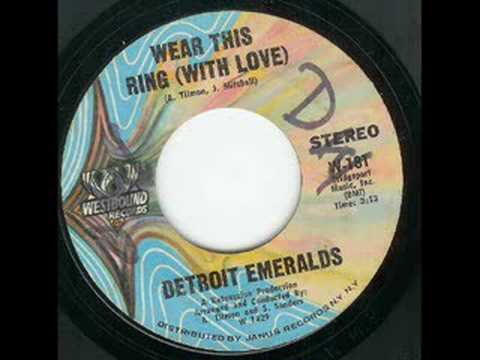
The Detroit Emeralds were formed in Little Rock, Arkansas, in the late 1960s, and despite their name were not originally from Detroit. The group relocated and built their professional base in the Michigan city that gave the ensemble its commercial identity. The core members included vocalist Abrim Tilmon, who served as the group's primary creative voice, and his brothers, and the group signed with Westbound Records in the early 1970s. Westbound was an independent Detroit label with a distinctive roster that included Funkadelic, the Ohio Players in their early recordings, and other acts that occupied the intersection of soul, funk, and early psychedelic R&B. The label had a willingness to allow its artists to explore the more experimental edges of black popular music that distinguished it from more commercially conservative labels of the period.
The Detroit Emeralds achieved their most significant commercial success in the early 1970s with singles including "You Want It, You Got It" and "Baby Let Me Take You (In My Arms)," which reached the top forty of the Billboard Hot 100 and demonstrated the group's ability to construct irresistibly listenable soul recordings around Tilmon's warm, conversational lead vocal. Those recordings established the group's commercial baseline and gave them the platform to continue recording through the mid-decade period of transition.
"Feel The Need" was released in 1977 as the disco era was reaching its commercial peak. The recording adapted the group's characteristic soul sensibility to the rhythmic expectations of a marketplace dominated by the four-on-the-floor kick drum patterns and extended dance arrangements that disco required. The production reflected these adjustments while maintaining the vocal warmth that had always been central to the Detroit Emeralds' appeal. Tilmon's lead vocal retained the intimate quality that distinguished the group's sound even as the arrangement incorporated the more insistent rhythmic drive that contemporary radio demanded.
The single debuted on the Billboard Hot 100 on May 14, 1977, entering at number 97. It climbed to a peak of number 90 over its five-week chart run, representing modest but genuine national commercial engagement with the material. The chart performance placed the recording in the lower reaches of the Hot 100 rather than among the week's major pop stories, but for a group that had been recording for nearly a decade and had seen the commercial ground shift beneath their feet multiple times, any Hot 100 presence represented continuing vitality.
The mid-1970s had been a particularly challenging period for soul groups that had built their identities in the early part of the decade. The emergence of disco created both opportunity and displacement: acts that could adapt their sound to disco's requirements found new commercial possibilities, while those that could not faced declining radio support and label interest regardless of the quality of their recordings. The Detroit Emeralds' attempt with "Feel The Need" reflected the pragmatic recognition that survival in the pop marketplace required some accommodation to changing tastes without complete abandonment of artistic identity.
Westbound Records, despite the strength of its roster, faced significant distribution challenges during this period that limited the promotional resources available for its acts. The independent label ecosystem of the 1970s operated with real constraints on its ability to compete with major-label promotional campaigns, and acts like the Detroit Emeralds frequently found their recordings reaching smaller audiences than the quality of the material warranted. The five-week Hot 100 run of "Feel The Need" was in part a function of these structural limitations as well as the competitive environment for dance music in 1977.
The Detroit Emeralds continued to have a loyal following in the United Kingdom, where their recordings attracted soul and northern soul audiences who valued the group's particular approach to the genre. Their catalog is respected among collectors of 1970s soul as a body of work that maintained consistent quality across a long and sometimes commercially difficult career. "Feel The Need" represents the late period of that career, a moment when genuine talent was navigating a transformed commercial environment with the resources available to it.
02 Song Meaning
Desire and Motion: The Emotional Architecture of "Feel The Need"
"Feel The Need" by Detroit Emeralds situates itself within the soul tradition's central preoccupation: the relationship between bodily sensation and emotional meaning, the way physical desire and emotional connection are not separate experiences but aspects of the same continuum of human feeling. The title itself is a declaration of irreducible honesty: whatever else might be said or explained or rationalized, there is a need, and it is felt with the full force of the body and the heart simultaneously. The song does not intellectualize or complicate this experience; it simply names it and insists on its reality.
In the context of 1977, when disco was systematizing the relationship between dance music and physical desire into an increasingly formulaic arrangement of rhythm and sensation, "Feel The Need" maintained the soul music tradition's insistence on emotional specificity within physical drive. Abrim Tilmon's vocal approach was always more conversational and intimate than the theatrical projection that characterized many soul performances, and this intimacy gave the song's expression of need a personal quality that generic disco production rarely achieved. The need being described was not an abstraction or a dancefloor formula but something specific and felt, directed toward a particular person rather than a generalized experience of desire.
Soul music's most powerful recordings have always operated at this intersection of the physical and the personal, and the Detroit Emeralds' best work understood that the dance groove and the emotional declaration were not competing elements but mutually reinforcing ones. A song that made you want to move your body while also making you feel understood in your emotional life was achieving something that neither pure dance music nor purely emotional balladry could accomplish alone. "Feel The Need" aspired to this integration, using the rhythmic insistence of its arrangement to amplify rather than replace the emotional content of its vocal performance.
The lyrical economy of the song's central statement also reflects a broader truth about desire: it resists elaborate verbal justification. The experience of needing someone is not typically accompanied by an explanatory narrative that makes sense of the feeling in analytical terms; it simply arrives, persistent and undeniable, demanding acknowledgment before it will accept any response. The song's directness honors this quality of desire, presenting the feeling without the kinds of rhetorical elaboration that might domesticate or diminish it.
For the disco-era audience that encountered "Feel The Need" on the radio and on the dancefloor, the song occupied a particular emotional niche: it was music that acknowledged the experience of desire with enough specificity to feel personal rather than merely functional. In an environment where much dance music of the period had become increasingly generalized in its emotional content, optimizing for rhythmic effect rather than emotional resonance, the Detroit Emeralds' continued insistence on personal emotional declaration within the dance format was a meaningful artistic choice.
The Westbound Records aesthetic that shaped the group's recordings through this period had always favored soul music with real emotional grounding over pure commercial formula, and "Feel The Need" reflects that ethos even in its late-career context. The song's meaning is not exhausted by its moment of commercial release; it speaks to a dimension of human experience that remains consistent across the shifting fashions of popular music. The need it describes is not a product of any particular decade; it is simply the condition of being a person who wants to be close to someone else, expressed with the directness and warmth that the best soul music has always managed to achieve.
→ More from Detroit Emeralds
View all Detroit Emeralds hits →

→ More from the 1970s File
View all 1970s hits →




Keep digging