The 1970s File Feature
Black Night
Black Night: Deep Purple's Breakthrough and the Making of British Hard Rock Note: "Black Night" is Deep Purple's hard-rock single from 1970, not to be confus…
01 The Story
Black Night: Deep Purple's Breakthrough and the Making of British Hard Rock
Note: "Black Night" is Deep Purple's hard-rock single from 1970, not to be confused with any other recording of the same title.
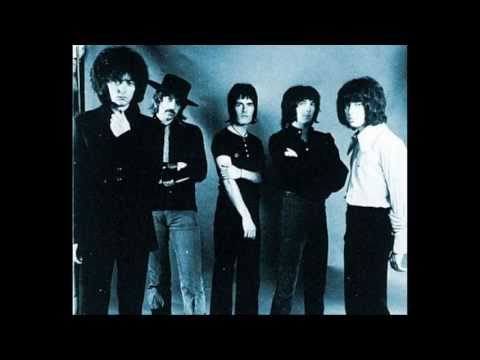
In the summer of 1970, Deep Purple were in the midst of a profound artistic transformation. The band had already cycled through one lineup and a period of classical-rock experimentation that had produced the Concerto for Group and Orchestra project, and they were now in the early stages of what fans and historians would come to call the classic Mark II configuration: Ritchie Blackmore on guitar, Jon Lord on Hammond organ, Roger Glover on bass, Ian Paice on drums, and Ian Gillan as lead vocalist. This lineup would become one of the most celebrated in hard rock history, and "Black Night," released on Harvest Records in June 1970, was among the very first recordings to demonstrate what they could achieve together.
The recording of "Black Night" was, by the accounts of the band members, a notably spontaneous process. The track was recorded quickly, reportedly assembled and committed to tape in a short session, with a driving riff and groove at its center. Ritchie Blackmore's guitar work on the track established a template for the heavy, riff-driven approach that would define the group's sound on subsequent albums including Fireball and the landmark Machine Head. Jon Lord's Hammond organ, which had been central to the band's sound throughout their earlier work, here takes on a harder, more aggressive character, complementing Blackmore's guitar rather than dominating the arrangement.
Ian Gillan's vocal performance on "Black Night" announced to British audiences that Deep Purple had found a singer of exceptional power and range. Gillan had joined the band in 1969, replacing Rod Evans, and his contributions to Deep Purple in Rock (recorded largely in the same period as "Black Night") demonstrated a vocalist who could match and even surpass the ferocity of Blackmore's guitar. On "Black Night," his delivery is energetic and assured, lending the track an urgency that complemented its muscular production.
The single reached number 2 on the UK Singles Chart, a commercial breakthrough that established Deep Purple as a mainstream force in British music rather than merely a respected album act. The number-2 position was a striking commercial achievement for music of this heaviness and intensity, reflecting the appetite among British audiences for harder rock sounds that had been building throughout the late 1960s with artists like Cream, Led Zeppelin, and the Who. Deep Purple's success with "Black Night" demonstrated that this audience was substantial enough to drive a single to near the very top of the charts.
The song was released in the United Kingdom on Harvest Records, the EMI imprint that had become associated with progressive and heavier rock music, and the label was an appropriate home for a track that bridged the gap between the experimental rock of the late 1960s and the more commercially assertive hard rock that would dominate the early 1970s. In the United States, where Deep Purple were distributed through Warner Bros. Records, the track received less attention, reflecting the longer timeline on which American audiences came to embrace heavy British rock.
The chart success of "Black Night" set the stage for what would become one of the most productive periods in the band's history. Deep Purple in Rock, released in the same year, is now considered a foundational document of heavy metal and hard rock, and the band followed it with a sequence of albums that cemented their status as one of the definitive acts of the era. The single also established the commercial framework within which subsequent Deep Purple releases would be received in Britain, where the band became genuine chart presences in addition to album sellers.
The song has remained a staple of Deep Purple's live sets across the decades, played at concerts and reunions spanning more than fifty years. Its durability in the live context speaks to the directness and energy of the recording, qualities that translate well to performance and retain their power regardless of when they are encountered. As a document of the moment when one of rock's most celebrated lineups found its commercial and artistic voice, "Black Night" holds an important place not only in the Deep Purple catalog but in the broader history of British hard rock. The track demonstrated that heaviness and commercial appeal were not mutually exclusive, a lesson the genre would continue to learn and relearn through the decades that followed.
02 Song Meaning
Darkness, Drive, and the Grammar of Hard Rock: The Meaning of "Black Night"
"Black Night" is a song that operates primarily through energy and atmosphere rather than narrative complexity, but this does not diminish its significance as an artistic statement. The track's title and its overall mood gesture toward a familiar rock tradition of nighttime imagery, the darkness of the night serving as a space for both danger and liberation, for experiences that daylight and its social constraints would not permit. This is a theme with deep roots in blues and R&B, the traditions from which British hard rock groups like Deep Purple drew heavily, and "Black Night" is effective partly because it connects its heavy, modern production to those older emotional frameworks.
The song's most important meanings, however, are musical rather than literary. Ritchie Blackmore's central guitar riff is the song's primary communicative act, a statement of force and momentum that establishes the terms on which the rest of the track operates. The riff does not so much support a lyrical narrative as it creates a sonic environment within which the listener is invited to experience a particular emotional state: driven, darkly energized, liberated from the more delicate emotional registers of pop music. This is what hard rock at its best accomplishes, the creation of a specific emotional and physical experience through volume, repetition, and rhythmic intensity.
Ian Gillan's vocal adds a human dimension to what might otherwise be primarily an instrumental statement. His delivery conveys a kind of urgent animation, a voice engaged fully with the music around it rather than simply riding atop a backing track. The interaction between Gillan's voice and Jon Lord's Hammond organ is particularly striking, two relatively unconventional lead instruments in a rock context (most bands of the era relied on guitar as the dominant melodic voice) weaving around each other in ways that give Deep Purple a textural richness absent from their contemporaries.
The song's meaning for Deep Purple as a group is perhaps most clearly understood in terms of what it announced: that the Mark II lineup had arrived and that its approach to hard rock would be both commercially viable and artistically distinctive. The number-2 UK chart position validated an approach that could have been seen as too heavy or too uncompromising for mainstream audiences, and that validation gave the band the confidence to pursue the heavier and more ambitious work that followed on In Rock and beyond. In this sense, "Black Night" is not just a song but a statement of artistic intent whose commercial reception enabled a remarkable subsequent creative period, one that produced recordings now widely regarded as among the most important in the genre's history.
→ More from Deep Purple
View all Deep Purple hits →



→ More from the 1970s File
View all 1970s hits →




Keep digging