The 1970s File Feature
I Heard It Through The Grapevine
I Heard It Through the Grapevine — Creedence Clearwater Revival Featuring John Fogerty A Classic Song in New Hands By January 1976, I Heard It Through the Gr…
01 The Story
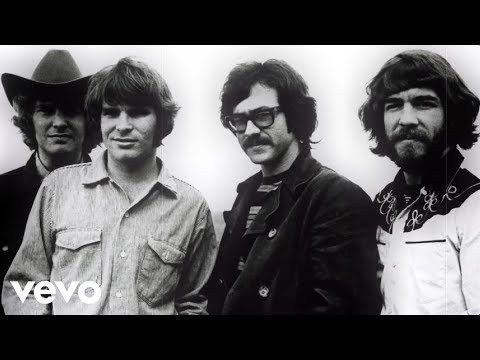
I Heard It Through the Grapevine — Creedence Clearwater Revival Featuring John Fogerty
A Classic Song in New Hands
By January 1976, I Heard It Through the Grapevine was already one of the most famous songs in American pop history. Marvin Gaye's 1968 recording had reached number one on the Billboard Hot 100 and become a cornerstone of Motown's golden period. The Gladys Knight & the Pips version had charted before Gaye's, and the song had already demonstrated its ability to support dramatically different interpretations. When Creedence Clearwater Revival's version surfaced on the charts in early 1976, it came with its own backstory: the recording had been made years earlier, during the band's commercial peak, and its release coincided with a period when CCR nostalgia was beginning to intensify even as the band itself had long since dissolved.
CCR's Recording and Its Delayed Release
Creedence Clearwater Revival recorded their version of the Norman Whitfield and Barrett Strong composition during the band's active years, before their 1972 breakup. The recording featured John Fogerty's distinctive swamp-rock guitar work and vocals, which gave the song a completely different character from the lush orchestral soul of the Motown versions. CCR's approach was rawer, driven by that churning, bayou-inflected rhythm that had defined their biggest hits. The version ran considerably longer than typical radio edits of the era, and its extended instrumental passages became one of its most discussed features. It appeared as part of the Live in Europe album's accompanying release strategy, and its chart performance in early 1976 was driven partly by CCR's continued album sales and partly by the nostalgia market that was building around classic rock.
Eight Weeks on the Hot 100
The single entered the Billboard Hot 100 on January 31, 1976, at number 90. It climbed modestly through February, reaching 78 in its third week and 72 in its fourth, before pushing further through the end of February and into March. The recording peaked at number 43 on March 20, 1976, completing a chart run of eight weeks. That placing was respectable for a track from a band that had been broken up for four years, and it spoke to the enduring loyalty of the CCR fanbase and to the song's intrinsic commercial appeal. The performance was also a reminder of how strong the underlying composition was: a song that could chart in three different versions across eight years was doing something at the level of the melody and structure that transcended any particular production choice.
The Fogerty Touch on a Motown Standard
What CCR did with the song was make it sound like a CCR song first and a cover second. John Fogerty's approach to covering material had always prioritized transformation over homage; he absorbed songs into the band's aesthetic rather than reproducing them respectfully at a distance. The result was a version that surprised listeners who expected either a straightforward reproduction of the Gaye recording or a straightforward hard rock treatment. Instead, it occupied a middle ground that reflected everything that made CCR distinctive: the interplay between American roots forms, the grinding rhythm guitar, the voice that sounded like it had been seasoned by a Southern swamp even though Fogerty was from El Cerrito, California.
A Song That Keeps Proving Its Own Point
The song's subject matter, the spread of unwanted information through informal social networks, has maintained its relevance across every communication era. When CCR recorded it and when their version charted, the grapevine was literal: word-of-mouth gossip traveling from person to person in social circles. The song has continued to find new resonance in each communication revolution since, from cable television to the internet to social media, because the psychology it describes does not change even as the technology does. CCR's version holds its own place in that lineage, a rock reading of a soul standard that documented the song's ability to survive translation into forms its composers never imagined. Press play and hear the swamp take hold of a Motown classic.
"I Heard It Through the Grapevine" — Creedence Clearwater Revival Featuring John Fogerty's singular moment on the 1970s charts.
02 Song Meaning
I Heard It Through the Grapevine — Themes and the CCR Interpretation
The Psychology of Betrayal Rumors
The central drama of I Heard It Through the Grapevine is the moment of receiving second-hand information about romantic betrayal: not confronting the truth directly, not reading a letter or witnessing the betrayal firsthand, but hearing it whispered through the social network that surrounds every relationship. The song's power lies in the space between knowing and not quite knowing, the emotional state of having information that cannot be fully verified but cannot be ignored. That particular form of anguish, the corrosive uncertainty of rumor, is rendered with great precision in the song's structure, and it explains why the composition has remained emotionally resonant across generations and across cultures.
CCR's Transformation of the Material
Creedence Clearwater Revival brought a different emotional register to the song than either Gladys Knight or Marvin Gaye had. Where Gaye's recording built its devastation through Motown's orchestral architecture, CCR's version expressed the same pain through rock-based tension and release, the anguish of betrayal transmuted into guitar urgency. John Fogerty's vocal approach was less polished and more raw, which suited a band whose entire aesthetic was built around the illusion of unmediated emotion. The Motown versions felt like they were happening inside a ballroom; the CCR version felt like it was happening on a dirt road at midnight.
Roots Music and the Blues Inheritance
The composition was written by Norman Whitfield and Barrett Strong, two of Motown's most inventive writer-producers, and it drew on the blues tradition's long engagement with themes of infidelity, suspicion, and emotional vulnerability. CCR's interpretation made the blues inheritance more explicit, stripping away some of the song's Motown sophistication in favor of the rawer textures of Delta and country blues. That choice illuminated something in the composition that the more polished versions partially obscured: the song is fundamentally a blues complaint, and it works in that register just as effectively as it works as soul gospel.
Social Networks and Informal Knowledge
The grapevine of the title refers to the pre-telephone social network of community gossip, a system of information transmission that preceded any formal communication technology. The song captured the emotional experience of living inside that network, where your private life is never fully private and knowledge about you travels through channels you cannot monitor or control. For listeners in 1976, this resonated differently than it had for listeners in 1968, when Gaye's version first charted. The intervening years had produced Watergate, a scandal built partly on the same premise: that information travels in ways those at the center cannot always anticipate or prevent.
The Cover's Place in a Long Legacy
The CCR version's chart performance in 1976 contributed to the ongoing documentation of the song's commercial resilience across interpretations. Each major version added a new layer of meaning to the composition, and the cumulative effect was to make "Grapevine" one of the most analyzed and re-recorded songs of the classic Motown era. CCR's contribution to that legacy was to demonstrate that the song's emotional core survived the removal of virtually everything stylistically specific to its origins, emerging intact in a rock context that shared none of the Motown musical vocabulary. The bones of the composition were strong enough to hold up regardless of what surrounded them.
→ More from Creedence Clearwater Revival Featuring John Fogerty
View all Creedence Clearwater Revival Featuring John Fogerty hits →

→ More from the 1970s File
View all 1970s hits →




Keep digging