The 1970s File Feature
Sweet Love
Sweet Love — Commodores (1975–1976) The Commodores arrived on the commercial landscape in the mid-1970s as a band capable of both hard-driving funk and sweep…
01 The Story
Sweet Love — Commodores (1975–1976)
The Commodores arrived on the commercial landscape in the mid-1970s as a band capable of both hard-driving funk and sweeping romantic balladry, and "Sweet Love" belongs to the latter mode. Released in 1975 on Motown Records, the song announced the emergence of Lionel Richie as one of the most compelling ballad writers of his generation, even as the band as a whole continued to be defined in the public imagination by its harder material.
The Commodores had formed at Tuskegee University in Alabama in the late 1960s, and by the time they arrived at Motown, they had developed a reputation as a formidable live act, one capable of tearing through funk grooves with the precision of a well-rehearsed unit. They had toured as an opening act for the Jackson 5, an experience that exposed them to the Motown operation and eventually led to their signing. But their commercial instincts led them toward a dual identity: the funk band that could also break your heart.
"Sweet Love" leaned entirely into that romantic identity. Lionel Richie wrote and sang the track, and his voice, smooth and intimate at once, gave the song the warmth it required. The production reflects the Motown house approach of the mid-1970s, a period when the label was evolving from the tight, Detroit-forged soul of the classic era toward something more lush and orchestrated, suited to the adult contemporary market that was growing rapidly on radio.
The song performed well on the charts, reaching the upper regions of the R&B chart and crossing over to the pop mainstream with measurable impact. It contributed to the Commodores' sustained commercial presence on both the Billboard Hot 100 and the R&B charts through the mid-decade period, when the group was establishing themselves as reliable hit-makers rather than a promising newcomer act. The track helped build the audience that would eventually make the group's late-1970s recordings, particularly the string of ballads Richie would write for them, among the best-selling soul recordings of the era.
The production team at Motown understood what they had in Richie's vocal performances and gave the arrangements space to breathe, surrounding his voice with string textures and gentle rhythmic support rather than the dense funk architecture the group deployed elsewhere. This sonic contrast between the band's two modes was not accidental: it was a deliberate commercial strategy that allowed the Commodores to reach different audiences with different singles while maintaining a coherent group identity.
For Lionel Richie personally, "Sweet Love" was an early indicator of the direction his solo career would eventually take. His instinct for melodic accessibility, for songs that communicated emotional states with directness and without condescension, was already evident here. The song's success demonstrated that an R&B ballad could thrive on pop radio without sacrificing its emotional authenticity, a lesson Richie would apply repeatedly over the following decade.
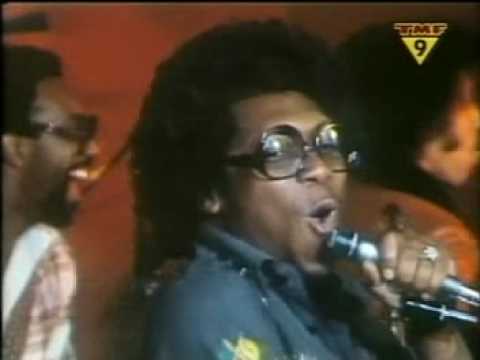
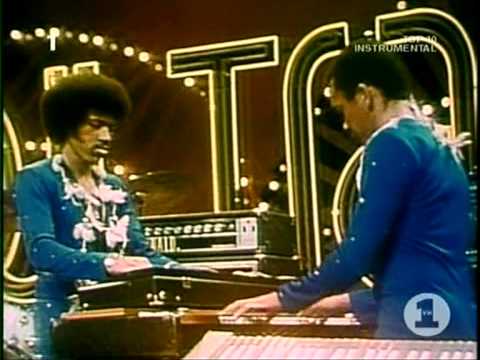
The Commodores of this period were a seven-piece band that included, alongside Richie, the talents of guitarist Thomas McClary, keyboardist Milan Williams, drummer Walter Orange, bassist Ronald LaPread, and saxophonist William King. The full ensemble contributed to the song's texture, but it was Richie's compositional intelligence and vocal performance that gave "Sweet Love" its lasting appeal. The track holds up as a document of a specific Motown moment and as an early chapter in what would become one of the most commercially successful songwriting careers in American pop music.
In the broader sweep of 1970s soul and R&B, "Sweet Love" occupies a space alongside the romantic ballads of Al Green and the lush productions coming out of Philadelphia, sharing their commitment to emotional sincerity and melodic craft. The song helped define what the Commodores could be at their most tender, and that definition would prove commercially durable well into the decade's second half.
02 Song Meaning
The Meaning of Sweet Love by the Commodores
"Sweet Love" by the Commodores operates within the tradition of devotional R&B balladry, a form that locates its emotional power in the act of bearing witness to romantic feeling rather than dramatizing conflict or loss. The song is a declaration rather than a negotiation, a sustained expression of tenderness directed at a specific beloved figure whose presence in the narrator's life is framed as an unambiguous source of joy and security.
Lionel Richie's lyrical approach in the song is fundamentally affirmative, which distinguishes it from much of the soul tradition's exploration of romantic ambivalence, longing, or heartbreak. Where many of the era's ballads drew their emotional charge from absence or uncertainty, "Sweet Love" situates itself in the present of a relationship that is working, a present that the narrator wishes to sustain and celebrate. This commitment to the affirmative mood is not naivety but a deliberate artistic choice, one that Richie would refine and expand throughout his subsequent career.
The emotional register of the song is intimate rather than grandiose. Richie pitches his vocal delivery to suggest a private conversation rather than a public declaration, which creates a sense of warmth and accessibility for the listener. The song invites identification because its emotional terrain is familiar and its expression of that terrain is unguarded. There is no irony, no distance, no posturing. What the narrator feels is what the narrator says, and what he says is delivered with a simplicity that is more difficult to achieve than it might appear.
For the Commodores as a band, "Sweet Love" represented an articulation of their capacity for emotional range. The same group that drove dancers to the floor with funk workouts could also create the space for reflection and intimate connection. This duality was central to their artistic identity, and "Sweet Love" was one of the clearest early demonstrations that the romantic mode was not a departure from what the band was but an equally authentic expression of it.
In the context of Motown's mid-1970s evolution, the song also reflects a broader shift in how the label was positioning its artists. The classic Motown sound had been built on tight, compressed arrangements and urgent rhythmic energy. By the mid-1970s, the label was moving toward more expansive, orchestrated production that suited adult contemporary radio and its audience of maturing pop listeners. "Sweet Love" participated in that evolution, offering a more spacious and lush sonic environment than the Motown records of the previous decade while retaining the label's commitment to melody and emotional clarity.
The song's lasting significance in the Commodores' catalog lies partly in what it predicted. Richie's subsequent ballads for the group, and then his solo work, would follow the same emotional logic that "Sweet Love" established: the belief that romantic love, expressed with sincerity and melodic craft, is a subject worthy of serious artistic attention. The song is an early chapter in that larger argument, and it made the argument convincingly enough to establish both the Commodores and their most gifted member as forces in the American pop and soul landscape for years to come.
→ More from Commodores
View all Commodores hits →


→ More from the 1970s File
View all 1970s hits →




Keep digging