The 1970s File Feature
Chase The Clouds Away
A Jazz Flugelhorn Finds the Pop Charts: Chuck Mangione and "Chase The Clouds Away" Chuck Mangione arrived at the Billboard Hot 100 in the summer of 1975 as s…
01 The Story
A Jazz Flugelhorn Finds the Pop Charts: Chuck Mangione and "Chase The Clouds Away"
Chuck Mangione arrived at the Billboard Hot 100 in the summer of 1975 as something of an anomaly: a trained jazz musician whose instrumental work had found an audience sufficiently broad to register on a singles chart dominated by vocalists and rock bands. "Chase The Clouds Away" debuted at number 96 on July 19, 1975, peaking at that same position in its first week before dipping slightly and spending four total weeks in the lower reaches of the chart. The numbers themselves were modest, but the mere presence of the record on the Hot 100 signaled something meaningful about the state of American popular music in the mid-1970s and about Mangione's particular ability to communicate across stylistic divides.
Born in Rochester, New York, in 1940, Mangione had grown up in a household where jazz was taken seriously. His father had befriended Dizzy Gillespie, and the young Chuck and his brother Gap were encouraged to pursue music with genuine rigor. Chuck studied at the Eastman School of Music, one of the most respected conservatories in the country, and spent time playing with Art Blakey and the Jazz Messengers in the early 1960s, an apprenticeship that placed him in one of the central institutions of hard bop jazz education. He also taught at Eastman for a period, developing his musical thinking alongside his performing career.
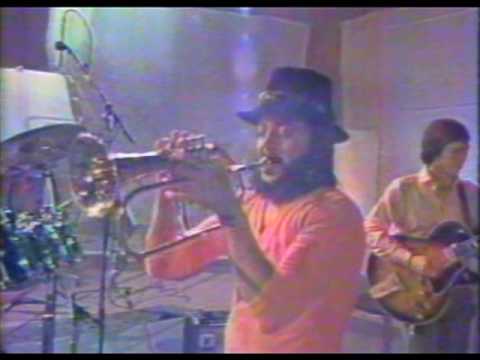
The transition toward a more accessible sound came gradually. Mangione was particularly drawn to the flugelhorn, a brass instrument with a mellower, rounder tone than the trumpet it resembles. The flugelhorn's character lent itself to melodic writing that felt warm and approachable without sacrificing musical sophistication. Mangione proved exceptionally skilled at composing instrumental melodies that had the memorable quality of pop hooks while remaining firmly grounded in jazz harmonic language. "Chase The Clouds Away," the title track of his 1975 album on A&M Records, exemplified this approach: a lyrical, flowing melody carried by the flugelhorn over a rhythm section that incorporated jazz, funk, and light Latin influences.
The Chase The Clouds Away album arrived at a moment when the boundaries between jazz and popular music were unusually porous. Fusion had opened audiences to the idea that jazz could incorporate rock rhythms and electric instrumentation. At the same time, soft rock and adult contemporary formats were demonstrating that radio listeners were receptive to music without vocals if the melodic content was strong enough to sustain interest. Herb Alpert had already proved the commercial viability of brass-led instrumental pop through the Tijuana Brass, and George Benson was beginning his transition toward a crossover approach that would make him one of the best-selling artists of the late 1970s. Mangione occupied a related but distinct niche, one rooted more firmly in jazz tradition even as it reached toward pop accessibility.
The chart performance of "Chase The Clouds Away" was limited, but the album itself performed well enough to establish Mangione as a commercially viable artist rather than purely a critical concern. A&M Records, the label founded by Herb Alpert and Jerry Moss, had a particular gift for nurturing instrumental artists with crossover potential, and Mangione fit that profile well. The label's investment in his career would prove to have extraordinary patience and foresight: just three years after "Chase The Clouds Away" made its modest Hot 100 appearance, Mangione would release Feels So Good, whose title track would reach number four on the Hot 100, earn a Grammy Award for Best Pop Instrumental Performance, and become one of the definitive recordings of the late 1970s pop landscape.
In retrospect, "Chase The Clouds Away" reads as an important developmental stage in that journey. The musical approach that would make "Feels So Good" such a phenomenon was already present in embryonic form: the melodic flugelhorn lead, the rhythmically sophisticated but listener-friendly accompaniment, the sense of warmth and optimism embedded in the musical texture itself. The Hot 100 placement, however brief, confirmed that the approach had commercial potential and encouraged Mangione and his label to continue developing it.
The four weeks that "Chase The Clouds Away" spent on the chart between July 19 and August 9, 1975, represent a footnote in the larger story of Mangione's career, but footnotes sometimes illuminate the main text more clearly than the celebrated passages. The song demonstrated that a jazz instrumentalist playing with genuine musical integrity could find a place on the pop singles chart, and it contributed to the gradual broadening of mainstream audience expectations that would eventually allow a flugelhorn melody to become one of the most recognizable instrumental recordings of its era.
02 Song Meaning
Optimism as Instrumental Language: The Meaning Behind "Chase The Clouds Away"
An instrumental recording presents a particular interpretive challenge: without words to anchor meaning explicitly, listeners must derive the song's emotional content from musical texture, melodic character, and the associations that the instruments and their performance styles carry. Chuck Mangione's "Chase The Clouds Away" is a masterclass in how an instrumental can communicate with precision and warmth without recourse to language, achieving through melody and timbre what lesser composers require full lyrical argument to convey.
The title itself does the work that lyrics would otherwise perform. "Chase The Clouds Away" establishes an immediate program: there are clouds, they represent something oppressive or limiting, and the purpose of the music is to dispel them. The image is optimistic without being naive, acknowledging that clouds exist while asserting the possibility of clearing them. This is not the optimism of someone who has never experienced difficulty, but the optimism of someone who has learned that difficulty is temporary and that music is one of the tools by which the human spirit reclaims equilibrium.
Mangione's choice of the flugelhorn as his lead instrument is central to this meaning. The flugelhorn's tone is softer and more rounded than the trumpet's, lacking the piercing brightness that makes the trumpet effective for fanfares and proclamations. Instead, the flugelhorn has a quality of intimacy, a sense that it is speaking rather than announcing. When Mangione plays the song's primary melody, the instrument sounds like a voice offering reassurance: present, warm, and close. That tonal quality transforms what might be a merely cheerful instrumental into something that feels genuinely comforting.
The rhythmic foundation of the recording also contributes to its meaning. The rhythm section incorporates elements from jazz, funk, and light Latin music in a combination that feels both energetic and relaxed. The groove moves forward without urgency, suggesting purposeful motion rather than frantic escape. This is important because "chasing clouds away" is an active process; it requires engagement and effort. The music's rhythmic character embodies that activity without making it feel strenuous. The listener is invited to participate in a kind of gentle forward movement, carried along by the music's momentum toward a brighter emotional state.
Harmonically, the piece works within a framework that jazz listeners would recognize as sophisticated while remaining accessible to ears not trained in jazz vocabulary. The chord progressions create a sense of forward motion and resolution that satisfies even without the completion that a conventional pop song's verse-chorus structure provides. Mangione's melodic lines work against and with these harmonies in ways that feel inevitable, as though the notes could not have been arranged otherwise, which is the hallmark of strong melodic composition in any genre.
The meaning of "Chase The Clouds Away" is ultimately about the function of music itself as much as it is about any specific emotional experience. The piece argues through its existence that instrumental music can lift the spirit, that a melody well-played can perform the psychic work that clouds require. In 1975, when Mangione released the recording, this argument found an audience because the mid-1970s were a period when many Americans were seeking emotional restoration after years of turbulence. A warm flugelhorn melody over a gentle, swinging groove offered exactly the kind of uncomplicated restorative pleasure that the cultural moment demanded.
→ More from Chuck Mangione
View all Chuck Mangione hits →
→ More from the 1970s File
View all 1970s hits →




Keep digging