The 1970s File Feature
Fly At Night
Chilliwack's "Fly At Night": Canadian Rock's Quiet Conquest of the American Airwaves In the spring of 1977, a Vancouver-based rock band with a decade of hist…
01 The Story
Chilliwack's "Fly At Night": Canadian Rock's Quiet Conquest of the American Airwaves
In the spring of 1977, a Vancouver-based rock band with a decade of history behind them achieved their first and most significant American chart breakthrough with a song that balanced hard rock energy against an evocative lyrical quality that set it apart from the more straightforwardly aggressive material that dominated rock radio at the time. "Fly At Night" by Chilliwack debuted on the Billboard Hot 100 on April 30, 1977, at number 76, and reached its peak of number 75 the following week, on May 7, 1977, before a somewhat uneven descent over the remaining weeks of its six-week chart run. The peak position was modest, but the record's American chart appearance at all was a significant milestone for a band that had spent years building a devoted following in Canada while struggling to translate that domestic success into the American market.
Chilliwack had been formed in Vancouver in the late 1960s, evolving from an earlier group called the Collectors that had recorded psychedelic rock in the tradition of the late-1960s San Francisco scene. By the time the band settled into the Chilliwack configuration, with guitarist and vocalist Bill Henderson as the central creative force, they had developed a sound that drew on British hard rock influences while retaining a melodic sensibility and a lyrical quality that distinguished them from heavier, more riff-driven contemporaries. Henderson's songwriting consistently favored imagery and atmosphere over the more straightforward rock-as-force-of-nature approach that many of the band's genre contemporaries pursued.
The Canadian rock scene of the 1970s occupied a peculiar position relative to its American counterpart. Canadian musicians had always faced the challenge of a domestic market that was simultaneously too small to sustain major commercial ambitions and too heavily influenced by American and British models to provide a clearly distinct creative identity. The Canadian Radio Broadcasting Commission's content requirements, which mandated that a percentage of radio airplay be devoted to Canadian-produced music, had provided some structural support for Canadian artists seeking domestic radio exposure, but they did nothing to address the challenge of breaking through in the American market, where Canadian origin was at best irrelevant and at worst a mild negative in the minds of some industry figures.
"Fly At Night" demonstrated that Chilliwack could write and record material with genuine crossover appeal, songs that operated within recognizable American rock conventions while bringing to them a quality of imagery and mood that reflected Henderson's particular songwriting gifts. The song's nocturnal imagery, its evocation of flight as a metaphor for freedom and escape, placed it within a romantic-atmospheric tradition in rock songwriting that had precedents in the work of artists from Jim Morrison to Neil Young, both of whom had used similar imagery to similar expressive effect.
The production of the record, handled within the Canadian recording infrastructure that had developed substantially over the preceding decade, captured the band's live energy while giving the studio performance the sonic polish that American radio required. The guitar work was central to the record's appeal: Henderson's playing combined the melodic sophistication of classic British rock with the directness and power of American hard rock, creating a hybrid approach that could appeal to audiences on both sides of the stylistic divide.
The modest American chart performance of "Fly At Night" should be understood against the backdrop of a competitive 1977 rock market that included major established acts as well as the emerging punk and new wave movements that were beginning to reshape the genre's landscape. That Chilliwack could place a record on the Hot 100 at all, without the backing of a major American label or a significant American tour profile at the time of the single's release, was an achievement that reflected genuine musical quality rather than merely promotional muscle.
In Canada, Chilliwack's commercial success was considerably more substantial. The band achieved multiple top-ten hits on the Canadian charts through the late 1970s and into the 1980s, building a following that sustained a career of considerable longevity. Henderson continued to develop as a songwriter, and subsequent Chilliwack records would refine the approach that "Fly At Night" had introduced to the American market, though they would not again achieve comparable American chart placement. The RPM Music Awards in Canada recognized the band's contributions to Canadian rock music, and their status as one of the most significant Canadian rock acts of the 1970s has been acknowledged by Canadian music historians and critics with increasing frequency as the historical importance of Canadian popular music has gained wider recognition.
"Fly At Night" endures as the record that defined Chilliwack's international profile, the song through which listeners outside Canada encountered a band that deserved a wider audience than the American market ultimately provided. Its combination of rock energy and lyrical evocativeness represented Henderson's songwriting at a particular creative peak, and the record's occasional reappearance in retrospective collections of 1970s rock confirms that its appeal was not merely a matter of timing or circumstance but of genuine and enduring musical quality.
02 Song Meaning
Freedom, Escape, and the Night Sky: Reading Chilliwack's "Fly At Night"
Night flying as a metaphor for freedom and escape belongs to a venerable tradition in both poetry and popular song, drawing on the specific qualities of nocturnal experience, the darkness that offers concealment, the stars that suggest infinite space and possibility, the absence of the social surveillance and constraint that daylight brings, as vehicles for expressing desires that resist accommodation within ordinary social life. Chilliwack's "Fly At Night" participates in this tradition with a conviction and atmospheric specificity that elevates it above the merely generic use of its central imagery.
Bill Henderson's songwriting approach consistently favored the concrete image over the abstract statement, grounding emotional content in specific sensory experiences rather than articulating it in purely psychological terms. The choice of flight at night as the song's central image was characteristic of this approach: rather than simply declaring a desire for freedom or escape, the song makes that desire present through an image that combines physical sensation with atmospheric evocation in ways that engage the listener's imagination directly.
The nocturnal setting carries specific associations that the song deploys with deliberateness. Night in the tradition of Romantic and post-Romantic lyric poetry is the time when the ordinary social world relaxes its grip, when the imagination is freed from the constraints of pragmatic daylight thinking, and when experiences of transcendence or escape become imaginatively available in ways that the structures of daytime life foreclose. Rock music had inherited this association and deployed it consistently from at least the mid-1960s onward, and "Fly At Night" contributes a specific and well-crafted instance to a rich tradition.
The flight metaphor itself adds a further layer of meaning. Flying, whether literally in aircraft or metaphorically through some alteration of consciousness or circumstance, functions in popular song as one of the most powerful available images of transcendence, the movement beyond earthbound limitations into a space defined by freedom of movement rather than constraint. The combination of flight and night in Chilliwack's song creates an image that is doubly freed: from the physical limitations that gravity imposes and from the social and psychological limitations that the ordinary daylit world maintains.
There is also a quality of longing in the song that complicates its apparent celebration of freedom. The desire to fly at night is not simply a desire for freedom in the abstract but a desire that implies dissatisfaction with present circumstances, a sense that something essential is missing or constrained in the singer's current life. This dimension of the lyric gives it an emotional depth that pure celebration of freedom would not possess, connecting it to the more ambivalent tradition of songs in which freedom is desired precisely because it has not been achieved.
The musical construction of the record reinforces the thematic content through its own atmospheric qualities. The production creates a sense of open space and momentum that mirrors the experience of flight, and Henderson's guitar work suggests both the precision required for navigation and the expansiveness of the space through which one moves. The rhythm section provides the driving momentum that keeps the song moving forward rather than settling into stasis, an appropriate musical choice for material organized around the image of sustained movement through open space.
The song's reception in Canada, where it was a significant hit, and its more modest American chart performance point to an interesting dynamic in rock music's relationship to geography. The specific quality of nocturnal freedom that "Fly At Night" evokes may carry different resonances for listeners in Canada, where the sense of vast open space, of wilderness and sky extending beyond any horizon, is a more immediate feature of both physical and imaginative geography than it typically is for American listeners accustomed to a more densely populated and urbanized cultural landscape. Whether or not this geographical dimension was consciously intended by Henderson, it may account for some of the difference in audience response between the record's Canadian and American markets. What the song captured remained, regardless of geography, an authentic expression of a specific kind of longing that rock music has always been particularly equipped to articulate.
→ More from Chilliwack
View all Chilliwack hits →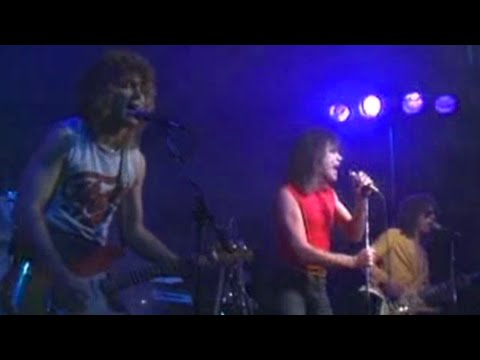


→ More from the 1970s File
View all 1970s hits →




Keep digging