The 1970s File Feature
Earache My Eye
Earache My Eye — Cheech and Chong Featuring Alice Bowie (1974) Few comedy recordings of the 1970s achieved quite the cultural penetration of "Earache My Eye,…
01 The Story
Earache My Eye — Cheech and Chong Featuring Alice Bowie (1974)
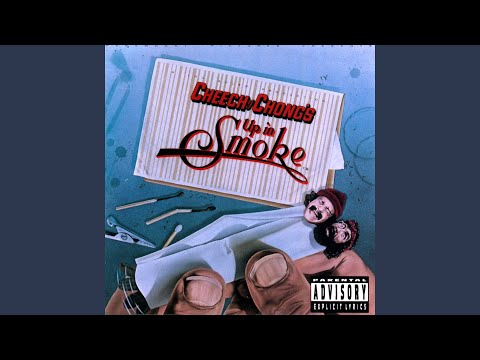
Few comedy recordings of the 1970s achieved quite the cultural penetration of "Earache My Eye," released by Cheech and Chong on Ode Records in 1974. The track appeared on the album "Cheech and Chong's Wedding Album" and was released as a single that managed something genuinely unusual in the comedy genre: it crossed over from the comedy album market into mainstream rock radio, where it was embraced not merely as a joke but as a genuine piece of hard rock music that happened to be funny. The Alice Bowie billing on the single was itself a joke, a portmanteau of Alice Cooper and David Bowie that served as the name of the fictional band within the sketch.
Richard "Cheech" Marin and Tommy Chong had by 1974 established themselves as the dominant comedy duo in American popular culture, a status they achieved through a series of enormously successful comedy albums on Ode Records that combined marijuana humor, ethnic comedy, and parody of rock music and counterculture posturing. Their records sold in quantities that were remarkable for comedy albums of any era, making them not just critical favorites within their genre but genuine mainstream commercial presences. The pair had earned Grammy Awards for their comedy recordings and had demonstrated repeatedly that their material could cross demographic and format boundaries in ways that other comedy acts of the period could not match.
"Earache My Eye" operated as a multi-layered parody. The comedy sketch framing device presented a character who is a teenager being nagged by his mother while fantasizing about being a rock star. Within that framework, the song that the teenage protagonist daydreams about performing was an authentic piece of hard rock, played with genuine competence and featuring the kind of heavy riffing and theatrical excess that characterized glam rock and early heavy metal in 1974. The joke worked on multiple levels simultaneously: as a parody of rock star pretension, as a parody of the gap between adolescent fantasy and domestic reality, and as a straightforwardly enjoyable rock track.
The musical execution was central to the record's success. Had the hard rock portion of the track been merely adequate, the joke would have been limited to those who appreciated the comedy context. But the playing was energetic and convincing enough that rock radio programmers and rock audiences could engage with it as music while also enjoying the comedic framing. This dual appeal was not common in comedy-rock crossovers of the period, and it gave the record a reach that extended well beyond the typical comedy album audience.
The single reached number nine on the Billboard Hot 100, an extraordinary position for a comedy record, demonstrating the extent to which the track had been embraced by mainstream pop and rock audiences rather than confined to the comedy specialty market. The chart performance placed "Earache My Eye" among the highest-charting comedy singles of the decade, comparable in its crossover success to other comedy-music hybrids that had found mainstream audiences in previous years.
Radio airplay was a significant factor in the record's chart performance. Rock FM stations, which had by 1974 become the primary venue for album-oriented rock programming, were willing to program the track in rotation alongside straight rock releases, an acceptance that few comedy records had received. The station programmers and their audiences recognized that the hard rock elements of the track were genuine enough to function as entertainment independent of the comedic context.
The glam rock parody dimension of the track was particularly well-timed. By 1974, glam rock was at or near its commercial peak, with artists like David Bowie, Alice Cooper, T. Rex, and Gary Glitter dominating large segments of the rock market. The theatrical excess and gender-bending imagery of the genre were simultaneously enormously popular and ripe for comedic examination. Cheech and Chong's Alice Bowie character and the surrounding sketch captured the absurdity of glam's more extreme posturing while clearly being appreciative of the music that the posturing accompanied.
The legacy of "Earache My Eye" is somewhat unusual for a comedy record: it has been remembered and celebrated both as a comedy classic and as a legitimate example of early-1970s hard rock. Musicians who came of age in the 1970s have cited the track as a genuine influence on their understanding of the hard rock form, while comedy enthusiasts have celebrated it as one of the most successful comedy-music crossovers of the decade. Cheech and Chong's broader catalog, of which this track is one of the most prominent examples, has been recognized as a significant cultural artifact of the 1970s, documenting the counterculture's comedic self-examination at a period of maximum mainstream penetration.
The track has been referenced in later media and has influenced subsequent comedy-rock hybrids, demonstrating that its model of taking the comedy seriously enough to execute it with genuine musical skill was a viable and durable approach to the form. As both a chart curiosity and a genuine creative achievement, "Earache My Eye" occupies a genuinely singular position in the popular music history of its era.
02 Song Meaning
What "Earache My Eye" Means: Adolescent Fantasy, Rock Mythology, and Comic Deflation
"Earache My Eye" functions as a comedic examination of the gap between the grandiose self-image cultivated by rock music and the mundane domestic reality in which its audience actually lived. The sketch framework that surrounds the hard rock centerpiece positions the would-be rock star not in the glamorous contexts that glam rock mythology celebrated, but in the familiar indignity of a teenager being scolded by a parent. The comedy works because the contrast is so precisely and recognizably true: the fantasy of rock stardom and the reality of domestic obligation existed side by side in the actual lives of the young people who consumed rock music in 1974.
The Alice Bowie persona at the center of the track is itself a commentary on the constructed and theatrical nature of glam rock identity. David Bowie and Alice Cooper, the two artists whose names were merged into the joke billing, were among the most theatrically elaborate performers of the era, artists who had built elaborate alternative personas that were central to their commercial appeal. By naming the fictional character after a combination of the two, Cheech and Chong pointed directly at the artificiality of these constructions without dismissing the appeal that made them work. The joke acknowledges that the theatricality is both amusing and genuinely exciting.
The hard rock music itself within the track is not merely incidental to the comedy; it is an essential component of the meaning. By playing the rock section with genuine energy and competence, the duo demonstrated an understanding that effective parody requires mastery of the form being parodied. Lazy or incompetent execution would have reduced the joke to simple mockery, which carries less insight and less pleasure. The commitment to playing the music well says, implicitly, that the music is worth playing well, that the form has genuine power even when the mythology surrounding it is being affectionately deflated.
The parental nagging that frames the fantasy sequence addresses one of the central tensions in rock music's relationship to its audience. Rock in the early 1970s positioned itself as liberation from exactly the kind of domestic constraint that the mother character in the sketch represents. The fantasy of becoming a theatrical rock star was, among other things, a fantasy of escape from the ordinary obligations and limitations of home, family, and social expectation. By placing that fantasy within the context of a bedroom scene with a nagging parent, the track simultaneously validates the appeal of the fantasy and punctures its pretensions, acknowledging that the conditions from which rock promised escape were not so easily left behind.
The track's crossover success on both comedy and rock radio reflected a genuine dual appreciation for what it was doing. Rock audiences could hear in it an affectionate homage to the form they loved, delivered with enough musical authenticity to function as entertainment independent of the comedic wrapper. Comedy audiences could appreciate the precision of the social observation and the technical skill of the parody. The record worked for both communities because it was genuinely doing two things at once, and doing both of them well.
In retrospect, "Earache My Eye" can be understood as part of a broader cultural moment in which the rock mythology of the late 1960s and early 1970s was becoming sufficiently established and familiar that it could be examined with comic distance. The capacity for self-aware humor about rock music's more extravagant claims was a sign that the culture had reached a degree of maturity with the form. Cheech and Chong's willingness to engage with that mythology from the inside, with appreciation as well as mockery, gave the track a warmth and affection that pure satire would have lacked.
→ More from Cheech & Chong Featuring Alice Bowie
View all Cheech & Chong Featuring Alice Bowie hits →

→ More from the 1970s File
View all 1970s hits →




Keep digging