The 1970s File Feature
There Won't Be Anymore
Charlie Rich and "There Won't Be Anymore": A Sun Records Recording That Found Its Moment a Decade Late The commercial career of Charlie Rich is one of the mo…
01 The Story
Charlie Rich and "There Won't Be Anymore": A Sun Records Recording That Found Its Moment a Decade Late
The commercial career of Charlie Rich is one of the more fascinating stories in American popular music, full of false starts, label changes, genre experiments, and a belated superstardom that arrived in the early 1970s after fifteen years of near-misses. "There Won't Be Anymore" exemplifies that arc almost perfectly: it was a recording Rich had made for Sun Records back in 1966, and it sat unreleased, or at least commercially dormant, until RCA recognized its commercial potential after Rich's explosive breakthrough with "Behind Closed Doors" in 1973.
Rich was born in 1932 in Colt, Arkansas, and grew up absorbing a range of musical influences that would eventually define his sound: gospel from rural church services, jazz from his own piano studies, rhythm and blues from the regional culture of the mid-South, and country from the dominant commercial form of his home region. He arrived at Sun Records in Memphis in the late 1950s as one of producer Sam Phillips's more unconventional signings, an artist whose sophisticated harmonic sensibility and jazz-tinged piano style sat uneasily alongside the rawer rockabilly that Sun had made its commercial foundation.
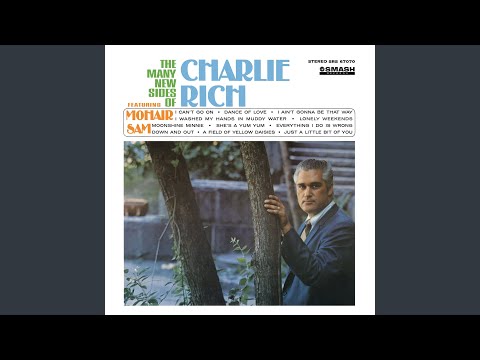
At Sun, Rich recorded a series of tracks that showed his range, from the bluesy "Lonely Weekends" (his biggest Sun-era hit, reaching number 22 on the pop chart in 1960) to more polished country and pop recordings. "There Won't Be Anymore" was among the tracks recorded during his later Sun period, capturing Rich in a country-pop mode that suited his voice well but found little commercial traction at the time. The recording was shelved without becoming a major release, and Rich moved on to other labels and other musical identities over the subsequent years.
The transformation of Rich's commercial fortunes came with his signing to Epic Records and his work with producer Billy Sherrill in the early 1970s. Sherrill's polished "countrypolitan" sound, built on lush string arrangements, carefully controlled dynamics, and a sophisticated pop sensibility, turned out to be the perfect setting for Rich's voice. "Behind Closed Doors" reached number one on the country chart in 1973 and crossed over to the pop chart as well, eventually winning Rich the Country Music Association's Album of the Year award and establishing him as one of the dominant commercial forces in country music.
The success created immediate demand for more Rich product, and RCA moved quickly to capitalize on the recordings it controlled from his Sun era. "There Won't Be Anymore" was released through RCA and debuted on the Billboard Hot 100 on January 26, 1974, entering at number 87. It climbed steadily over the following weeks, reaching its peak of number 18 on the chart dated March 30, 1974, after a 15-week run. On the country chart, the song performed even better, reaching number one, demonstrating the full extent of Rich's crossover appeal at the height of his fame.
The timing of the release was shrewdly commercial. Rich had spent late 1973 and early 1974 at the peak of his cultural visibility, and labels controlling his back catalog recognized that any recording bearing his name would find a ready market. The RCA release of "There Won't Be Anymore" was part of a broader pattern of archival exploitation that occurred whenever an artist achieved sudden mainstream success, pulling catalog recordings into the commercial spotlight regardless of when they had been made.
What made "There Won't Be Anymore" distinctive despite its archival origins was the quality of the recording itself. Rich's vocal performance demonstrated the same emotional authority that would characterize his best Epic-era work, and the production, while simpler than Sherrill's elaborate countrypolitan arrangements, had a directness that connected with listeners. The song's straightforward country-pop construction suited radio play well, and its chart performance confirmed that Rich's audience was willing to follow him across labels and time periods.
The Hot 100 success of "There Won't Be Anymore" came during a period when Rich was simultaneously dominating the country chart and achieving significant pop crossover. His string of hits in 1973 and 1974 placed him among the most commercially successful artists in any genre, and the pop chart appearances underscored the extent to which his appeal transcended the country market. The song's number 18 peak represented genuine mainstream acceptance for a recording that had originally been made without any expectation of reaching such a wide audience.
The broader story of "There Won't Be Anymore" reflects the complex economics of the music industry in the early 1970s, when an artist's breakthrough could simultaneously revive dormant catalog recordings and create new commercial opportunities across formats and labels. For Rich, it was further confirmation that his long journey through country, pop, jazz, and rhythm and blues had equipped him with a musical authority that could find an audience whenever the right circumstances aligned.
02 Song Meaning
Finality and Forgiveness: The Meaning of "There Won't Be Anymore" by Charlie Rich
"There Won't Be Anymore" by Charlie Rich inhabits a particular emotional territory that country music has long claimed as its own: the moment of firm but aching resolution at the end of a relationship. The song occupies the space after a decision has been made, where the speaker has committed to walking away and is working through the complex feelings that accompany such finality. It is not a song of anger or recrimination, but rather one of exhausted certainty, the kind that arrives only after considerable emotional labor.
The title itself functions as both declaration and mourning. "There won't be anymore" is a statement of fact, yet the delivery Rich brings to those words transforms factual statement into something closer to elegy. He is not announcing the end of something bad; he is announcing the end of something that once mattered, and the song holds both of those realities simultaneously. This emotional complexity was central to the appeal of the recording and helps explain why it connected with listeners across country and pop audiences.
Rich's vocal style, developed through years of exposure to jazz, gospel, and rhythm and blues, gave him a distinctive approach to such material. Where some country singers of the era might have leaned into demonstrative emotion, Rich favored restraint: a controlled delivery that allowed the words to carry their full weight without the vocal performance overwhelming them. This restraint is itself meaningful; the speaker of the song has moved past the stage of raw feeling and arrived somewhere quieter and more final.
The country-pop tradition from which the song emerges has a long history of treating relationship endings as occasions for introspection rather than performance. The genre's roots in Appalachian and Southern folk music included a tradition of songs about loss, departure, and separation that approached those subjects with directness and emotional honesty. "There Won't Be Anymore" fits within that tradition while also reflecting the more polished, commercial sensibility that characterized country music in the early 1970s.
The song's commercial context adds another layer to its meaning. When RCA released the recording in early 1974, Rich was at the height of his "Behind Closed Doors" fame, an artist associated with intimate, emotionally honest country-pop. Audiences brought those associations to "There Won't Be Anymore," hearing it as consistent with the persona Rich had established in his breakthrough period, even though the recording predated that breakthrough by nearly a decade. The disconnect between the song's origins and its reception illustrates how powerfully an artist's established persona can shape the meaning listeners assign to individual recordings.
The theme of finality without bitterness connects "There Won't Be Anymore" to a broader emotional current in American popular music of the 1970s, a period when both country and mainstream pop were producing songs that approached relationship endings with a new kind of reflective maturity. The era's singer-songwriter tradition had helped legitimate music that examined personal experience with nuance rather than resolving into simple moral conclusions, and that sensibility influenced country music as well as pop.
Charlie Rich's interpretation of the material was inseparable from his personal history: an artist who had spent years being passed over commercially, who had moved from label to label seeking the right context for his talents, and who had arrived at mainstream success only after considerable perseverance. That biography, while not directly encoded in the song's text, lent his performance a quality of hard-won experience that audiences could sense without necessarily being able to articulate. The song's meaning, for both performer and listener, was deepened by everything that surrounded it.
→ More from Charlie Rich
View all Charlie Rich hits →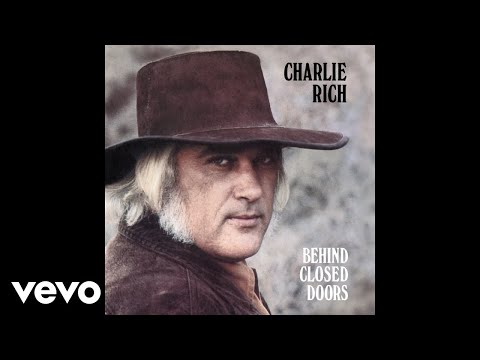



→ More from the 1970s File
View all 1970s hits →




Keep digging