The 1970s File Feature
Corazón
Corazon by Carole King: From Pop Royalty to Rhythmic Latin Influence, 1973 By the autumn of 1973, Carole King had achieved a level of commercial and artistic…
01 The Story
Corazon by Carole King: From Pop Royalty to Rhythmic Latin Influence, 1973
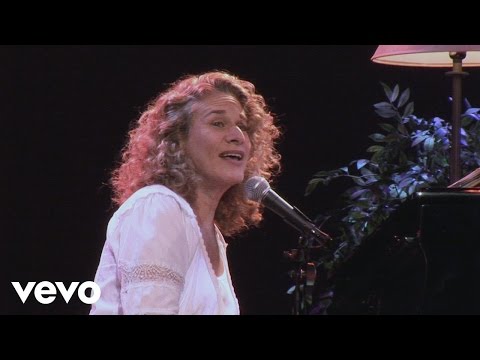
By the autumn of 1973, Carole King had achieved a level of commercial and artistic recognition that would have seemed impossible to predict even a few years earlier. Her album Tapestry, released in 1971, had become one of the best-selling albums in the history of American popular music to that point, and her follow-up releases had maintained her commercial presence even as they explored new directions. Corazon, the title track of her 1973 album, arrived as a record that showed King expanding her sonic vocabulary in ways that demonstrated her continued creative ambition.
Carole King After Tapestry
The challenge facing Carole King after the extraordinary success of Tapestry was one that few artists have had to navigate: how to maintain artistic integrity and creative development in the shadow of a commercial achievement so large that everything subsequent would inevitably be measured against it. King's response was to continue writing and recording music that reflected her genuine interests rather than attempting to replicate the specific qualities of her breakthrough.
Corazon demonstrated this approach: the title itself signals an openness to non-Anglo influences, and the album incorporated Latin rhythmic elements that were not central to King's previous commercial work. This expansion of her sonic palette reflected a genuine artistic curiosity rather than a commercially calculated move toward a trending sound.
Chart Performance in Late 1973
Corazon entered the Billboard Hot 100 on October 27, 1973, debuting at position 80. Over the following weeks it climbed steadily: 66, 56, 53, 43, and continued upward before peaking at number 37 during the week of December 15, 1973. The ten-week chart run confirmed that King's audience was willing to follow her into new sonic territory, even when that territory involved rhythmic elements and cultural references that were not central to her established commercial formula.
A peak of 37 in late 1973 was a solid commercial showing for a record that represented genuine artistic exploration. The late 1973 chart was competitive across multiple genres, and Corazon held its own within that competitive environment.
The Latin Influence and King's Artistic Evolution
The incorporation of Latin rhythmic elements into Corazon reflected a broader trend in American popular music of the early 1970s, when the commercial success of Latin-influenced recordings and the growing presence of Latin music in American cultural life were creating space for cross-cultural musical exploration. King's approach to this territory was characteristically personal rather than generic: the Latin influences in Corazon feel like genuine engagement rather than superficial borrowing, integrated into her songwriting voice rather than grafted onto it.
The result was a record that added dimensions to King's established sound without abandoning the melodic and lyrical intelligence that had made Tapestry such a landmark commercial success.
Carole King's Sustained Creative Career
Carole King's legacy rests not only on Tapestry's extraordinary commercial achievement but on the decades of songwriting she had completed before that album and the work she continued to produce afterward. Corazon is one document of the creative restlessness that drove her continued output, the desire to explore new musical territory even from a position of commercial security. Her willingness to try Latin-influenced rhythm and Spanish title in 1973, regardless of whether it matched the commercial formula that had just made her one of the most successful recording artists in American history, reflects an artistic integrity that distinguishes the most significant careers from those defined purely by commercial calculation.
The Early 1970s Singer-Songwriter Moment
Carole King released Corazon at a specific moment in the history of American popular music when the singer-songwriter as a commercial and artistic category had reached its greatest cultural prestige. The early 1970s had produced a sustained commercial and critical investment in artists who wrote their own material and delivered it with an intimacy and personal authenticity that distinguished them from the more produced pop acts of previous decades. King was one of the central figures in this moment, and Corazon was released with the full expectation that her audience would follow her into territory that pushed against the edges of her established sound. The fact that a Spanish-titled record with Latin rhythmic influences could chart for ten weeks in late 1973 under her name reflects the depth of the loyalty she had built with her audience: listeners trusted Carole King to take them somewhere interesting, and that trust was sufficient to overcome any hesitation about the unfamiliar elements the record introduced.
Press play and hear what Carole King sounded like when she was willing to take her heart somewhere new and trust her audience to follow.
Corazon — Carole King's singular moment on the 1970s charts.
02 Song Meaning
The Meaning Behind Corazon: Heart, Language, and Cross-Cultural Romantic Expression
The title Corazon, the Spanish word for heart, makes a statement before the music begins. By choosing a Spanish word rather than its English translation, Carole King signals a connection to a cultural tradition beyond her own Anglo-American formation, and an interest in what that tradition brings to the expression of romantic feeling. Understanding what the record means requires engaging with this linguistic and cultural choice and what it implies about how the heart, as a concept and a symbol, can be understood across cultural boundaries.
The Heart in Multiple Traditions
The heart as a symbol of romantic and emotional life appears across virtually every human culture, but different traditions invest the symbol with different specific qualities and associations. The corazon of Latin American romantic tradition carries particular associations with passion, suffering, and the intensity of emotional experience that are not identical to the Anglo-American heart, even if the organ they designate is the same. By using the Spanish word, King invites these associations into her song's emotional frame, enriching the simple concept of the heart with a different cultural register.
This kind of cross-cultural romantic imagination is one of the ways that popular music has always expanded its emotional vocabulary: by borrowing words, images, and rhythmic patterns from traditions that express familiar feelings in unfamiliar ways, creating new combinations that can access emotional territory unavailable in any single tradition alone.
Latin Rhythms and Emotional Temperature
The Latin rhythmic influences that run through Corazon are not merely sonic decoration; they contribute to the record's emotional meaning by raising the temperature of the musical experience. Latin rhythmic patterns have long been associated in American popular consciousness with a kind of passionate intensity that contrasts with the more reserved emotional registers of some Anglo-American musical traditions.
When Carole King places her voice and her lyrics within a rhythmic framework that carries these associations, the combination creates a different emotional effect than either element would produce alone. The familiar King melodic voice and lyrical intelligence are given a new context that inflects their characteristic qualities with a different emotional energy.
Artistic Courage and Commercial Security
Corazon was written and recorded from a position of extraordinary commercial security: King had nothing to prove and no audience approval to seek after the success of Tapestry. This security made the artistic choices on the record particularly meaningful: they reflect genuine creative interest rather than commercial calculation. An artist who experiments from a position of security is demonstrating that the experimentation is authentic, that the new directions are being pursued because they genuinely interest the artist rather than because they are expected to generate revenue.
This authentic artistic curiosity is one of the most attractive qualities in the work of established artists, and it is what gives Corazon its particular character. The record sounds like something Carole King wanted to make, not something she was obligated to produce, and that distinction is audible in the result.
The Heart as Constant
Whatever language it is named in, the heart remains the constant at the center of Corazon's meaning. The record is ultimately about the experience of romantic feeling in its most fundamental sense: the surrender to another person that the corazon represents in its most fully engaged state. Carole King's songwriting, consistently focused on the emotional reality of human relationships rather than their more stylized representations, approached this universal subject from a new angle without abandoning the emotional honesty that had always been her defining quality as a songwriter. The Spanish title is a door into a different room in a house that King had always been building from the inside out.
→ More from Carole King
View all Carole King hits →
→ More from the 1970s File
View all 1970s hits →




Keep digging